|
|
|||
|
||||
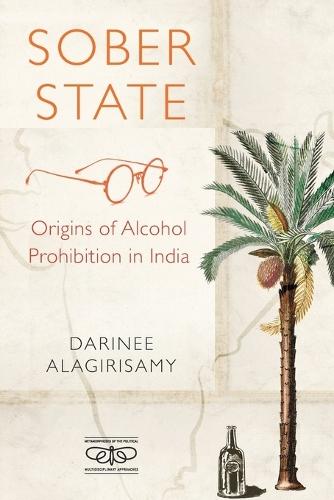
Overview'What happens when a democratic state—still in the process of formation—commits to banning a substance, especially one as controversial as alcohol? This book traces the origins and evolution of alcohol prohibition in India, drawing on extensive archival research and rich vernacular sources to explain its surprising resilience over time. Since its inception, prohibition has served both as an ideal and a tool of state power—a dual role that has worked to shape its shifting trajectories. Each phase of enforcement has served to reaffirm prohibition's founding logic, thereby further embedding it in the machinery of governance—even as it has constrained its future implementation. Foregrounding intersections with caste and gender, the book illuminates how diverse social responses have made prohibition a deeply contested—sobering—yet enduring project. While prohibition may be a thing of the past in the West, history helps to keep it alive in India.' Full Product DetailsAuthor: Darinee Alagirisamy (National University of Singapore)Publisher: Cambridge University Press Imprint: Cambridge University Press Weight: 0.250kg ISBN: 9781009683159ISBN 10: 1009683152 Pages: 220 Publication Date: 14 May 2026 Audience: General/trade , General Format: Paperback Publisher's Status: Active Availability: Not yet available This item is yet to be released. You can pre-order this item and we will dispatch it to you upon its release. Table of ContentsDedication, Acknowledgements, List of Abbreviations, Note on Translation, Introduction. Setting the Stage; 1. The Madras Abkari Act of 1886; 2. Congress Nationalism, Provincial Politics, and the Road to Prohibition; 3. The Development of a Prohibition Culture and Ideal; 4. The Prose of Subaltern Alcoholism and Prohibitioning; 5. Liquor Businesses and The Business of Prohibition; 6. Enforcing the Madras Prohibition Act; 7. Prohibition in Independent India; Conclusion; Bibliography.ReviewsAuthor InformationDarinee Alagirisamy is a historian and Lecturer at National University of Singapore, where she currently teaches courses in Indian history and culture in the South Asian Studies Programme. Her research engages with social exclusion and marginalisation in the context of late colonialism from the perspective of regional, national, and transnational reform movements. She has been a Gates Cambridge scholar and held the Holland Rose Studentship. Her research has been published in Modern Asian Studies and The Indian Economic and Social History Review. Tab Content 6Author Website:Countries AvailableAll regions |
||||