Overview
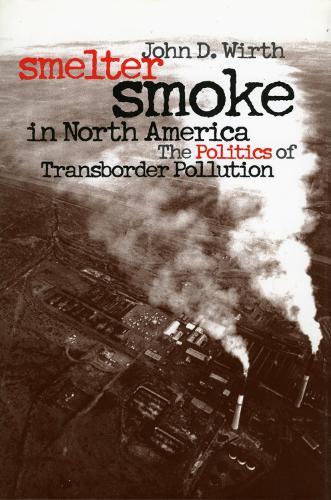
Air pollution challenges nations sharing common borders to balance economic needs with protecting citizens and the environment across jurisdictions. By examining landmark cases on the two borders, John Wirth shows how environmental diplomacy, citizen action at the grassroots level, and the role of science, industry, and the law converged, bringing Canada, the United States, and Mexico to the threshold of today's continental approaches to pollutant pathways. Wirth first examines the famous Trail smelter conflict of 1927-1941. This precedent-setting case, which pitted U.S. farmers against the Canadian smelter, resulted in the doctrine that in cases of transborder damage, the polluter must pay. Although the farmers were modestly compensated and the British Columbia-based smelter cooperated to control pollution, Wirth reveals the real significance of the decision: U.S. industries shared with the Canadians a common interest to resolve the case in a manner that would allow them to continue to pollute freely across international borders with minimal regulation. Wirth then turns to the Gray Triangle confrontations of the 1980s, in which the new instruments of the Clean Air Act and cooperative policies developed by the Mexican and U.S. governments established an entirely new climate for citizen action, resulting in the closing of an American smelter in Arizona and the imposition of stricter standards on two Mexican smelters in Sonora. Although the Trail precedent favored industry, the Gray Triangle resolution signaled that the needs of industry and the public interest were now in better balance. Drawing on extensive interviews and previously untapped archives, Smelter Smoke in North America provides new analysis of the development of a North American institutional response to continental air pollution. It chronicles how industry developed a continental perspective in a shared regional space, the mineralized West, and how successful efforts of governments and citizens to protect the environment evolved.
Full Product Details
Author: John D. Wirth
Publisher: University Press of Kansas
Imprint: University Press of Kansas
Dimensions:
Width: 16.70cm
, Height: 2.60cm
, Length: 24.10cm
Weight: 0.623kg
ISBN: 9780700609840
ISBN 10: 0700609849
Pages: 264
Publication Date: 31 January 2000
Audience:
College/higher education
,
Professional and scholarly
,
Undergraduate
,
Postgraduate, Research & Scholarly
Format: Hardback
Publisher's Status: Active
Availability: Manufactured on demand

We will order this item for you from a manufactured on demand supplier.
Reviews
-Wirth uses two focused, lucid, and engaging case histories to lead readers onto a challenging intellectual and policy frontier. A first-rate historian and an experienced policy consultant, he provides deep insights and guidance into the politics and technology of global environmental pollution. This major contribution deserves a wide audience.---Thomas P. Hughes, author of Networks of Power: Electrification in Western Society -Wirth's study can be read profitably at three levels: first, as an in-depth analysis of two major metallurgical plants, the Trail smelter in British Columbia and the Phelps Dodge smelter in Arizona; second, as a brief survey of smoke policies and pollution laws in the U.S., culminating in the Clean Air Act of 1970; and third, as a diplomatic history of U.S.-Canadian and U.S.-Mexican industrial border relations. An important contribution to environmental history, it has obvious implications for anyone interested in NAFTA and related North American economic and business affairs. I highly recommend it.---Marc Cioc, deputy editor of Environmental History Review
Wirth uses two focused, lucid, and engaging case histories to lead readers onto a challenging intellectual and policy frontier. A first-rate historian and an experienced policy consultant, he provides deep insights and guidance into the politics and technology of global environmental pollution. This major contribution deserves a wide audience. --<b>Thomas P. Hughes</b>, author of <i>Networks of Power: Electrification in Western Society</i> Wirth's study can be read profitably at three levels: first, as an in-depth analysis of two major metallurgical plants, the Trail smelter in British Columbia and the Phelps Dodge smelter in Arizona; second, as a brief survey of smoke policies and pollution laws in the U.S., culminating in the Clean Air Act of 1970; and third, as a diplomatic history of U.S.-Canadian and U.S.-Mexican industrial border relations. An important contribution to environmental history, it has obvious implications for anyone interested in NAFTA and related North American economic and business affairs. I highly recommend it. --<b>Marc Cioc</b>, deputy editor of <i>Environmental History Review</i>
John Wirth's Smelter Smoke in North America is one of the most important contributions to environmental history in the past decade. . . . It brilliantly succeeds on a number of levels. The research in scientific reports, corporate records, and interviews is staggering; more important, Wirth analyzes these documents in a manner accessible to specialists and nonspecialists alike. --Canadian Journal of History Wirth uses two focused, lucid, and engaging case histories to lead readers onto a challenging intellectual and policy frontier. A first-rate historian and an experienced policy consultant, he provides deep insights and guidance into the politics and technology of global environmental pollution. This major contribution deserves a wide audience. --Thomas P. Hughes, author of Networks of Power: Electrification in Western Society Wirth's study can be read profitably at three levels: first, as an in-depth analysis of two major metallurgical plants, the Trail smelter in British Columbia and the Phelps Dodge smelter in Arizona; second, as a brief survey of smoke policies and pollution laws in the U.S., culminating in the Clean Air Act of 1970; and third, as a diplomatic history of U.S.-Canadian and U.S.-Mexican industrial border relations. An important contribution to environmental history, it has obvious implications for anyone interested in NAFTA and related North American economic and business affairs. I highly recommend it. --Marc Cioc, deputy editor of Environmental History Review
Wirth uses two focused, lucid, and engaging case histories to lead readers onto a challenging intellectual and policy frontier. A first-rate historian and an experienced policy consultant, he provides deep insights and guidance into the politics and technology of global environmental pollution. This major contribution deserves a wide audience. --Thomas P. Hughes, author of Networks of Power: Electrification in Western Society Wirth's study can be read profitably at three levels: first, as an in-depth analysis of two major metallurgical plants, the Trail smelter in British Columbia and the Phelps Dodge smelter in Arizona; second, as a brief survey of smoke policies and pollution laws in the U.S., culminating in the Clean Air Act of 1970; and third, as a diplomatic history of U.S.-Canadian and U.S.-Mexican industrial border relations. An important contribution to environmental history, it has obvious implications for anyone interested in NAFTA and related North American economic and business affairs. I highly recommend it. --Marc Cioc, deputy editor of Environmental History Review John Wirth's Smelter Smoke in North America is one of the most important contributions to environmental history in the past decade. . . . It brilliantly succeeds on a number of levels. The research in scientific reports, corporate records, and interviews is staggering; more important, Wirth analyzes these documents in a manner accessible to specialists and nonspecialists alike. --Canadian Journal of History
Author Information
John D. Wirth was Gildred Professor of Latin American Studies in the department of history at Stanford University. Founder and president of the North American Institute, he was appointed by the White House in 1994 to serve as a U.S. member on the Joint Public Advisory Committee of the NAFTA Commission for Environmental Cooperation. He was a contributing editor to Environmental Management on North America's Borders.