|
|
|||
|
||||
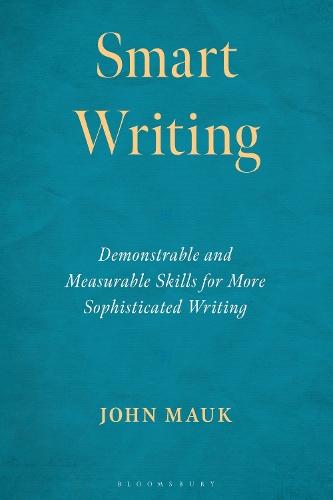
OverviewWriting teachers of all grade levels have been called upon to increase their students’ cognitive power. Outcomes across institutions, districts, and states emphasize the need for richness, depth, complexity, rigor, sophistication, or critical thinking in student writing. Yet that quality—no matter how it gets characterized—remains a challenge for both teachers and students. How can teachers most effectively explain, model, and assess such an evasive quality? Smart Writing: Demonstrable and Measurable Skills for More Sophisticated Writing offers a path forward. It details a range of powerful strategies that students can apply directly. The specifics offered here are not vague descriptors. They are moves that get worked out in written passages. They can be adopted and shaped according to assignment, topic, and each writer’s comfort level. The goal in each chapter is to eradicate the mysteries of sophisticated writing—to offer samples, activities, and prompts that make student projects richer. In this sense, Smart Writing is not a book for those teaching only gifted, advanced, or highly prepared students. It’s for all teachers trying desperately to help students with something that seems now universally valued. Full Product DetailsAuthor: John MaukPublisher: Bloomsbury Publishing Plc Imprint: Rowman & Littlefield ISBN: 9781475874747ISBN 10: 147587474 Pages: 176 Publication Date: 08 January 2026 Audience: Professional and scholarly , Professional & Vocational Format: Hardback Publisher's Status: Forthcoming Availability: Manufactured on demand Table of ContentsIntroduction Chapter 1, Seeking Complexity · Focusing the Questions · Unpacking Broad Terms · Making New Comparisons · Creating Context · Advanced Move: Denying the Usual Associations Chapter 2, Applying a Concept · Adopting Specific Language · Taking on the Big Concepts · Advanced Move: Transporting a Concept Chapter 3, Analyzing Arguments · Considering Context · Analyzing the Reasoning · Identifying Counters, Concessions, Qualifiers · Analyzing the Writer/Speaker · Analyzing the Audience · Advanced Move: Calling Out Unstated Reasons · Advanced Move: Calling Out the Quiet Argument Chapter 4, Justifying a Position · Adopting a Position and Purpose · Providing Evidence · Breaking Down Reasons · Managing Opposition · Advanced Move: Seeking Reasons for Reasons Chapter 5, Applying Sources · Apply a Supportive Source · Drawing from a Vital Source · Synthesizing Sources · Draw from the Past · Trust But Verify · Cite Your Sources Chapter 6, Seeking TensionReviewsAuthor InformationJohn Mauk has taught writing courses for twenty-five years. Twice elected professor of the year at different colleges, he also worked closely with public school teachers, administrators, and college faculty to generate writing curricula and several widely used textbooks. Tab Content 6Author Website:Countries AvailableAll regions |
||||