Overview
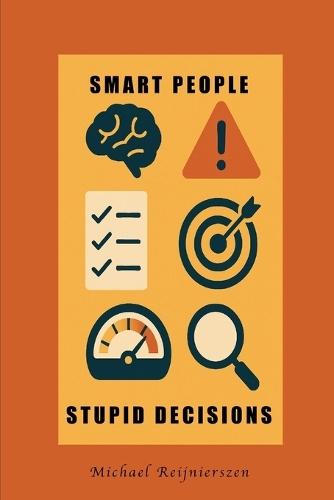
Intelligence does not protect against error. The modern world rewards speed, confidence, and narrative coherence. Decisions are expected to arrive fully formed, defended with fluency, and executed without visible hesitation. Under these conditions, intelligence becomes a liability when it outruns judgment. The sharper the mind, the more convincingly it can rationalize instinct, suppress doubt, and mistake momentum for mastery. This book examines why capable people make decisions that later appear indefensible, avoidable, or quietly destructive. The failures explored here do not stem from ignorance or malice. They arise from predictable distortions in human cognition, compounded by pressure, hierarchy, and poorly designed systems. Bias bends judgment in consistent directions. Inconsistency scatters it without warning. Together, they erode fairness, accuracy, and trust. Drawing from decades of behavioural science, safety engineering, and real-world decision failures across medicine, aviation, government, and enterprise, the book advances a simple claim: good judgment is not a personality trait. It is an engineered outcome. Where structure is absent, even the most capable minds default to comfort, familiarity, and self-protection. Where discipline is present, ordinary people routinely outperform brilliance. Leadership, in this account, is not about superior intellect or force of personality. It is about governing attention, emotion, and pace. It is about creating environments where dissent is safe, standards are visible, and power is restrained by design rather than virtue. The book argues that fairness is not an aspiration but an architecture, and that ethical judgment begins long before outcomes are known, at the moment trade-offs are acknowledged, and evidence is allowed to argue back. The final sections confront the moral dimension of decision-making. Every major decision allocates risk, dignity, and consequence to people who often lack voice or recourse. Careless judgment is not abstract; it leaves victims. Precision in thought becomes a civic duty when institutions claim authority over others' lives, livelihoods, and futures. Smart People, Stupid Decisions is written for those who carry responsibility and feel the weight of getting it wrong. It does not promise perfect outcomes. It offers something rarer and more durable: a way to slow certainty just enough for wisdom to arrive, to replace instinct with proportion when the stakes demand it, and to build systems that keep intelligence from turning against itself. Judgment is not improved by believing you are right. Judgment improves when you design for the possibility that you are not.
Full Product Details
Author: Michael Reijnierszen
Publisher: Independently Published
Imprint: Independently Published
Dimensions:
Width: 15.20cm
, Height: 0.40cm
, Length: 22.90cm
Weight: 0.109kg
ISBN: 9798242333703
Pages: 74
Publication Date: 02 January 2026
Audience:
General/trade
,
General
Format: Paperback
Publisher's Status: Active
Availability: Available To Order

We have confirmation that this item is in stock with the supplier. It will be ordered in for you and dispatched immediately.