Overview
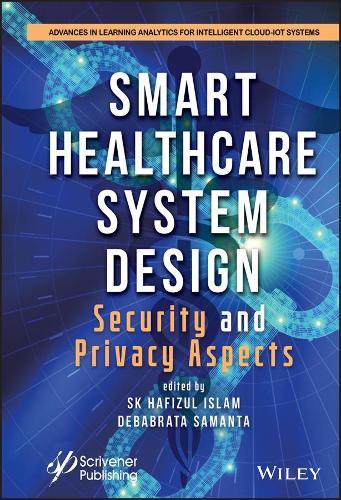
SMART HEALTHCARE SYSTEM DESIGN This book deeply discusses the major challenges and issues for security and privacy aspects of smart health-care systems. The Internet-of-Things (IoT) has emerged as a powerful and promising technology, and though it has significant technological, social, and economic impacts, it also poses new security and privacy challenges. Compared with the traditional internet, the IoT has various embedded devices, mobile devices, a server, and the cloud, with different capabilities to support multiple services. The pervasiveness of these devices represents a huge attack surface and, since the IoT connects cyberspace to physical space, known as a cyber-physical system, IoT attacks not only have an impact on information systems, but also affect physical infrastructure, the environment, and even human security. The purpose of this book is to help achieve a better integration between the work of researchers and practitioners in a single medium for capturing state-of-the-art IoT solutions in healthcare applications, and to address how to improve the proficiency of wireless sensor networks (WSNs) in healthcare. It explores possible automated solutions in everyday life, including the structures of healthcare systems built to handle large amounts of data, thereby improving clinical decisions. The 14 separate chapters address various aspects of the IoT system, such as design challenges, theory, various protocols, implementation issues, as well as several case studies. Smart Healthcare System Design covers the introduction, development, and applications of smart healthcare models that represent the current state-of-the-art of various domains. The primary focus is on theory, algorithms, and their implementation targeted at real-world problems. It will deal with different applications to give the practitioner a flavor of how IoT architectures are designed and introduced into various situations. Audience: Researchers and industry engineers in information technology, artificial intelligence, cyber security, as well as designers of healthcare systems, will find this book very valuable.
Full Product Details
Author: S. K. Hafizul Islam (Indian Institute of Information Technology, Kalyani, India) , Debabrata Samanta (CHRIST (Deemed To Be University), Bangalore, India)
Publisher: John Wiley & Sons Inc
Imprint: Wiley-Scrivener
Dimensions:
Width: 1.00cm
, Height: 1.00cm
, Length: 1.00cm
Weight: 0.454kg
ISBN: 9781119791683
ISBN 10: 1119791685
Pages: 384
Publication Date: 24 August 2021
Audience:
Professional and scholarly
,
Professional & Vocational
Format: Hardback
Publisher's Status: Active
Availability: Out of stock 
The supplier is temporarily out of stock of this item. It will be ordered for you on backorder and shipped when it becomes available.
Table of Contents
Preface xvii Acknowledgments xxiii 1 Machine Learning Technologies in IoT EEG-Based Healthcare Prediction 1 Karthikeyan M.P., Krishnaveni K. and Muthumani N. 1.1 Introduction 2 1.1.1 Descriptive Analytics 3 1.1.2 Analytical Methods 3 1.1.3 Predictive Analysis 4 1.1.4 Behavioral Analysis 4 1.1.5 Data Interpretation 4 1.1.6 Classification 4 1.2 Related Works 7 1.3 Problem Definition 9 1.4 Research Methodology 9 1.4.1 Components Used 10 1.4.2 Specifications and Description About Components 10 1.4.2.1 Arduino 10 1.4.2.2 EEG Sensor—Mindwave Mobile Headset 11 1.4.2.3 Raspberry pi 12 1.4.2.4 Working 13 1.4.3 Cloud Feature Extraction 13 1.4.4 Feature Optimization 14 1.4.5 Classification and Validation 15 1.5 Result and Discussion 16 1.5.1 Result 16 1.5.2 Discussion 23 1.6 Conclusion 27 1.6.1 Future Scope 27 References 28 2 Smart Health Application for Remote Tracking of Ambulatory Patients 33 Shariq Aziz Butt, Muhammad Waqas Anjum, Syed Areeb Hassan, Arindam Garai and Edeh Michael Onyema 2.1 Introduction 34 2.2 Literature Work 34 2.3 Smart Computing for Smart Health for Ambulatory Patients 35 2.4 Challenges With Smart Health 36 2.4.1 Emergency Support 36 2.4.2 The Issue With Chronic Disease Monitoring 38 2.4.3 An Issue With the Tele-Medication 38 2.4.4 Mobility of Doctor 40 2.4.5 Application User Interface Issue 40 2.5 Security Threats 41 2.5.1 Identity Privacy 41 2.5.2 Query Privacy 42 2.5.3 Location of Privacy 42 2.5.4 Footprint Privacy and Owner Privacy 43 2.6 Applications of Fuzzy Set Theory in Healthcare and Medical Problems 43 2.7 Conclusion 51 References 51 3 Data-Driven Decision Making in IoT Healthcare Systems—COVID-19: A Case Study 57 Saroja S., Haseena S. and Blessa Binolin Pepsi M. 3.1 Introduction 58 3.1.1 Pre-Processing 59 3.1.2 Classification Algorithms 60 3.1.2.1 Dummy Classifier 60 3.1.2.2 Support Vector Machine (SVM) 60 3.1.2.3 Gradient Boosting 61 3.1.2.4 Random Forest 62 3.1.2.5 Ada Boost 63 3.2 Experimental Analysis 63 3.3 Multi-Criteria Decision Making (MCDM) Procedure 63 3.3.1 Simple Multi Attribute Rating Technique (SMART) 64 3.3.1.1 COVID-19 Disease Classification Using SMART 64 3.3.2 Weighted Product Model (WPM) 66 3.3.2.1 COVID-19 Disease Classification Using WPM 66 3.3.3 Method for Order Preference by Similarity to the Ideal Solution (TOPSIS) 67 3.3.3.1 COVID-19 Disease Classification Using TOPSIS 68 3.4 Conclusion 69 References 69 4 Touch and Voice-Assisted Multilingual Communication Prototype for ICU Patients Specific to COVID-19 71 B. Rajesh Kanna and C.Vijayalakshmi 4.1 Introduction and Motivation 72 4.1.1 Existing Interaction Approaches and Technology 73 4.1.2 Challenges and Gaps 74 4.2 Proposed Prototype of Touch and Voice-Assisted Multilingual Communication 75 4.3 A Sample Case Study 82 4.4 Conclusion 82 References 84 5 Cloud-Assisted IoT System for Epidemic Disease Detection and Spread Monitoring 87 Himadri Nath Saha, Reek Roy and Sumanta Chakraborty 5.1 Introduction 88 5.2 Background & Related Works 92 5.3 Proposed Model 98 5.3.1 ThinkSpeak 100 5.3.2 Blood Oxygen Saturation (SpO2) 100 5.3.3 Blood Pressure (BP) 101 5.3.4 Electrocardiogram (ECG) 101 5.3.5 Body Temperature (BT) 102 5.3.6 Respiration Rate (RR) 102 5.3.7 Environmental Parameters 103 5.4 Methodology 103 5.5 Performance Analysis 110 5.6 Future Research Direction 111 5.7 Conclusion 112 References 113 6 Impact of Healthcare 4.0 Technologies for Future Capacity Building to Control Epidemic Diseases 115 Himadri Nath Saha, Sumanta Chakraborty, Sourav Paul, Rajdeep Ghosh and Dipanwita Chakraborty Bhattacharya 6.1 Introduction 116 6.2 Background and Related Works 120 6.3 System Design and Architecture 128 6.4 Methodology 131 6.5 Performance Analysis 138 6.6 Future Research Direction 138 6.7 Conclusion 139 References 139 7 Security and Privacy of IoT Devices in Healthcare Systems 143 Himadri Nath Saha and Subhradip Debnath 7.1 Introduction 144 7.2 Background and Related Works 145 7.3 Proposed System Design and Architecture 147 7.3.1 Modules 148 7.3.1.1 Wireless Body Area Network 148 7.3.1.2 Centralized Network Coordinator 149 7.3.1.3 Local Server 149 7.3.1.4 Cloud Server 150 7.3.1.5 Dedicated Network Connection 151 7.4 Methodology 151 7.5 Performance Analysis 160 7.6 Future Research Direction 161 7.7 Conclusion 163 References 164 8 An IoT-Based Diet Monitoring Healthcare System for Women 167 Suganyadevi S., Shamia D. and Balasamy K. 8.1 Introduction 168 8.2 Background 177 8.2.1 Food Consumption 177 8.2.2 Food Consumption Monitoring 178 8.2.3 Health Monitoring Methods Using Physical Methodology 179 8.2.3.1 Traditional Form of Self-Report 179 8.2.3.2 Self-Reporting Methodology Through Smart Phones 179 8.2.3.3 Food Frequency Questionnaire 179 8.2.4 Methods for Health Tracking Using Automated Approach 180 8.2.4.1 Pressure Process 180 8.2.4.2 Surveillance Video Method 180 8.2.4.3 Method of Doppler Sensing 180 8.3 Necessity of Wearable Approach? 181 8.4 Different Approaches for Wearable Sensing 181 8.4.1 Approach of Acoustics 182 8.4.1.1 Detection of Chewing 182 8.4.1.2 Detection of Swallowing 183 8.4.1.3 Shared Chewing/Swallowing Discovery 183 8.5 Description of the Methodology 184 8.6 Description of Various Components Used 185 8.6.1 Sensors 185 8.6.1.1 Sensors for Cardio-Vascular Monitoring 185 8.6.1.2 Sensors for Activity Monitoring 186 8.6.1.3 Sensors for Body Temperature Monitoring 187 8.6.1.4 Sensor for Galvanic Skin Response (GSR) Monitoring 188 8.6.1.5 Sensor for Monitoring the Blood Oxygen Saturation (SpO2 ) 189 8.7 Strategy of Communication for Wearable Systems 189 8.8 Conclusion 192 References 194 9 A Secure Framework for Protecting Clinical Data in Medical IoT Environment 203 Balasamy K., Krishnaraj N., Ramprasath J. and Ramprakash P. 9.1 Introduction 203 9.1.1 Medical IoT Background & Perspective 204 9.1.1.1 Medical IoT Communication Network 204 9.2 Medical IoT Application Domains 209 9.2.1 Smart Doctor 209 9.2.2 Smart Medical Practitioner 209 9.2.3 Smart Technology 209 9.2.4 Smart Receptionist 210 9.2.5 Disaster Response Systems (DRS) 210 9.3 Medical IoT Concerns 210 9.3.1 Security Concerns 211 9.3.2 Privacy Concerns 212 9.3.3 Trust Concerns 212 9.4 Need for Security in Medical IoT 212 9.5 Components for Enhancing Data Security in Medical IoT 214 9.5.1 Confidentiality 214 9.5.2 Integrity 214 9.5.3 Authentication 215 9.5.4 Non-Repudiation 215 9.5.5 Privacy 215 9.6 Vulnerabilities in Medical IoT Environment 215 9.6.1 Patient Privacy Protection 215 9.6.2 Patient Safety 216 9.6.3 Unauthorized Access 216 9.6.4 Medical IoT Security Constraints 217 9.7 Solutions for IoT Healthcare Cyber-Security 218 9.7.1 Architecture of the Smart Healthcare System 218 9.7.1.1 Data Perception Layer 218 9.7.1.2 Data Communication Layer 219 9.7.1.3 Data Storage Layer 219 9.7.1.4 Data Application Layer 219 9.8 Execution of Trusted Environment 220 9.8.1 Root of Trust Security Services 220 9.8.2 Chain of Trust Security Services 222 9.9 Patient Registration Using Medical IoT Devices 223 9.9.1 Encryption 224 9.9.2 Key Generation 225 9.9.3 Security by Isolation 225 9.9.4 Virtualization 225 9.10 Trusted Communication Using Block Chain 229 9.10.1 Record Creation Using IoT Gateways 229 9.10.2 Accessibility to Patient Medical History 230 9.10.3 Patient Enquiry With Hospital Authority 230 9.10.4 Block Chain Based IoT System Architecture 231 9.10.4.1 First Layer 231 9.10.4.2 Second Layer 231 9.10.4.3 Third Layer 232 9.11 Conclusion 232 References 233 10 Efficient Data Transmission and Remote Monitoring System for IoT Applications 235 Laith Farhan, Firas MaanAbdulsattar, Laith Alzubaidi, Mohammed A. Fadhel, Banu ÇalışUslu and Muthana Al-Amidie 10.1 Introduction 236 10.2 Network Configuration 236 10.2.1 Message Queuing Telemetry Transport (MQTT) Protocol 238 10.2.2 Embedded Database SQLite 242 10.2.3 Eclipse Paho Library 242 10.2.4 Raspberry Pi Single Board Computer 242 10.2.5 Custard Pi Add-On Board 243 10.2.6 Pressure Transmitter (Type 663) 244 10.3 Data Filtering and Predicting Processes 245 10.3.1 Filtering Process 245 10.3.2 Predicting Process 246 10.3.3 Remote Monitoring Systems 248 10.4 Experimental Setup 249 10.4.1 Implementation Using Python 251 10.4.1.1 Prerequisites 251 10.4.2 Monitoring Data 251 10.4.3 Experimental Results 255 10.4.3.1 IoT Device Results 255 10.4.3.2 Traditional Network Results 257 10.5 Conclusion 261 References 261 11 IoT in Current Times and its Prospective Advancements 265 T. Venkat Narayana Rao, Abhishek Duggirala, Muralidhar Kurni and Syed Tabassum Sultana 11.1 Introduction 266 11.1.1 Introduction to Industry 4.0 266 11.1.2 Introduction to IoT 266 11.1.3 Introduction to IIoT 267 11.2 How IIoT Advances Industrial Engineering in Industry 4.0 Era 267 11.3 IoT and its Current Applications 268 11.3.1 Home Automation 268 11.3.2 Wearables 269 11.3.3 Connected Cars 269 11.3.4 Smart Grid 269 11.4 Application Areas of IIoT 270 11.4.1 IIoT in Healthcare 270 11.4.2 IIoT in Mining 270 11.4.3 IIoT in Agriculture 271 11.4.4 IIoT in Aerospace 271 11.4.5 IIoT in Smart Cities 272 11.4.6 IIoT in Supply Chain Management 272 11.5 Challenges of Existing Systems 272 11.5.1 Security 272 11.5.2 Integration 273 11.5.3 Connectivity Issues 273 11.6 Future Advancements 273 11.6.1 Data Analytics in IoT 274 11.6.2 Edge Computing 274 11.6.3 Secured IoT Through Blockchain 274 11.6.4 A Fusion of AR and IoT 275 11.6.5 Accelerating IoT Through 5G 275 11.7 Case Study of DeWalt 275 11.8 Conclusion 276 References 276 12 Reliance on Artificial Intelligence, Machine Learning and Deep Learning in the Era of Industry 4.0 281 T. Venkat Narayana Rao, Akhila Gaddam, Muralidhar Kurni and K. Saritha 12.1 Introduction to Artificial Intelligence 282 12.1.1 History of AI 282 12.1.2 Views of AI 282 12.1.3 Types of AI 283 12.1.4 Intelligent Agents 284 12.2 AI and its Related Fields 286 12.3 What is Industry 4.0? 289 12.4 Industrial Revolutions 289 12.4.1 First Industrial Revolution (1765) 290 12.4.2 Second Industrial Revolution (1870) 290 12.4.3 Third Industrial Revolution (1969) 290 12.4.4 Fourth Industrial Revolution 291 12.5 Reasons for Shifting Towards Industry 4.0 291 12.6 Role of AI in Industry 4.0 292 12.7 Role of ML in Industry 4.0 292 12.8 Role of Deep Learning in Industry 4.0 293 12.9 Applications of AI, ML, and DL in Industry 4.0 294 12.10 Challenges 295 12.11 Top Companies That Use AI to Augment Manufacturing Processes in the Era of Industry 4.0 296 12.12 Conclusion 297 References 297 13 The Implementation of AI and AI-Empowered Imaging System to Fight Against COVID-19—A Review 301 Sanjay Chakraborty and Lopamudra Dey 13.1 Introduction 302 13.2 AI-Assisted Methods 304 13.2.1 AI-Driven Tools to Diagnose COVID-19 and Drug Discovery 304 13.2.2 AI-Empowered Image Processing to Diagnosis 306 13.3 Optimistic Treatments and Cures 307 13.4 Challenges and Future Research Issues 308 13.5 Conclusion 308 References 309 14 Implementation of Machine Learning Techniques for the Analysis of Transmission Dynamics of COVID-19 313 C. Vijayalakshmi and S. Bangusha Devi 14.1 Introduction 314 14.2 Data Analysis 315 14.3 Methodology 315 14.3.1 Linear Regression Model 315 14.3.2 Time Series Model 318 14.4 Results and Discussions 320 14.4.1 Model Estimation and Studying its Adequacy 323 14.4.2 Regression Model for Daily New Cases and New Deaths 330 14.5 Conclusions 348 References 348 Index 351
Reviews
Author Information
SK Hafizul Islam received his PhD degree in Computer Science and Engineering in 2013 from the Indian Institute of Technology [IIT (ISM)] Dhanbad, Jharkhand, India. He is an assistant professor in the Department of Computer Science and Engineering, Indian Institute of Information Technology Kalyani (IIIT Kalyani), West Bengal, India. He has authored or coauthored 110 research papers in journals and conference proceedings. Debabrata Samanta is an assistant professor in the Department of Computer Science, CHRIST (Deemed to be University), Bangalore, India. He obtained his PhD in Computer Science and Engg. from the National Institute of Technology, Durgapur, India, in the area of SAR Image Processing. He is the owner of 17 Indian patents and has authored and coauthored more than 135 research papers in international journals.
Tab Content 6
Author Website:
Countries Available
All regions
|