|
|
|||
|
||||
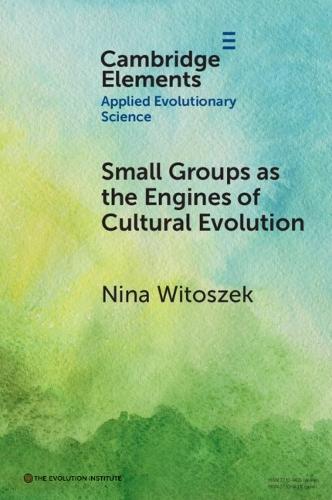
OverviewThis Element explores the evolutionary role of small groups as key actors in shaping human adaptability, resilience, and societal development. Drawing on cultural evolutionary theory and interdisciplinary scholarship, it illuminates the world-making and transformative capacities of small groups as primary agents of cooperative communication, cultural innovation, and transmission. Through historical and contemporary case studies from Europe, Asia, Africa, and the Americas, it examines how small groups function both as catalysts for moral imagination, cooperation, and democratic renewal, and as drivers of destructive ideologies and social disintegration. The study also reassesses the relevance of evolutionary insights for addressing the major crises of the twenty-first century. By critically engaging with foundational thinkers and ongoing debates on democratic and institutional innovation, this Element offers insights for scholars, policymakers, and civic actors committed to empowering communities and countering authoritarian regression. Full Product DetailsAuthor: Nina Witoszek (Civitas University in Warsaw and University of Oslo)Publisher: Cambridge University Press Imprint: Cambridge University Press Weight: 0.117kg ISBN: 9781009732277ISBN 10: 1009732277 Pages: 70 Publication Date: 28 May 2026 Audience: General/trade , General Format: Paperback Publisher's Status: Active Availability: Manufactured on demand We will order this item for you from a manufactured on demand supplier. Table of Contents1. Introduction: making sense of small groups as drivers of cultural evolution; 2. From Alexis de Tocqueville to Robert Putnam: theories of small groups in the social sciences; 3. Unfreezing the past: evolutionary perspectives on small groups; 4. Small integrative groups as catalysts of emancipative transitions; 5. Malignant palingenesis: small disintegrative groups as drivers of evolutionary regressions; 6. The power of the powerless: small groups in the age of polycrisis; 7. Toward a prosocial future: policy implications and research vistas; References.ReviewsAuthor InformationTab Content 6Author Website:Countries AvailableAll regions |
||||