|
|
|||
|
||||
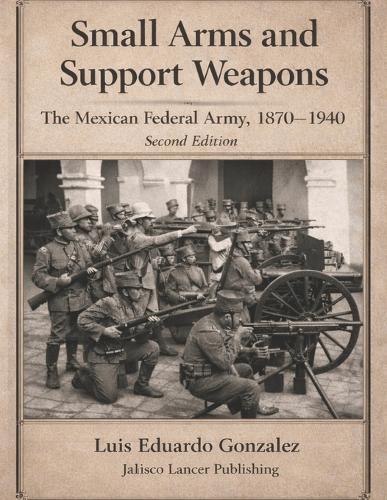
OverviewBetween 1870 and 1940, the evolution of small arms and support weapons within the Mexican Federal Army mirrored the nation's political upheavals, doctrinal experimentation, and uneven industrial capacity. This era marked a progression from 19th-century single-shot and early repeating systems-exemplified by the widespread use of the Remington rolling block-toward standardized bolt-action Mauser rifles that defined infantry armament in the early 20th century. Alongside rifles, the Army fielded a heterogeneous mix of pistols and revolvers, including prominent Colt designs, reflecting both foreign procurement patterns and logistical pragmatism. Support weapons assumed increasing importance during this period, particularly in response to revolutionary warfare and mobile engagements. Early machine guns such as Hotchkiss systems introduced sustained fire at the unit level, while lighter automatic weapons like the Madsen machine gun expanded tactical flexibility and firepower in irregular and conventional operations alike. Collectively, the coexistence of legacy arms and modern automatic weapons underscores the Army's incremental modernization process, shaped by battlefield necessity, international influence, and the persistent challenge of equipping a force engaged in prolonged internal conflict and national reorganization. Full Product DetailsAuthor: Luis Eduardo GonzalezPublisher: Independently Published Imprint: Independently Published Volume: 7 Dimensions: Width: 21.60cm , Height: 2.00cm , Length: 27.90cm Weight: 0.866kg ISBN: 9798252811284Pages: 374 Publication Date: 29 March 2026 Audience: General/trade , General Format: Paperback Publisher's Status: Active Availability: Available To Order We have confirmation that this item is in stock with the supplier. It will be ordered in for you and dispatched immediately. Table of ContentsReviewsAuthor InformationTab Content 6Author Website:Countries AvailableAll regions |
||||