Overview
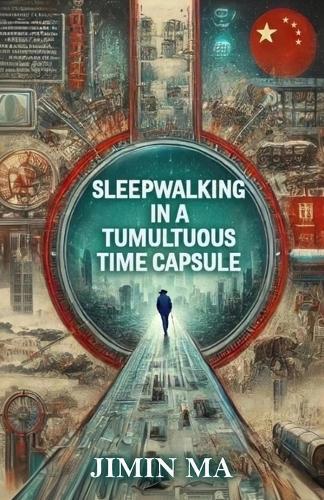
This book explores the tension between progress and identity, blending the intimate with the global; its warm narrative and gentle craft allow real-life dramas to unfold and resonate much like a fictional tale.Through my journey, I invite readers to reflect on the collision of tradition and innovation, as well as the resilience of the human spirit amid chaos. Sleepwalking in a Tumultuous Time Capsule offers a perspective that is both timely and timeless, appealing to readers who appreciate works like Thomas Berger's Little Big Man or Daniel Wallace's Big Fish, both of which were later adapted into films.While the world's great powers of the past experienced periods of prominence followed by long declines, none have managed to reclaim a dominant global status after a precipitous fall, and with the speed and scope demonstrated by modern China, her resurgence defies historical precedent. Once the supremacy of the great powers faded, they were either absorbed into other systems (as with the Romans and Ottomans) or reduced to regional powers (as with the British and French). These declines often became permanent, with no significant resurgence to their former glory, particularly in the era of global industrialization.Another transformation of our time capsule lies in the realm of science and innovation, approaching what feels like its final chapter. Metaphorically, it's like a punctuation period (.) at the end of humanity's life ""sentence.""The march of human progress began in earnest with the First Industrial Revolution in the late 18th century, transitioning from manual labor to mechanized production powered by steam. The Second Industrial Revolution10, in the late 19th century, introduced electricity, chemical processes, and combustion engines, laying the groundwork for modern telecommunications, industrialization, and material sciences. Each stage is built upon the last, propelling us into the Digital Revolution11.The advent of computers, the internet, and artificial intelligence has now brought us to a critical juncture-one where technology is likely to surpass human control. The horizon is filled with quantum computing, biotechnology, and gene editing, pushing us to redefine what it means to be human.
Full Product Details
Author: Jimin Ma
Publisher: Jimin Ma
Imprint: Jimin Ma
Dimensions:
Width: 14.00cm
, Height: 1.40cm
, Length: 21.60cm
Weight: 0.286kg
ISBN: 9798349403682
Pages: 242
Publication Date: 10 June 2025
Audience:
General/trade
,
General
Format: Paperback
Publisher's Status: Active
Availability: Available To Order

We have confirmation that this item is in stock with the supplier. It will be ordered in for you and dispatched immediately.
Reviews
Never before in human history has a civilization risen so far from the depths of decline to become a global powerhouse, and in such a short span. China's resurrection as a global power within a few decades is a historical anomaly, particularly when juxtaposed with the rise and fall of other great empires.This transformation lies in the realm of science and innovation, approaching what feels like its final chapter. Metaphorically, it's like a period (.) at the end of humanity's life ""sentence."" As Einstein famously said, ""You are right in speaking of the moral foundations of science, but you cannot turn around and speak of the scientific foundations of morality.""Albert Einstein once suggested that only two things might be infinite: the universe and human stupidity.The true dramas of my life's journey lie in witnessing the renaissance of one of the world's oldest and once poorest nations, and its mesmerizing advancements in technology. As Luigi Pirandello211 aptly put it, ""Life is full of absurdity, which, strangely enough, does not even need to be plausible since it is, in fact, true.""