Overview
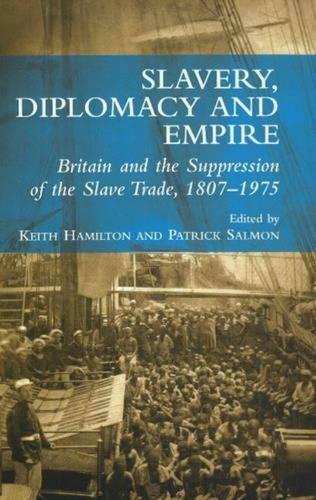
Throughout the nineteenth century British governments engaged in a global campaign against the slave trade. They sought through coercion and diplomacy to suppress the trade on the high seas and in Africa and Asia. But, despite the Royal Navys success in eradicating the transatlantic commerce in captive Africans, the forced migration of labour and other forms of people trafficking persisted. This collection of essays by specialist international, naval and slave trade historians examines the role played by individuals and institutions in the diplomacy of suppression, particularly the personnel of the Slave Trade Department of the Foreign Office and of the Mixed Commission Courts; the changing socio-religious character and methods of anti-slavery activists and the lobbyists; and the problems faced by the navy and those who served with its so-called Preventive Squadron in seeking to combat the trade. Other contributions explore the difficulties confronting British diplomats in their efforts to reconcile their moral objections to slavery and the slave trade with Britains imperial and strategic interests in Ottoman Turkey, Persia and the Arabian Peninsula; British reactions to the continued exploitation of forced labour in Portugals African colonies; and the apparent reluctance of the Colonial Office to attempt any systematic reform of the master and servant legislation in force in Britains Caribbean possessions. The final chapter brings the story through the twentieth century, showing how the interests of the Foreign Office sometimes diverged from those of the Colonial Office, and considering how the changing face of slavery has made it the world-wide issue that it is today.
Full Product Details
Author: Keith Hamilton ,
Patrick Salmon
Publisher: Liverpool University Press
Imprint: Liverpool University Press
Dimensions:
Width: 15.20cm
, Height: 1.50cm
, Length: 22.90cm
Weight: 0.376kg
ISBN: 9781845195731
ISBN 10: 1845195736
Pages: 256
Publication Date: 04 March 2013
Audience:
General/trade
,
General
Format: Paperback
Publisher's Status: Active
Availability: In Print

This item will be ordered in for you from one of our suppliers. Upon receipt, we will promptly dispatch it out to you. For in store availability, please contact us.
Reviews
"""[T]here can be little doubt that throughout the nineteenth century Britain led the international fight against slave trading. . . . As, however, the authors of this volume reveal, there are limits to what diplomacy can achieve, especially when it comes to putting universally accepted principles into universal practice in a world of sovereign states. Despite all the efforts of governments, non-governmental organizations and individual activists, slavery persists."" From the Foreword by The Rt Hon David Miliband, MP ""This volume collects essays on British antislavery strategies and activism, the Foreign and Colonial Offices' policies and activities, and the work of the Mixed Commission Courts. Despite certain limitations and flaws, it will be of interest to scholars of the British slave trade and its suppression. ... After making vast profits from the trade in enslaved Africans, Parliament finally responded to pressure from antislavery organisations and passed the 1807 Act outlawing this trade. As subsequent Acts were passed, traders found new ways to circumvent their restrictions and the trade continued, unabated, notwithstanding treaties with other countries forbidding the commerce in enslaved Africans. It was not until the 1840s that a Royal Naval Squadron with suitable vessels in sufficient numbers was dispatched to the coast of West Africa to capture slaving vessels. Courts, sometimes staffed by Britons alone and other times, in the case of Mixed Commission Courts, staffed by judges from countries that had signed such treaties, were set up to judge the captured slave traders. ... Many contributors to the book allude to the idealism of British officials involved in this process, an emphasis that ignores the profits earned by the judges and the Royal Navy and therefore lends an excessively rosy glow to the history. The unqualified and often incompetent judges were paid from the profits of the sale of slaving vessels: some British officials grew very rich from these captures. These funds were also used as prize money for the Royal Navy. Foreign and Colonial Office officials were also often less than idealistic or disinterested. The political importance of Portugal to Britain necessitated careful and often toothless diplomacy. One example of political pressures preventing any meaningful action can be found in Britain's treatment of the ongoing slavery (as ""forced labour"") in Sao Tom� and Principe, from which British companies imported cocoa, in the period between 1894 and 1910. And how to explain British law officers who sometimes actually questioned the legality of declared policies, such as the statute of 1839 empowering Britain to seize and try Brazilian vessels? Brazil was a colony of Portugal. British funds were used in Brazil to influence governments and abolitionists; if the aim is declared to the humanistic, can we not also accurately label it as bribery? ... This collection's primary limitation is an excessive focus on diplomacy without a sufficiently detailed or sceptical analysis. To detail diplomatic activity without a full political, historical, and commercial context results in a biased picture that fails to explore the many possible reasons and motivations for diplomacy. For example, activities could be undertaken both to prevent conflict and to exert pressure regarding a particular issue. And what was the effect of the diplomacy? Was publicity - that is, presenting a positive picture of Britain abroad - deemed sufficient motivation for diplomacy? Without adequate enforcement - and the essays in this book indicate wholly inadequate enforcement - Acts passed and treaties signed remained pieces of publicity, of diplomacy, and were perhaps used to cover up what was really going on."" --Victorian Studies"
[T]here can be little doubt that throughout the nineteenth century Britain led the international fight against slave trading. . . . As, however, the authors of this volume reveal, there are limits to what diplomacy can achieve, especially when it comes to putting universally accepted principles into universal practice in a world of sovereign states. Despite all the efforts of governments, non-governmental organizations and individual activists, slavery persists. From the Foreword by The Rt Hon David Miliband, MP This volume collects essays on British antislavery strategies and activism, the Foreign and Colonial Offices' policies and activities, and the work of the Mixed Commission Courts. Despite certain limitations and flaws, it will be of interest to scholars of the British slave trade and its suppression. ... After making vast profits from the trade in enslaved Africans, Parliament finally responded to pressure from antislavery organisations and passed the 1807 Act outlawing this trade. As subsequent Acts were passed, traders found new ways to circumvent their restrictions and the trade continued, unabated, notwithstanding treaties with other countries forbidding the commerce in enslaved Africans. It was not until the 1840s that a Royal Naval Squadron with suitable vessels in sufficient numbers was dispatched to the coast of West Africa to capture slaving vessels. Courts, sometimes staffed by Britons alone and other times, in the case of Mixed Commission Courts, staffed by judges from countries that had signed such treaties, were set up to judge the captured slave traders. ... Many contributors to the book allude to the idealism of British officials involved in this process, an emphasis that ignores the profits earned by the judges and the Royal Navy and therefore lends an excessively rosy glow to the history. The unqualified and often incompetent judges were paid from the profits of the sale of slaving vessels: some British officials grew very rich from these
[T]here can be little doubt that throughout the nineteenth century Britain led the international fight against slave trading. . . . As, however, the authors of this volume reveal, there are limits to what diplomacy can achieve, especially when it comes to putting universally accepted principles into universal practice in a world of sovereign states. Despite all the efforts of governments, non-governmental organizations and individual activists, slavery persists. From the Foreword by The Rt Hon David Miliband, MP This volume collects essays on British antislavery strategies and activism, the Foreign and Colonial Offices' policies and activities, and the work of the Mixed Commission Courts. Despite certain limitations and flaws, it will be of interest to scholars of the British slave trade and its suppression. ... After making vast profits from the trade in enslaved Africans, Parliament finally responded to pressure from antislavery organisations and passed the 1807 Act outlawing this trade. As subsequent Acts were passed, traders found new ways to circumvent their restrictions and the trade continued, unabated, notwithstanding treaties with other countries forbidding the commerce in enslaved Africans. It was not until the 1840s that a Royal Naval Squadron with suitable vessels in sufficient numbers was dispatched to the coast of West Africa to capture slaving vessels. Courts, sometimes staffed by Britons alone and other times, in the case of Mixed Commission Courts, staffed by judges from countries that had signed such treaties, were set up to judge the captured slave traders. ... Many contributors to the book allude to the idealism of British officials involved in this process, an emphasis that ignores the profits earned by the judges and the Royal Navy and therefore lends an excessively rosy glow to the history. The unqualified and often incompetent judges were paid from the profits of the sale of slaving vessels: some British officials grew very rich from these captures. These funds were also used as prize money for the Royal Navy. Foreign and Colonial Office officials were also often less than idealistic or disinterested. The political importance of Portugal to Britain necessitated careful and often toothless diplomacy. One example of political pressures preventing any meaningful action can be found in Britain's treatment of the ongoing slavery (as forced labour ) in Sao Tom and Principe, from which British companies imported cocoa, in the period between 1894 and 1910. And how to explain British law officers who sometimes actually questioned the legality of declared policies, such as the statute of 1839 empowering Britain to seize and try Brazilian vessels? Brazil was a colony of Portugal. British funds were used in Brazil to influence governments and abolitionists; if the aim is declared to the humanistic, can we not also accurately label it as bribery? ... This collection's primary limitation is an excessive focus on diplomacy without a sufficiently detailed or sceptical analysis. To detail diplomatic activity without a full political, historical, and commercial context results in a biased picture that fails to explore the many possible reasons and motivations for diplomacy. For example, activities could be undertaken both to prevent conflict and to exert pressure regarding a particular issue. And what was the effect of the diplomacy? Was publicity - that is, presenting a positive picture of Britain abroad - deemed sufficient motivation for diplomacy? Without adequate enforcement - and the essays in this book indicate wholly inadequate enforcement - Acts passed and treaties signed remained pieces of publicity, of diplomacy, and were perhaps used to cover up what was really going on. --Victorian Studies
Author Information
Keith Hamilton is an historian in the Foreign and Commonwealth Office and Senior Editor of the series, Documents on British Policy Overseas. Patrick Salmon is Chief Historian in the Foreign and Commonwealth Office and Professor Emeritus of History in the University of Newcastle.