Overview
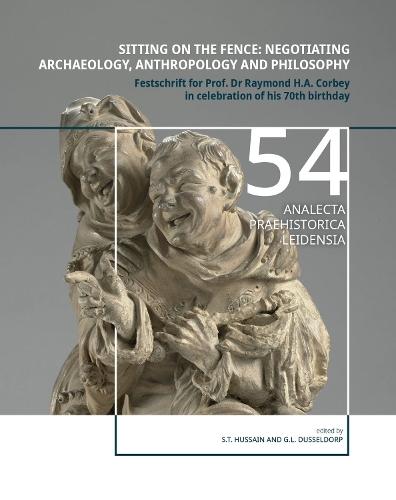
This volume celebrates the academic life of prof. Raymond Corbey. It gathers contributions by diverse scholars and professionals from both science and society to engage with a range of key topics Raymond has grappled with at different stages of his capricious career. The volume not only provides an opinionated portrait of Raymond as an academic persona and sometimes controversial scholarly figure, unpacking key tropes of his intellectual journey such as “sitting on the fence” or the “embedded philosopher” and academic “jester”, it also illustrates the wide-ranging and inspirational nature of his work. As a “boundary-worker” seeking to re-negotiate the limits, opportunities and contributions of various disciplines, the volume reflects Raymond’s critical but always provocative engagement with issues such as theory-building, alien civilizations and cosmic evolution, nonhuman sentience, the politics of species, Darwinism, the Maussian gift, human nature, hand axes, the mark of the intentional, diamonds, the structure of the European Mousterian, the relation between cultural anthropology and archaeology, liminality and the marginal, ritual and religion, cats, primates, language, heritage and the many legacies of Western thinking and acting in the world. Taken together, these individual contributions showcase the immense scope – temporal, geographic and topical – that defines Raymond's unique scholarly venture which continues to animate many of his friends, colleagues and former students. The volume will be of interest for a broad readership in academia and beyond, and for the first time brings poignant essays from philosophy to archaeology into conversation, which comment on, continue, or critique the scholarship Raymond embodies. This scholarship defies the contemporary tendency of hyper-specialization, and sometimes scholasticism, and inspires us to transcend the self-erected boundaries of academic and public cathedrals in our thinking and acting alike.
Full Product Details
Author: Shumon T. Hussain ,
Gerrit L. Dusseldorp
Publisher: Sidestone Press
Imprint: Sidestone Press
ISBN: 9789464263206
ISBN 10: 9464263202
Pages: 222
Publication Date: 15 August 2025
Audience:
Professional and scholarly
,
Professional & Vocational
Format: Paperback
Publisher's Status: Active
Availability: In Print

This item will be ordered in for you from one of our suppliers. Upon receipt, we will promptly dispatch it out to you. For in store availability, please contact us.
Author Information
Shumon T. Hussain is a transdisciplinary archaeologist with a research focus on Late Pleistocene and Early Holocene foragers, especially their stone artefact technologies and animal relationships. He is broadly interested in theoretical innovation and synthesis beyond archaeology as a disciplinary specialism, to better integrate data and perspectives across the humanities and sciences vis-à-vis question of the human deep past, and the epistemology and practice of science. He is currently based at the University of Cologne, Germany, where he is a senior researcher and lecturer at the newly established research hub MESH – Multidisciplinary Environmental Studies in the Humanities. Gerrit L. Dusseldorp is a Stone Age archaeologist focussing on Pleistocene societies in both Europe and Southern Africa. His PhD work on Neanderthal foraging behaviour was co-supervised by Prof. Corbey. He currently directs work on the Middle to Later Stone Age transition Umhlatuzana rockshelter, South Africa. He is also involved in the multidisciplinary project “Liveable Planet” to develop strategies to develop more sustainable human societies. He is currently appointed as associate professor at the Faculty of Archaeology at Leiden University and as senior research fellow at the Paleo-Research Institute at the University of Johannesburg.