Overview
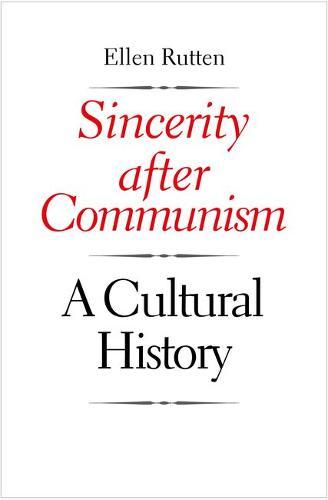
A compelling study of “new sincerity” as a powerful cultural practice, born in perestroika-era Russia, and how it interconnects with global social and media flows The global cultural practice of a “new sincerity” in literature, media, art, design, fashion, film, and architecture grew steadily in the wake of the Soviet collapse. Cultural historian Ellen Rutten traces the rise and proliferation of a new rhetoric of sincere social expression characterized by complex blends of unabashed honesty, playfulness, and irony. Insightful and thought provoking, Rutten’s masterful study of a sweeping cultural trend with roots in late Soviet Russia addresses postsocialist, postmodern, and postdigital questions of selfhood. The author explores how and why a uniquely Russian artistic and social philosophy was shaped by “cultural memory, commodification, and mediatization,” and how, under Putin, “new sincerity” talk merges with transnational pleas to “revive sincerity.” This essential study stands squarely at the intersection of the history of emotions, media studies, and post-Soviet studies to shed light on a new cultural reality—one that is profoundly affecting creative thought, artistic expression, and lifestyle virtually everywhere.
Full Product Details
Author: Ellen Rutten
Publisher: Yale University Press
Imprint: Yale University Press
Dimensions:
Width: 15.60cm
, Height: 2.70cm
, Length: 23.50cm
Weight: 0.644kg
ISBN: 9780300213980
ISBN 10: 0300213980
Pages: 304
Publication Date: 07 March 2017
Audience:
Professional and scholarly
,
College/higher education
,
Professional & Vocational
,
Tertiary & Higher Education
Format: Hardback
Publisher's Status: Active
Availability: Manufactured on demand

We will order this item for you from a manufactured on demand supplier.
Reviews
In her intellectually captivating and at times provocative book, Ellen Rutten analyzes a discourse on sincerity as a self-sufficient narrative, with its inner logic, recognizable signifiers, rhetorics -- in short, poetics. The fact that this daring exploration of the poetics of discourse focuses on contemporary Russian culture, placed into the context of the global debate about sincerity, makes this work especially valuable. The discourse on sincerity emerges as a counter-agent of postmodernism, yet as the reader realizes proves to be inseparable of postmodernism and develops not only in a parallel course with it but also within it. Sincerity after Communism contributes to the conceptualization of Russian and global postmodernism by presenting the discourse on sincerity as the indispensable form of postmodernism's self-critique, as its ferment of growth and the trigger for further renovations. --Mark Lipovetsky, Professor of Russian Studies, University of Colorado-Boulder -- Mark Lipovetsky An enormous amount of thought, hard work, and research went into the tracking of the phenomenon of new sincerity. The topic is an extraordinarily complex one, the work is original and brave, and the scholarship is both sound and meticulous. --Nancy Condee, Director, Global Studies Center, University of Pittsburgh -- Nancy Condee
In her intellectually captivating and at times provocative book, Ellen Rutten analyzes a discourse on sincerity as a self-sufficient narrative, with its inner logic, recognizable signifiers, rhetorics -- in short, poetics. The fact that this daring exploration of the poetics of discourse focuses on contemporary Russian culture, placed into the context of the global debate about sincerity, makes this work especially valuable. The discourse on sincerity emerges as a counter-agent of postmodernism, yet as the reader realizes proves to be inseparable of postmodernism and develops not only in a parallel course with it but also within it. Sincerity after Communism contributes to the conceptualization of Russian and global postmodernism by presenting the discourse on sincerity as the indispensable form of postmodernism's self-critique, as its ferment of growth and the trigger for further renovations. --Mark Lipovetsky, Professor of Russian Studies, University of Colorado-Boulder -- Mark Lipovetsky In post-Communist Russia the requirement of the new sincerity promised the liberation of art and literature from the ideological censorship but at the same time announced a new era of cultural marketing and rising importance of the blogosphere. In her groundbreaking book Rutten analyses this ambiguous role of new sincerity using the recent examples from Russian literature and comparing them with analogous cultural phenomena in English and American literature and theoretical writing. -Boris Groys, Global Distinguished Professor of Russian and Slavic Studies, New York University -- Boris Groys An enormous amount of thought, hard work, and research went into the tracking of the phenomenon of new sincerity. The topic is an extraordinarily complex one, the work is original and brave, and the scholarship is both sound and meticulous. --Nancy Condee, Director, Global Studies Center, University of Pittsburgh -- Nancy Condee
Sincerity After Communism is a major contribution to Russian studies, as well as to cultural studies more broadly. --Eliot Borenstein, New York University -- Eliot Borenstein An enormous amount of thought, hard work, and research went into the tracking of the phenomenon of new sincerity. The topic is an extraordinarily complex one, the work is original and brave, and the scholarship is both sound and meticulous. --Nancy Condee, Director, Global Studies Center, University of Pittsburgh -- Nancy Condee In post-Communist Russia the requirement of the new sincerity promised the liberation of art and literature from the ideological censorship but at the same time announced a new era of cultural marketing and rising importance of the blogosphere. In her groundbreaking book Rutten analyses this ambiguous role of new sincerity using the recent examples from Russian literature and comparing them with analogous cultural phenomena in English and American literature and theoretical writing. -Boris Groys, Global Distinguished Professor of Russian and Slavic Studies, New York University -- Boris Groys In her intellectually captivating and at times provocative book, Ellen Rutten analyzes a discourse on sincerity as a self-sufficient narrative, with its inner logic, recognizable signifiers, rhetorics -- in short, poetics. The fact that this daring exploration of the poetics of discourse focuses on contemporary Russian culture, placed into the context of the global debate about sincerity, makes this work especially valuable. The discourse on sincerity emerges as a counter-agent of postmodernism, yet as the reader realizes proves to be inseparable of postmodernism and develops not only in a parallel course with it but also within it. Sincerity after Communism contributes to the conceptualization of Russian and global postmodernism by presenting the discourse on sincerity as the indispensable form of postmodernism's self-critique, as its ferment of growth and the trigger for further renovations. --Mark Lipovetsky, Professor of Russian Studies, University of Colorado-Boulder -- Mark Lipovetsky
Sincerity After Communism is a major contribution to Russian studies, as well as to cultural studies more broadly. --Eliot Borenstein, New York University -- Eliot Borenstein An enormous amount of thought, hard work, and research went into the tracking of the phenomenon of new sincerity. The topic is an extraordinarily complex one, the work is original and brave, and the scholarship is both sound and meticulous. --Nancy Condee, Director, Global Studies Center, University of Pittsburgh -- Nancy Condee In post-Communist Russia the requirement of the new sincerity promised the liberation of art and literature from the ideological censorship but at the same time announced a new era of cultural marketing and rising importance of the blogosphere. In her groundbreaking book Rutten analyses this ambiguous role of new sincerity using the recent examples from Russian literature and comparing them with analogous cultural phenomena in English and American literature and theoretical writing. -Boris Groys, Global Distinguished Professor of Russian and Slavic Studies, New York University -- Boris Groys In her intellectually captivating and at times provocative book, Ellen Rutten analyzes a discourse on sincerity as a self-sufficient narrative, with its inner logic, recognizable signifiers, rhetorics -- in short, poetics. The fact that this daring exploration of the poetics of discourse focuses on contemporary Russian culture, placed into the context of the global debate about sincerity, makes this work especially valuable. The discourse on sincerity emerges as a counter-agent of postmodernism, yet as the reader realizes proves to be inseparable of postmodernism and develops not only in a parallel course with it but also within it. Sincerity after Communism contributes to the conceptualization of Russian and global postmodernism by presenting the discourse on sincerity as the indispensable form of postmodernism's self-critique, as its ferment of growth and the trigger for further renovations. -Mark Lipovetsky, Professor of Russian Studies, University of Colorado-Boulder -- Mark Lipovetsky In her intellectually captivating and at times provocative book, Ellen Rutten analyzes a discourse on sincerity as a self-sufficient narrative, with its inner logic, recognizable signifiers, rhetorics -- in short, poetics. The fact that this daring exploration of the poetics of discourse focuses on contemporary Russian culture, placed into the context of the global debate about sincerity, makes this work especially valuable. The discourse on sincerity emerges as a counter-agent of postmodernism, yet as the reader realizes proves to be inseparable of postmodernism and develops not only in a parallel course with it but also within it. Sincerity after Communism contributes to the conceptualization of Russian and global postmodernism by presenting the discourse on sincerity as the indispensable form of postmodernism's self-critique, as its ferment of growth and the trigger for further renovations. --Mark Lipovetsky, Professor of Russian Studies, University of Colorado-Boulder In post-Communist Russia the requirement of the new sincerity promised the liberation of art and literature from the ideological censorship but at the same time announced a new era of cultural marketing and rising importance of the blogosphere. In her groundbreaking book Rutten analyses this ambiguous role of new sincerity using the recent examples from Russian literature and comparing them with analogous cultural phenomena in English and American literature and theoretical writing. -Boris Groys, Global Distinguished Professor of Russian and Slavic Studies, New York University An enormous amount of thought, hard work, and research went into the tracking of the phenomenon of new sincerity. The topic is an extraordinarily complex one, the work is original and brave, and the scholarship is both sound and meticulous. --Nancy Condee, Director, Global Studies Center, University of Pittsburgh Sincerity After Communism is a major contribution to Russian studies, as well as to cultural studies more broadly. --Eliot Borenstein, New York University
Author Information
Ellen Rutten is a professor of literature and chair of the Slavonic Department at the University of Amsterdam, where she researches post‑Soviet and global contemporary culture, literature and art, design, social media, and memory.