Overview
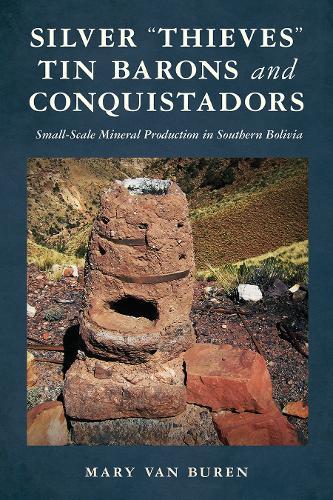
The Spanish conquest of Peru was motivated by the quest for precious metals, a search that resulted in the discovery of massive silver deposits in what is now southern Bolivia. The enormous flow of specie into the world economy is usually attributed to the Spanish imposition of a forced labor system on the Indigenous population as well as the introduction of European technology. This narrative omits the role played by thousands of independent miners, often working illegally, who at different points in history generated up to 30 percent of the silver produced in the region. In this work, Mary Van Buren examines the long-term history of these workers, the technology they used, and their relationship to successive large-scale mining. The methods of historian Bertell Ollman, particularly a dialectical approach and “doing history backwards,” are used to examine small-scale mineral production in Porco, Bolivia. The research is based on nine seasons of archaeological fieldwork and historical research, with a particular focus on labor and technology. Van Buren argues that artisanal mineral production must be understood in relation to large-scale mining rather than as a traditional practice and that the Bolivian case is a culturally specific instantiation of a broader economic phenomenon that began under colonial regimes.
Full Product Details
Author: Mary Van Buren
Publisher: University of Arizona Press
Imprint: University of Arizona Press
ISBN: 9780816556670
ISBN 10: 0816556679
Pages: 264
Publication Date: 31 December 2025
Audience:
Professional and scholarly
,
Professional & Vocational
Format: Paperback
Publisher's Status: Forthcoming
Availability: Not yet available

This item is yet to be released. You can pre-order this item and we will dispatch it to you upon its release.
Reviews
""Mining does not just disrupt, it destroys. Yet despite this fact we see the miner's relentless quest for dignity, the refiner's instinct of workmanship, the resurgent ideal of reciprocity. Miners are not criminals, but at base, mining is an unforgivable, criminal act, a theft, one that we all rely on every day. Or that is one possible takeaway from this important, richly documented, and uniquely structured book.""--Kris Lane, Technology and Culture ""In this book, Van Buren uses archaeological and historical research to trace the long history of mining in Bolivia, an industry that for centuries has occupied a critical space in reinforcing colonial practices and structural inequalities in Andean nations. Her approach moves from easy equations of past and present institutions, readings that reinforce a colonizer and colonized dichotomy, or narratives predicated on the erasure of Indigenous practices. Instead, Van Buren tells a complex and intertwined story of mining at different scales, highlighting that the persistence of Indigenous technologies and values can be traced through the materiality of the institutions that sought to eradicate them.""--Carla Hernández Garavito, University of California, Santa Cruz
Author Information
Mary Van Buren is a professor in the Department of Anthropology and Geography at Colorado State University. Her research focuses on the historical archaeology of the southern Andes.