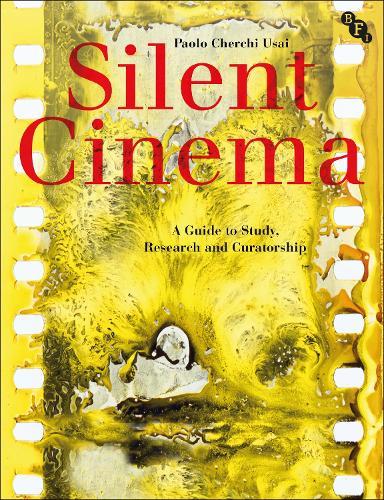
Full Product Details
Author: Paolo Cherchi Usai (George Eastman Museum, Rochester, USA)
Publisher: Bloomsbury Publishing PLC
Imprint: BFI Publishing
Edition: 3rd edition
Dimensions:
Width: 19.60cm
, Height: 2.40cm
, Length: 24.80cm
Weight: 1.100kg
ISBN: 9781844575299
ISBN 10: 1844575292
Pages: 448
Publication Date: 04 April 2019
Audience:
College/higher education
,
Tertiary & Higher Education
Format: Hardback
Publisher's Status: Active
Availability: To order

Stock availability from the supplier is unknown. We will order it for you and ship this item to you once it is received by us.
Reviews
Silent Cinema is a must-have book for everyone interested in cinema of all eras … If you’re not a silent fan, this giddy ride can make you one. * Observations on Film Art * Paolo Cherchi Usai, renowned film curator, filmmaker, and programmer, has created an engaging saga of the diverse ways in which people have made films—and rescued them for others to enjoy. Silent Cinema is a rare feast of information, ideas, and insights. Using Méliès’ moon-shot as a recurring example, Cherchi Usai surveys everything from perforations and acting performances to musical accompaniment, each treated with clarity and wit. Particularly valuable are the nuanced accounts of how digital technology has transformed our attitudes toward silent films. The reader comes away with a deeper appreciation of the patient curators who have dedicated themselves to making ‘old cinema’ perpetually new. * David Bordwell, Jacques Ledoux Professor Emeritus of Film Studies, University of Wisconsin–Madison, USA * For decades, Paolo Cherchi Usai’s book had been a definitive and inspiring guide to silent cinema—and stays so today when this formerly out-of-the-way and obscure field of study has entered the realm of mainstream entertainment. It stays so because Cherchi Usai has kept it up to date—by way of questioning rather than going along with contemporary dogmas and illusions. Silent film was a performative rather than a technologically reproductive medium; digitization of the photochemical is a deadly remedy instead of a hoped-for panacea. No stone unturned. I fully endorse Paolo Cherchi Usai’s daringly cautionary guide. * Yuri Tsivian, William Colvin Emeritus Professor at the University of Chicago, USA * This third edition of an already classic introduction to cinema’s ‘silent’ era may be the best of all. Instead of merely updating his pioneering text, Paolo Cherchi Usai has re-thought what the early period means to us today, and addresses the ‘digital natives’ who will be its main readers. It’s hard to imagine a more enthusiastic or authoritative introduction. * Ian Christie , Anniversary Professor of Film and Media History, Birkbeck, University of London, UK *
Paolo Cherchi Usai, renowned film curator, filmmaker, and programmer, has created an engaging saga of the diverse ways in which people have made films-and rescued them for others to enjoy. Silent Cinema is a rare feast of information, ideas, and insights. Using Melies' moon-shot as a recurring example, Cherchi Usai surveys everything from perforations and acting performances to musical accompaniment, each treated with clarity and wit. Particularly valuable are the nuanced accounts of how digital technology has transformed our attitudes toward silent films. The reader comes away with a deeper appreciation of the patient curators who have dedicated themselves to making 'old cinema' perpetually new. * David Bordwell, Jacques Ledoux Professor Emeritus of Film Studies, University of Wisconsin-Madison, USA * For decades, Paolo Cherchi Usai's book had been a definitive and inspiring guide to silent cinema-and stays so today when this formerly out-of-the-way and obscure field of study has entered the realm of mainstream entertainment. It stays so because Cherchi Usai has kept it up to date-by way of questioning rather than going along with contemporary dogmas and illusions. Silent film was a performative rather than a technologically reproductive medium; digitization of the photochemical is a deadly remedy instead of a hoped-for panacea. No stone unturned. I fully endorse Paolo Cherchi Usai's daringly cautionary guide. * Yuri Tsivian, William Colvin Emeritus Professor at the University of Chicago, USA * This third edition of an already classic introduction to cinema's 'silent' era may be the best of all. Instead of merely updating his pioneering text, Paolo Cherchi Usai has re-thought what the early period means to us today, and addresses the 'digital natives' who will be its main readers. It's hard to imagine a more enthusiastic or authoritative introduction. * Ian Christie , Anniversary Professor of Film and Media History, Birkbeck, University of London, UK *
Paolo Cherchi Usai, renowned film curator, filmmaker, and programmer, has created an engaging saga of the diverse ways in which people have made films-and rescued them for others to enjoy. Silent Cinema is a rare feast of information, ideas, and insights. Using Melies' moon-shot as a recurring example, Cherchi Usai surveys everything from perforations and acting performances to musical accompaniment, each treated with clarity and wit. Particularly valuable are the nuanced accounts of how digital technology has transformed our attitudes toward silent films. The reader comes away with a deeper appreciation of the patient curators who have dedicated themselves to making `old cinema' perpetually new. * David Bordwell, Jacques Ledoux Professor Emeritus of Film Studies, University of Wisconsin-Madison, USA * For decades, Paolo Cherchi Usai's book had been a definitive and inspiring guide to silent cinema-and stays so today when this formerly out-of-the-way and obscure field of study has entered the realm of mainstream entertainment. It stays so because Cherchi Usai has kept it up to date-by way of questioning rather than going along with contemporary dogmas and illusions. Silent film was a performative rather than a technologically reproductive medium; digitization of the photochemical is a deadly remedy instead of a hoped-for panacea. No stone unturned. I fully endorse Paolo Cherchi Usai's daringly cautionary guide. * Yuri Tsivian, William Colvin Emeritus Professor at the University of Chicago, USA * This third edition of an already classic introduction to cinema's `silent' era may be the best of all. Instead of merely updating his pioneering text, Paolo Cherchi Usai has re-thought what the early period means to us today, and addresses the `digital natives' who will be its main readers. It's hard to imagine a more enthusiastic or authoritative introduction. * Ian Christie , Anniversary Professor of Film and Media History, Birkbeck, University of London, UK *
Author Information
Paolo Cherchi Usai is Senior Curator of the Motion Picture Department of George Eastman House, founder of the L. Jeffrey Selznick School of Film Preservation and of the annual Pordenone Silent Film Festival. Cherchi Usai's publications include The Griffith Project, co-published by the British Film Institute and Le Giornate del Cinema Muto, in 12 volumes (1996-2012); The Death of Cinema: History, Cultural Memory, and the Digital Dark Age (2001); and Burning Passions: An Introduction to the Study of Silent Cinema (1994).