|
|
|||
|
||||
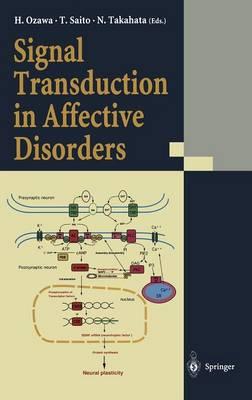
OverviewThe past decade has seen remarkable advances in understanding the workings of the brain, and an essential part of that progress has resulted from important discoveries about signal transduction. Research in neuroscience has led to new insights into the relation between affective disorders and neural signaling. That research has not been widely integrated with clinical psychiatry, however, and until now a comprehensive presentation of research findings has not been published. This monograph brings together in one volume a review of the work of Japanese scientists in the fields of basic and clinical neuroscience. The papers compiled here are from the Symposium on Affective Disorders and Neuronal Signal Transduction and from the 11th Sapporo Neuroscience Meeting, both held in Sapporo, Japan, in 1996. The result is a comprehensive view of signal transduction in the brain and the pathophysiology of affective disorders as well as a review of the mechanisms of antidepressants. Full Product DetailsAuthor: Hiroki Ozawa , Toshikazu Saito , Naohiko TakahataPublisher: Springer Verlag, Japan Imprint: Springer Verlag, Japan Edition: 1998 ed. Dimensions: Width: 15.60cm , Height: 1.10cm , Length: 23.00cm Weight: 0.454kg ISBN: 9784431702108ISBN 10: 4431702105 Pages: 146 Publication Date: 01 January 1998 Audience: Professional and scholarly , Professional & Vocational Format: Hardback Publisher's Status: Active Availability: Out of stock The supplier is temporarily out of stock of this item. It will be ordered for you on backorder and shipped when it becomes available. Table of ContentsEffects of Antidepressants on Transmembrane Signaling.- Role of G Proteins in Signal Transduction.- Effects of Chronic Administration of Antidepressants on Signal Transduction.- The Phospholipase C System in Affective Disorders.- Targets for Antidepressants.- References.- Serotonergic and Noradrenergic Neuromodulation in the Hippocampus and the Mechanism of Action of Antidepressants.- Pathophysiological Model of Affective Disorders and Monoaminergic Function.- Development of Novel Antidepressants and Their Pharmacological Profiles.- Modulation of Serotonergic Neurotransmission by SSRIs.- Convergence of Serotonergic and Noradrenergic Neurotransmission: Neurodynailiic Viewpoint.- Conclusion.- References.- Serotonin-2A Receptor Function in Affective Disorders.- Role of 5-HT2A Receptor Function in Etiology of Affective Disorders.- Postmortem Brain Studies.- Neuroendocrine Studies.- Platelet Studies.- Calcium Mobilization and Affective Diosorders.- 5-HTMnduced Calcium Response in Nonmedicated Depressed Patients.- Change in 5-HT-Induced Calcium Response During Drug Treatment.- Other Calcium Studies.- Mechanism of 5-HT2A Receptor Hyperfunction.- Conclusion.- References.- Immunological Aspects of Mood Disorders: Interaction Between Cytokines and Intracellular Calcium Signaling.- Immunological Dysfunction in Mood Disorders.- Stress and Immunological Function.- Alteration of Immune Function and Mood.- Cytokines and Nitric Oxide Pathway.- Cytokines and Calcium Function.- Conclusion.- References.- The Role of G Proteins in the Pathophysiology and Treatment of Affective Disorders.- Changes in the Biological Hypotheses for the Pathophysiology of Manic-Depressive Illness.- Antidepressants and G Proteins.- Receptors and G Proteins.- G Protein and Adenylyl Cyclase.- Direct Action on G Protein.- Receptor Reconciliation Theory of the Action of Antidepressants.- Postmortem Study in Affective Disorders.- Postnatal Developmental Changes of G Protein in Human Brains.- Imbalance Hypothesis of G-Protein Function in Affective Disorders.- Selectivity of Treatment Drugs in the Light of Signal Transduction.- Conclusion.- References.- Protein Phosphorylation System in the Mechanism of Action of Antidepressants.- Protein Phosphorylation Systems.- cAMP-Dependent Phosphorylation System.- Effect of Antidepressant Treatment on the PKA System.- Effect of Antidepressant Treatment on Phosphorylation of Substrate Proteins for PKA.- Effect of Antidepressant Treatment on Phosphorylation of MAP2.- Effect of Antidepressant Treatment on Microtubule Assembly.- Conclusion.- References.- Stress and BDNF Signal Transduction: Implications for Stress-Related Psychiatric Disorders.- Physiological Functions of BDNF.- Regulation of BDNF Expression.- BDNF Signal Transduction Cascade.- Stress-Induced Hippocampal Cellular Damage.- Stress and BDNF.- Co-Administration of a Phosphodiesterase Inhibitor and the Response to Selective Norepinephrine Reuptake Inhibitor.- Conclusion.- References.- Postreceptor Signal-Transduction Systems as Potential Targets of Lithium.- Lithium and Postreceptor Signal-Transduction.- Phosphoinositide Metabolism.- Adenylyl Cyclase System.- G Proteins.- Protein Phosphorylation and Gene Expression.- Conclusion.- References.- Participation of Cytoskeletal Elements in Neuronal Signal Transduction: New Insight into the Molecular Basis of Antidepressant Action.- Tubulin, G Proteins, and Adenylyl Cyclase Signal Transduction.- Tubulin - G Protein Interaction.- Cytoskeletal Elements and Antidepressant Drugs.- References.- In Vivo Investigations of Signal-Transduction Systems in Affective Disorders by Magnetic Resonance Spectroscopy.- Which Metabolites in Signal-Transduction Systems Can Be Measured by MRS?.- Neurotransmitters.- Second Messengers.- Phosphoinositide System.- Other Phospholipases.- Cyclic AMP.- Clinical Applications of MRS to the Study of Signal-Transduction Systems.- Phosphoinositide System.- Choline.- Lipids.- Conclusion.- References.ReviewsAuthor InformationTab Content 6Author Website:Countries AvailableAll regions |
||||