Overview
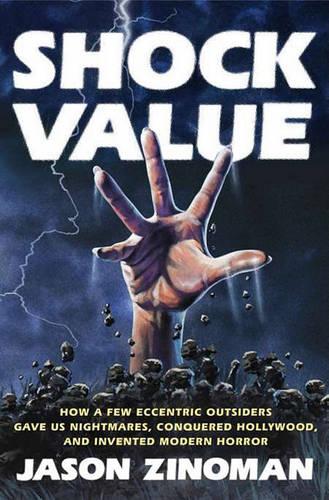
An enormously entertaining account of the gifted and eccentric directors who gave us the golden age of modern horror in the 1970s, bringing a new brand of politics and gritty realism to the genre. Much has been written about the storied New Hollywood of the 1970s, but at the same time as Martin Scorsese, Steven Spielberg, and Francis Ford Coppola were making their first classic movies, a parallel universe of directors gave birth to the modern horror film-aggressive, raw, and utterly original. Based on unprecedented access to the genre's major players, ""The New York Times""'s critic Jason Zinoman's ""Shock Value"" delivers the first definitive account of horror's golden age. By the late 1960s, horror was stuck in the past, confined mostly to drive-in theaters and exploitation houses, and shunned by critics. ""Shock Value"" tells the unlikely story of how the much-disparaged horror film became an ambitious art form while also conquering the multiplex. Directors such as Wes Craven, Roman Polanski, John Carpenter, and Brian De Palma- counterculture types operating largely outside the confines of Hollywood-revolutionized the genre, exploding taboos and bringing a gritty aesthetic, confrontational style, and political edge to horror. Zinoman recounts how these directors produced such classics as ""Rosemary's Baby, Carrie, The Texas Chainsaw Massacre,"" and ""Halloween,"" creating a template for horror that has been imitated relentlessly but whose originality has rarely been matched. This new kind of film dispensed with the old vampires and werewolves and instead assaulted audiences with portraits of serial killers, the dark side of suburbia, and a brand of nihilistic violence that had never been seen before. ""Shock Value"" tells the improbable stories behind the making of these movies, which were often directed by obsessive and insecure young men working on shoestring budgets, were funded by sketchy investors, and starred porn stars. But once ""The Exorcist"" became the highest grossing film in America, Hollywood took notice. The classic horror films of the 1970s have now spawned a billion-dollar industry, but they have also penetrated deep into the American consciousness. Quite literally, Zinoman reveals, these movies have taught us what to be afraid of. Drawing on interviews with hundreds of the most important artists in horror, ""Shock Value"" is an enthralling and personality-driven account of an overlooked but hugely influential golden age in American film.
Full Product Details
Author: Jason Zinoman
Publisher: Penguin Putnam Inc
Imprint: The Penguin Press
Dimensions:
Width: 16.20cm
, Height: 2.60cm
, Length: 24.30cm
Weight: 0.540kg
ISBN: 9781594203022
ISBN 10: 1594203024
Pages: 288
Publication Date: 07 July 2011
Audience:
General/trade
,
General
Format: Hardback
Publisher's Status: Remaindered
Availability: In Print

Limited stock is available. It will be ordered for you and shipped pending supplier's limited stock.
Reviews
In Shock Value, New York Times scribe Zinoman attempts to give these directors the same treatment Peter Biskind gave Spielberg, Scorsese, and Coppola in his magnificent Easy Riders, Raging Bulls. In other words, he explains the filmmakers importance while never letting his cultural theorizing get in the way of a good production yarn or intriguing biographical nugget. Zinoman succeeds monstrously well in this mission there is plenty here to make the most knowledgeable of horror fans head explode. Entertainment Weekly Not only is Shock Value enormously well-researched the book is based on the author's interviews with almost all of the movement's principals it's also an unbelievable amount of fun. Zinoman writes with a strong narrative drive and a contagious charisma. NPR.org [ Shock Value ] fuses biography (in this case, of such masters of horror as Wes Craven, John Carpenter and Tobe Hooper), production history, movie criticism and social commentary into a unified and irresistible story...You should finish a great movie book with your dander up and your Netflix queue swelled by at least a dozen titles. And on that count, Shock Value more than delivers. Laura Miller, Salon.com Zinoman...concentrates on a handful of films and filmmakers that brought the corpse back to life during the late 1960s and early 70s, and he convincingly conveys what made movies like 'Night of the Living Dead' and 'The Texas Chainsaw Massacre' different from anything that had come before: more unsettling, purer in their sense of dread...where Shock Value excels is in its primary research, the stories of how the seminal shockers of this era came to be. The New York Times Impassioned, articulate prose Zinoman is such a literate, intelligent defender of the cause that his arguments are well worth reading. Even better, he has a knack for finding the characters in behind-the-scenes theatrics. The Onion Though in-depth character bios and discussion of the changing movie business are fascinating, Zinoman s shot-by-shot descriptions of groundbreaking films and championing of understated gems are even more impressive. This volume reveals just enough to satiate horror aficionados, while offering plenty for curious fright-seekers who want to explore the formative years of what s become a billion-dollar industry. Publishers Weekly starred review Insightful, revealing, and thoroughly engrossing Thoroughly researched, Shock Value is chock full of nuggets of insider details that even the most hardcore horror fan might not know. About.com Between 1968 and 1976, all the films that redefined the horror movie were made: Night of the Living Dead, Rosemary s Baby, The Exorcist, Dark Star, The Last House on the Left, The Texas Chain Saw Massacre, and Carrie. In fluent reporter s prose lent urgency by personal fascination, Zinoman tells how their creators made those paradigm-shifters There are many good-bad and downright bad books about horror movies. Zinoman gives us the rare all-good book about them. Roy Olson, Booklist May well prove to be the most indispensable overview of modern horror. Rue Morgue Magazine Brisk, accessible and incisive...walks a tonal tightrope of entertaining prose and sobering deliberation. Fangoria Magazine Five Stars. The most effortlessly enchanting treatise on the American horror film since Stephen King s Danse Macabre. ... die-hard horror fans will worship it. BloodyDisgusting.com
If you think you already know everything you need to know about the '70s revolution in American film, think again, and take a trip to the (very) dark side with Jason Zinoman's astute, informed and vivid exploration of how the horror movie came back from the dead and walked among us once again. The decade that stretched from Rosemary's Baby to Alien saw the creation of just about every template for modern horror, and Zinoman brings a fan's appreciation, a critic's tough-mindedness and a reporter's zeal to his group portrait of the movies that reshaped a generation's sleepless nights. Aficionados should love it, and skeptics may find themselves giving this always disreputable genre the fair shake that, as this smart and savvy book makes clear, it deserves. <br> -Mark Harris, author of Pictures at a Revolution <br> Vivid and fascinating, Shock Value chronicles a period that feels both close and, sadly, remote. It is the fresco of a brave, uncompromising era in genre filmmaking.
Author Information
Jason Zinoman is a critic and reporter covering theater for ""The New York Times."" He has also regularly written about movies, television, books and sports for publications such as ""Vanity Fair,"" ""The Guardian ""and ""Slate."" He was the chief theater critic for ""Time Out New York ""before leaving to write the On Stage and Off column in the Weekend section of the ""Times."" He grew up in Washington D.C. and now lives in Brooklyn.