Overview
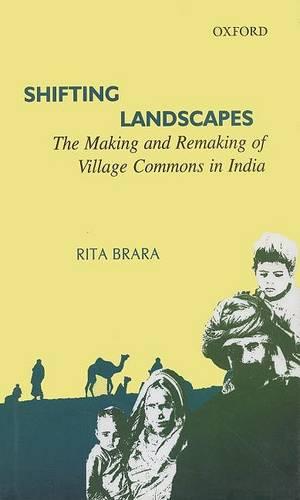
This book is a high quality ethnographic study in the classical sense. The fundamental question that Brara asks in her book is whether there are other ways of thinking about the village than in terms of its distinctions of caste, vertical ties created by patron-client relations of congregation of private propertied peasantry. She offers the idea that villagers can and do represent and act on matters of common concern but that this does not commit us to thinking of village communities a s harmonious wholes. Brara explores the institutional arrangements (commons) as a concept to analyse ideas of common good, the emergence of public action and property rights in Indian villages. She breaks from existing paradigms of agency as located in peasant movements and subaltern history. She contends that these are imagined always in relation to an elite and instead offers the idea of the shifting frames within which sociality operates at the village level.
Full Product Details
Author: Rita Brara
Publisher: OUP India
Imprint: OUP India
Dimensions:
Width: 14.00cm
, Height: 2.50cm
, Length: 21.50cm
Weight: 0.556kg
ISBN: 9780195673012
ISBN 10: 0195673018
Pages: 320
Publication Date: 26 January 2006
Audience:
Professional and scholarly
,
Professional & Vocational
Format: Hardback
Publisher's Status: Out of Print
Availability: Out of stock

Reviews
This richly detailed study adds to the increasingly important body of work in South Asian historiography that maps the continuities in the strategies, practices, and effects of statecraft of both the colonial and post-colonial period. ...While doing so, the book manages to make a significant advance on the existing literature on agrarian environments. --Contemporary Sociology This richly detailed study adds to the increasingly important body of work in South Asian historiography that maps the continuities in the strategies, practices, and effects of statecraft of both the colonial and post-colonial period. ...While doing so, the book manages to make a significant advance on the existing literature on agrarian environments. --Contemporary Sociology This richly detailed study adds to the increasingly important body of work in South Asian historiography that maps the continuities in the strategies, practices, and effects of statecraft of both the colonial and post-colonial period. ...While doing so, the book manages to make a significant advance on the existing literature on agrarian environments. --Contemporary Sociology This richly detailed study adds to the increasingly important body of work in South Asian historiography that maps the continuities in the strategies, practices, and effects of statecraft of both the colonial and post-colonial period. ...While doing so, the book manages to make a significant advance on the existing literature on agrarian environments. --Contemporary Sociology
This richly detailed study adds to the increasingly important body of work in South Asian historiography that maps the continuities in the strategies, practices, and effects of statecraft of both the colonial and post-colonial period. ...While doing so, the book manages to make a significant advance on the existing literature on agrarian environments. --Contemporary Sociology<br>