Overview
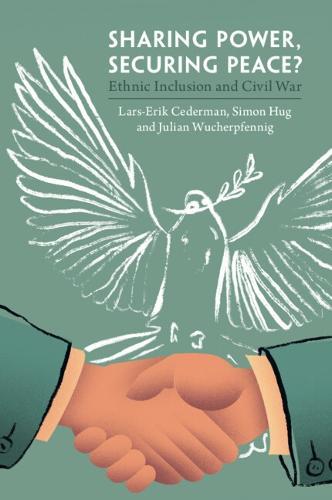
Does power sharing bring peace? Policymakers around the world seem to think so. Yet, while there are many successful examples of power sharing in multi-ethnic states, such as Switzerland, South Africa and Indonesia, other instances show that such arrangements offer no guarantee against violent conflict, including Rwanda, Yugoslavia, Zimbabwe and South Sudan. Given this mixed record, it is not surprising that scholars disagree as to whether power sharing actually reduces conflict. Based on systematic data and innovative methods, this book comes to a mostly positive conclusion by focusing on practices rather than merely formal institutions, studying power sharing's preventive effect, analyzing how power sharing is invoked in anticipation of conflict, and by showing that territorial power sharing can be effective if combined with inclusion at the center. The authors' findings demonstrate that power sharing is usually the best option to reduce and prevent civil conflict in divided states.
Full Product Details
Author: Lars-Erik Cederman ,
Simon Hug ,
Julian Wucherpfennig
Publisher: Cambridge University Press
Imprint: Cambridge University Press
Edition: New edition
Dimensions:
Width: 15.10cm
, Height: 1.80cm
, Length: 22.80cm
Weight: 0.480kg
ISBN: 9781108406550
ISBN 10: 1108406556
Pages: 332
Publication Date: 07 July 2022
Audience:
Professional and scholarly
,
Professional & Vocational
Format: Paperback
Publisher's Status: Active
Availability: Manufactured on demand

We will order this item for you from a manufactured on demand supplier.
Reviews
'This masterful analysis shows conclusively that much of the skepticism regarding power-sharing is misguided. While power-sharing does not offer any firm guarantees for peace and stability, inclusive practices at the center and territorially shared power clearly remain the most promising tools for solving and preventing serious ethnic and other conflicts. The book's conclusions are highly valuable for scholars and even more so for practical policy-makers.' Arend Lijphart, Research Professor Emeritus of Political Science, University of California, San Diego 'Theoretically and methodologically ambitious, impressively global in scope, and covering both conflict and non-conflict contexts, Cederman, Hug and Wucherpfennig convincingly argue that power-sharing builds peace in multi-ethnic states. These findings should guide scholars and practitioners in how to promote inclusive governance.' Elisabeth King, co-author of Diversity, Violence, and Recognition: How Recognizing Ethnic Identity Promotes Peace 'As Fred Iklé's classic book states in its title, 'Every War Must End,' and most civil wars end with some form of power-sharing, formal or informal, between the state and its challengers. This landmark book by Cederman, Hug, and Wucherpfennig offers valuable new insights and a wealth of new empirical results on whether sharing power helps secure the peace in the aftermath of ethnic war. With attention to the usual methodological pitfalls in the analysis of observational data and conceptual innovations throughout their book, Cederman, Hug, and Wucherpfennig provide a strong argument for the peace-inducing effects of the practice - rather than merely the promise - of sharing political power, while also noting that power-sharing institutions are no panacea. This extraordinary book charts the way forward in the quantitative study of civil war.' Nicholas Sambanis, Professor of Political Science, The University of Pennsylvania 'There is little doubt that Cederman, Hug, and Wucherpfennig have written a landmark study in the power-sharing and conflict literature. The sheer volume of empirical evidence in the book is astonishing and sets the standard for cross-national research on civil war. Scholars, students, and policy makers interested in ethnic politics, war, and conflict resolution will all benefit from reading it - especially those inclined to skepticism of power sharing (as this reviewer was). I would also recommend the book to anybody working with observational evidence subject to selection issues, as the authors provide an exemplary model for rigorous and transparent analysis of cross-national data.' Philip A. Martin, Perspectives on Politics
'This masterful analysis shows conclusively that much of the skepticism regarding power-sharing is misguided. While power-sharing does not offer any firm guarantees for peace and stability, inclusive practices at the center and territorially shared power clearly remain the most promising tools for solving and preventing serious ethnic and other conflicts. The book's conclusions are highly valuable for scholars and even more so for practical policy-makers.' Arend Lijphart, Research Professor Emeritus of Political Science, University of California, San Diego 'Theoretically and methodologically ambitious, impressively global in scope, and covering both conflict and non-conflict contexts, Cederman, Hug and Wucherpfennig convincingly argue that power-sharing builds peace in multi-ethnic states. These findings should guide scholars and practitioners in how to promote inclusive governance.' Elisabeth King, co-author of Diversity, Violence, and Recognition: How Recognizing Ethnic Identity Promotes Peace 'As Fred Ikle's classic book states in its title, 'Every War Must End,' and most civil wars end with some form of power-sharing, formal or informal, between the state and its challengers. This landmark book by Cederman, Hug, and Wucherpfennig offers valuable new insights and a wealth of new empirical results on whether sharing power helps secure the peace in the aftermath of ethnic war. With attention to the usual methodological pitfalls in the analysis of observational data and conceptual innovations throughout their book, Cederman, Hug, and Wucherpfennig provide a strong argument for the peace-inducing effects of the practice - rather than merely the promise - of sharing political power, while also noting that power-sharing institutions are no panacea. This extraordinary book charts the way forward in the quantitative study of civil war.' Nicholas Sambanis, Professor of Political Science, The University of Pennsylvania
Author Information
Lars-Erik Cederman is Professor of International Conflict Research, ETH Zürich. He is the author of Emergent Actors in World Politics: How States and Nations Develop and Dissolve (1997), co-author of Inequality, Grievances and Civil War (Cambridge, 2013, with Kristian Skrede Gleditsch and Halvard Buhaug), as well as numerous articles in scientific journals. Simon Hug is Professor in the Department of Political Science and International Relations, University of Geneva. His research has been published in leading outlets, including the American Political Science Review, American Journal of Political Science, Legislative Studies Quarterly, and the Journal of Conflict Resolution. Julian Wucherpfennig is Professor of International Affairs and Security at the Centre for International Security, Hertie School, Berlin. His research has been published in leading outlets, including the American Political Science Review, American Journal of Political Science, Journal of Politics, International Organization and World Politics.