Overview
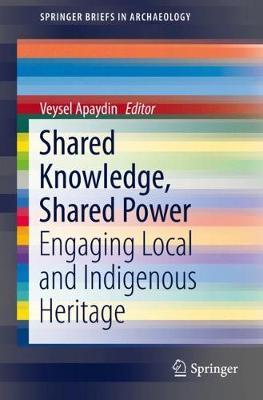
This volume brings together the experiences and research of heritage practitioners, archaeologists, and educators to explore new and unique approaches to heritage studies. The last several decades have witnessed a rapid increase in the field of cultural heritage studies worldwide. This increase in the number of studies and in interest by the public as well as academics has effected substantial change in the understanding of heritage and approaches to heritage studies. This change has also impacted the perception of communities, how to study and protect the physical residues of heritage, and how to share the knowledge of heritage. It has brought the issue of who has knowledge and how the value of heritage can be shared more effectively with communities who then ascribe meaning and value to heritage materials. Heritage studies, until a few decades ago, exclusively studied the material culture of the past as part of elitist approaches that completely neglected communities’rights to knowledge of their own heritage. Additionally, heritage practitioners and archaeologists neither shared this knowledge nor engaged with communities about their heritage. Communities were also mostly deprived from contributing to heritage and archaeological studies. This kind of top-down approach was quite common in many parts of the world. But recent studies and research in the field have shown the importance of including the public in projects, and that sharing the knowledge produced through heritage studies and archaeological works is significant for the protection and preservation of heritage materials; it has finally been understood that excluding the public from heritage is not ethical. This publication presents a wide array of case studies with different approaches and methods from many parts of the world to answer these questions.
Full Product Details
Author: Veysel Apaydin
Publisher: Springer International Publishing AG
Imprint: Springer International Publishing AG
Edition: 1st ed. 2018
Weight: 2.526kg
ISBN: 9783319686516
ISBN 10: 3319686518
Pages: 148
Publication Date: 28 November 2017
Audience:
College/higher education
,
Professional and scholarly
,
Tertiary & Higher Education
,
Professional & Vocational
Format: Paperback
Publisher's Status: Active
Availability: Manufactured on demand

We will order this item for you from a manufactured on demand supplier.
Author Information
Veysel Apaydin completed his Ph.D. in Cultural Heritage at the Institute of Archaeology, University College London. His doctoral thesis (2015) evaluated political use of the past, identity construction and the relationship between heritage, education and attitudes towards heritage, taking modern-day Turkey as its case study. He worked as an archaeologist and heritage consultant in the United Kingdom and Turkey, and has taught social research methods, heritage and museum studies and public archaeology courses at the Institute of Archaeology, University College London. He is also currently editor of the heritage section of the Journal of Open Archaeology.