Full Product Details
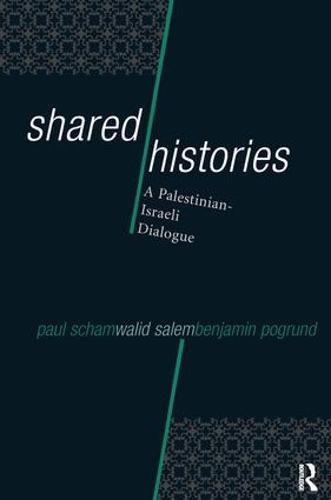
Author: Paul Scham ,
Walid Salem ,
Benjamin Pogrund
Publisher: Left Coast Press Inc
Imprint: Left Coast Press Inc
Dimensions:
Width: 15.20cm
, Height: 2.30cm
, Length: 22.90cm
Weight: 0.780kg
ISBN: 9781598740127
ISBN 10: 1598740121
Pages: 310
Publication Date: 15 October 2005
Audience:
College/higher education
,
Professional and scholarly
,
Tertiary & Higher Education
,
Professional & Vocational
Format: Hardback
Publisher's Status: Active
Availability: In Print

This item will be ordered in for you from one of our suppliers. Upon receipt, we will promptly dispatch it out to you. For in store availability, please contact us.
Reviews
.unpredictable and surprising.the book abounds with subversive historical gems that contradict narrative dogma. This series of erudite exchanges sets the entry bar high in terms of background knowledge. It is an insider's portrait of the complex, nuanced and alternately complementary and skeptical relationships of a group of Israeli and Palestinian professional historians to each other's work, and to the dominant narratives in whose shadow they operate. Through it all, the participants move seamlessly between critiquing and defending their own and each other's narratives. No one hews blindly to orthodox interpretations, and it is difficult to predict opinions based on identity; these historians think for themselves and say unexpected things. Shared Histories is a rare example of Israeli/Palestinian conflict discussion-among academics, no less-that defies the laws of negative interdependence. The quality and collegiality of the discussions is particularly notable, given that they occurred during the most lethal period of Israeli/Palestinian violence since 1948. If Israeli and Palestinian intellectuals can engage in dialogue of this level, at that time, it should be possible to debate these issues substantially and productively in academic forums further removed from the conflict. -Israel Studies Forum As the peace process in Palestine lurches along and cynicism grows about the possibility of ever having a just, lasting and comprehensive settlement, it is refreshing to come across Shared Histories, which is both hard-nosed and hopeful. .The juxtaposition of solid scholarship with all-too-human debate on issues underpinning the question of the Right of Return and other hot topics makes reading Shared Histories especially relevant. -Palestine-Israel Journal 13, 2 The reader, whether steeped in the history of the conflict of simply looking for some explanation of why it is so intractable, sees through the eyes of the protagonists themselves why mutual understanding is so difficult and, in the process, begins to understand why the two sides have not been able to come to terms. -Edy Kaufman, University of Maryland and Hebrew University of Jerusalem (emeritus) This rare book will help inform Israelis and Palestinians of each other's narrative, as well as identify points of agreements, which will contribute to diminishing the misunderstanding and hostility that have undermined peace efforts and reconciliation. -Philip J. Mattar, Editor, The Encyclopedia of the Palestinians, and former Senior Fellow at the United States Institute of Peace The participants move seamlessly between critiquing and defending their own and each other's narratives. No one hews blindly to orthodox interpretations, and it is difficult to predict opinions based on identity; these historians think for themselves and say unexpected things. Shared Histories is a rare example of Israeli-Palestinian conflict discussion-among academics, no less-that defies the laws of negative interdependence. The quality and collegiality of the discussions is particularly notable, given that they occurred during the most lethal period of Israeli-Palestinian violence since 1948. If Israeli and Palestinian intellectuals could engage in dialogue of this level, at that time, it should be possible to debate these issues substantially and productively in academic forums further removed from the conflict... [it] reads like Talmud: the shorthand minutes of alternately esoteric, fractious, and profound exchanges between learned authorities, fragmented, marked by subtlety, allusion and sophisticated hints of sub-textual dynamics. - Israel Studies Forum
'This book provides a view of the Israeli-Palestinian conflict unavailable in any other single volume...The reader, whether steeped in the history of the conflict or simply looking for some explanation of why it is so intractable, sees through the eyes of the protagonists themselves why mutual understanding is so difficult and, in the process, begins to understand why the two sides have not been able to come to terms.' Edy Kaufman, University of Maryland & Hebrew University of Jerusalem 'The participants move seamlessly between critiquing and defending their own and each other's narratives. No one hews blindly to orthodox interpretations, and it is difficult to predict opinions based on identity; these historians think for themselves and say unexpected things. Shared Histories is a rare example of Israeli-Palestinian conflict discussion-among academics, no less-that defies the laws of negative interdependence. The quality and collegiality of the discussions is particularly notable, given that they occurred during the most lethal period of Israeli-Palestinian violence since 1948. If Israeli and Palestinian intellectuals could engage in dialogue of this level, at that time, it should be possible to debate these issues substantially and productively in academic forums further removed from the conflict... [it] reads like Talmud: the shorthand minutes of alternately esoteric, fractious, and profound exchanges between learned authorities, fragmented, marked by subtlety, allusion and sophisticated hints of sub-textual dynamics.' Israel Studies Forum
Author Information
Paul Scham, formerly a lawyer, is currently a Scholar at the Middle East Institute in Washington, D.C., and a Visiting Scholar at George Washington University. Walid Salem is a journalist and director of the Palestinian Center for the Dissemination of Democracy and Community Development (Panorama), Jerusalem. Benjamin Pogrund is a journalist and director of the Yakar Center for Social Concern, Jerusalem.