Overview
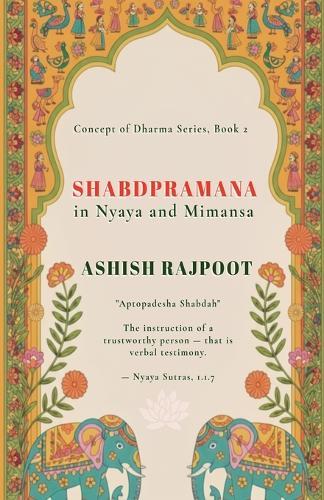
This work emerges from a sustained engagement with one of the most profound questions in Indian epistemology: how do we come to know through the medium of words? The question of Shabda Pramana - verbal testimony as a valid means of knowledge - has occupied the greatest minds of the Indian philosophical tradition for over two millennia, yet its relevance to contemporary debates in epistemology, philosophy of language, and hermeneutics remains remarkably vital. My interest in comparing the Nyaya and Mimamsa perspectives on verbal testimony began during my doctoral research at the University of Lucknow, where I was struck by the sophistication with which these two schools approached questions that Western philosophy has only recently come to appreciate fully. The Naiyayikas and Mimamsakas did not merely debate whether words convey knowledge; they developed comprehensive philosophical systems addressing the nature of language, the structure of meaning, the conditions of semantic comprehension, and the metaphysical foundations of linguistic authority. The Nyaya school, with its emphasis on the trustworthy speaker (Apta) and its rigorous criteria for testimonial reliability, offers what we might today call a naturalistic or agent-based account of testimonial knowledge. For the Naiyayikas, words convey knowledge because and insofar as they come from speakers whose cognitive and moral reliability has been established. The Mimamsa school, by contrast, grounds testimonial authority not in any speaker but in the eternal, authorless nature of language itself - a position of breathtaking philosophical audacity that continues to challenge and stimulate. I have written this study with several audiences in mind. For scholars of Indian philosophy, I hope to provide a clear and systematic comparison of these two traditions that moves beyond mere description to genuine philosophical analysis. For philosophers working in epistemology and philosophy of language in the analytic tradition, I hope to demonstrate that the Indian discussions of testimony, meaning, and linguistic authority anticipate and enrich contemporary debates in ways that deserve serious engagement. Throughout this work, I have drawn extensively on the foundational texts - the Nyaya Sutras of Gautama, the Mimamsa Sutras of Jaimini, and their major commentaries - as well as on the rich secondary literature in both traditional Sanskrit scholarship and contemporary philosophy of religion and language. The works of B.K. Matilal, J.N. Mohanty, Jonardon Ganeri, and Francis Clooney have been particularly indispensable guides through this complex philosophical terrain. I am grateful to the faculty and colleagues at the University of Lucknow and Indira Gandhi National Open University whose discussions, criticisms, and encouragement have shaped this work at every stage. Any errors that remain are entirely my own. It is my sincere hope that this study contributes to the ongoing dialogue between Indian and Western philosophical traditions, demonstrating that the deepest questions about knowledge, language, and authority are truly universal concerns that all philosophical traditions illuminate in their distinctive ways. Ashish Rajpoot India 5th March, 2026
Full Product Details
Author: Ashish Rajpoot
Publisher: Prasharan Svm
Imprint: Prasharan Svm
Dimensions:
Width: 14.00cm
, Height: 0.50cm
, Length: 21.60cm
Weight: 0.100kg
ISBN: 9798233527098
Pages: 76
Publication Date: 05 March 2026
Audience:
General/trade
,
General
Format: Paperback
Publisher's Status: Active
Availability: Available To Order

We have confirmation that this item is in stock with the supplier. It will be ordered in for you and dispatched immediately.
Author Information
Ashish Rajpoot is a versatile Indian author, researcher, and historian known for his extensive work in various genres. Here are some key highlights from his literary journey: Genres 1. Fiction: Novels, short stories, and poetry that explore themes of love, life, and social issues. 2. Non-Fiction: Historical studies, research papers, and essays that delve into India's rich cultural heritage. 3. Self-Help: Inspirational and motivational books that offer practical advice and guidance. 4. History and Archaeology: In-depth studies on India's historical past, numismatics, and archaeological findings. Notable Works 1. Quomodo: A thought-provoking fiction work that showcases his storytelling skills. 2. Kushana Coinage: A historical study on numismatics that highlights his expertise in the field. 3. Ye Duniyaa Hai Sab Hota Hai: A philosophical exploration of life's complexities and mysteries. Literary Contributions 1. Founder of YuvaanSabha (Yuva Vani Nagri Sabha): A literature publishing community that promotes emerging writers, fosters a love for reading and writing, and preserves India's cultural heritage. Recognition and Impact Ashish Rajpoot's work has been widely appreciated for its unique blend of historical research, philosophical insights, and creative storytelling. His contributions to Indian literature and history have made a significant impact on readers and scholars alike. Connect with Ashish Rajpoot Follow him on social media or check out his publications to explore his literary world and stay updated on his latest works.