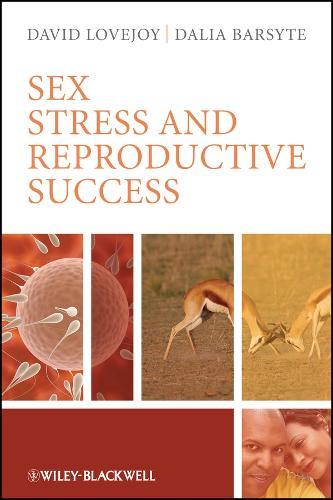
Sex, Stress and Reproductive Success

Author:   David A. Lovejoy (University of Toronto, Canada) ,  Dalia Barsyte (Protagenic Therapeutics Canada Inc.) ,  David D. Lovejoy
Publisher:   John Wiley and Sons Ltd
ISBN:  

9780470979600


Pages:   204
Publication Date:   31 March 2011
Format:   Digital
Availability:   Out of stock   Availability explained


Our Price $395.87 Quantity:  
Add to Cart

Share |

Sex, Stress and Reproductive Success


Overview

Any events that challenge the survival of living organisms may be classified as stressors. These stressors could include, for example, lack of food, increased population pressure, predatory pressure, climatic events or in the case of humans, loss of a loved one, lack of financial security or uncertainty in the future. Although most physiological systems are affected by stress, those systems that regulate reproductive physiology and behaviour are the most sensitive. All multicellular organisms show a stress related effect on reproduction, although the more complex organisms, such as mammals, have the most complex effects. The objective of this book is to provide a comparative analysis of the mechanisms by which stress regulates reproduction exploring the evolution of stress perceiving systems from the simplest organisms to humans. Taking an integrated approach, utilising a genes-to-environment overview, the book examines the stressors that occur at all levels of organisation. These theories are used to examine and explain human and animal reproductive behaviour and physiology under stressful conditions providing a well-written, concise introduction to this important subject.

Full Product Details

Author:   David A. Lovejoy (University of Toronto, Canada) ,  Dalia Barsyte (Protagenic Therapeutics Canada Inc.) ,  David D. Lovejoy
Publisher:   John Wiley and Sons Ltd
Imprint:   Wiley-Blackwell
Dimensions:   Width: 17.40cm , Height: 1.60cm , Length: 25.10cm
Weight:   0.592kg
ISBN:  

9780470979600


ISBN 10:   0470979607
Pages:   204
Publication Date:   31 March 2011
Audience:   College/higher education ,  Postgraduate, Research & Scholarly
Format:   Digital
Publisher's Status:   Unknown
Availability:   Out of stock   Availability explained

Table of Contents

About the Authors. Preface. Acknowledgements. 1 Reproduction Under Safe Conditions. 1.1 Introduction. 1.2 What is Stress? 1.3 Reproduction and Stress. 1.4 Reproduction, Stress and Energy are Intrinsically Interrelated. 1.5 Interaction of Stress and Reproduction. 1.6 Evolution of Germ Cells. 1.7 Variations in Reproductive Strategies. 1.8 Evolution and Complexity. 1.9 Summary. 2 Reproductive Physiology: How is it All Supposed to Work Together? 2.1 Introduction. 2.2 Neurological Regulation of Reproduction. 2.3 Reproductive Cycles. 2.4 Neurological Regulation of Reproduction. 2.5 Summary. 3 The Physiology of Stress: Why Too Much Stress Stops Us from Doing Things We Enjoy. 3.1 Introduction. 3.2 Anxiety and the Evolution of the Stress Response. 3.3 Stress, Anxiety and the Nervous System. 3.4 Autonomic Nervous System. 3.5 Complementary Physiological Systems. 3.6 Integration of HPA/I Components with Other Systems. 3.7 Prolactin and Stress. 3.8 Summary. 4 Reproductive and Stress-associated Behaviours: Integrating Differing Needs. 4.1 Introduction. 4.2 An Integrated Approach to Behavioural Modulation. 4.3 Stress and the Modulation of Learning and Behaviour. 4.4 Summary. 5 Animals Under Strain: Life is Stressful. 5.1 Introduction. 5.2 Changing Environments and Stress Bottlenecks. 5.3 Environmental Stress-Inducing Factors. 5.4 Migration as Part of a Life Strategy. 5.5 Reproductive Strategy and Habitat Erosion. 5.6 Human Industrial Waste as an Evolutionarily Novel Stressor. 5.7 Anticipation of Stress. 5.8 Nutrition, Toxins and Infertility. 5.9 Summary. 6 Saving Women and Children First: Protecting the Progeny. 6.1 Introduction. 6.2 Sexual Selection Costs and Stress. 6.3 Male Male Interaction Stressors. 6.4 Summary. 7 Epigenetic Factors in Reproductive Success: Don't Ignore Your Parents. 7.1 Introduction. 7.2 Epigenetic Actions of Stress on Reproduction. 7.3 Environmental Effects on Epigenetic Regulation. 7.4 Summary. 8 Species in Captivity: Stress in Agriculture and Aquaculture and Effects on Habitat Loss. 8.1 Introduction. 8.2 Management of Wild Species. 8.3 Species in Captivity. 8.4 Summary. 9 A Cellular Understanding of Stress and its Relationship to Reproduction. 9.1 Introduction. 9.2 Evolution of Cell Stress, Defence and Reproduction. 9.3 Understanding Cell Death. 9.4 Cell Death and Differentiation in Reproductive Development. 9.5 Molecular Mechanisms of Cell Death. 9.6 Heat Shock Proteins in stress and reproduction. 9.7 Relationship between Cell Division and Stress Pathways. 9.8 Summary. 10 Stress and Reproduction in Human Society: Implications for the Twenty-First Century. 10.1 Introduction. 10.2 The Unique Biology of Humans. 10.3 Stressors in Human Society. 10.4 Living with Stress. 10.5 Summary. Bibliography. Glossary. Index.

Reviews

A well-written, accessible contribution in an emerging and growing field of study. Summing Up: Recommended. Academic readers, all levels. (Choice, 1 September 2011)


""A well-written, accessible contribution in an emerging and growing field of study. Summing Up: Recommended. Academic readers, all levels."" (Choice, 1 September 2011)


Author Information

David Lovejoy Professor of Neuroendocrinology, Department of Cell and Systems Biology, University of Toronto Dalia Barsyte Protagenic Therapeutics Canada Inc., Canada

Tab Content 6

Author Website:  

Countries Available

All regions
Latest Reading Guide

NOV RG 20252


Shopping Cart
Your cart is empty
Shopping cart
Mailing List