Overview
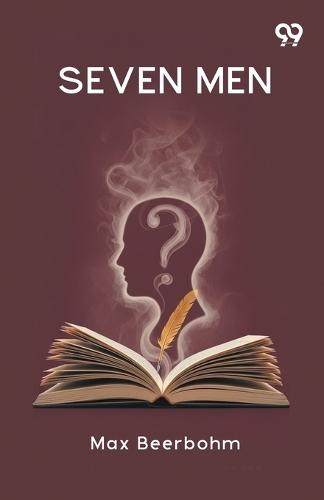
Seven men is a collection of stories that examines ambition, artistic struggle, and the human desire for recognition through wit, satire, and subtle supernatural elements. The opening story introduces a poet whose aspirations for literary fame remain unfulfilled, highlighting the gap between personal ambition and public acknowledgment. Through the perspective of a contemporary narrator, readers observe the poet's naivete, awkwardness, and obsessive longing for validation, which underscore the vulnerabilities inherent in the creative life. His interactions with peers reveal both eccentricity and the social pressures faced by artists striving for relevance in a competitive cultural landscape. The narrative develops a Faustian motif as he pursues a supernatural means to ascertain the enduring impact of his work, reflecting broader questions about legacy, mortality, and the pursuit of meaning in art. Through humor, irony, and imaginative storytelling, the collection probes the tensions between talent, recognition, and self-perception, offering a meditation on the precariousness of ambition and the often bittersweet nature of human creativity. The work blends literary reflection with philosophical insight, creating a nuanced portrait of the artistic condition.
Full Product Details
Author: Max Beerbohm
Publisher: Double 9 Books
Imprint: Double 9 Books
Dimensions:
Width: 14.00cm
, Height: 0.50cm
, Length: 21.60cm
Weight: 0.113kg
ISBN: 9789374833308
ISBN 10: 9374833301
Pages: 88
Publication Date: 01 November 2025
Audience:
General/trade
,
General
Format: Paperback
Publisher's Status: Active
Availability: Available To Order

We have confirmation that this item is in stock with the supplier. It will be ordered in for you and dispatched immediately.
Author Information
Sir Henry Maximilian Beerbohm (1872-1956), known as Max Beerbohm, was an influential English essayist, parodist, and caricaturist. He gained prominence in the 1890s for his wit, humor, and satirical commentary on society. Beerbohm worked as the drama critic for The Saturday Review from 1898 to 1910 before relocating to Rapallo, Italy, where he lived for the remainder of his life. He also became known for his occasional radio broadcasts in his later years. Beerbohm's most famous work is Zuleika Dobson (1911), a satirical novel about university life. He was also renowned for his caricatures of public figures, which are held in many major collections. Born in London, Beerbohm was the youngest of nine children. His father, Julius Ewald Edward Beerbohm, was a Lithuanian-born grain merchant, and his mother, Eliza Draper Beerbohm, came from a distinguished family. Among his other notable works are The Works of Max Beerbohm (1896), A Defence of Cosmetics (1896), The Happy Hypocrite (1897), More (1899), and Yet Again (1909). His legacy endures as one of the leading satirists of his era.