Overview
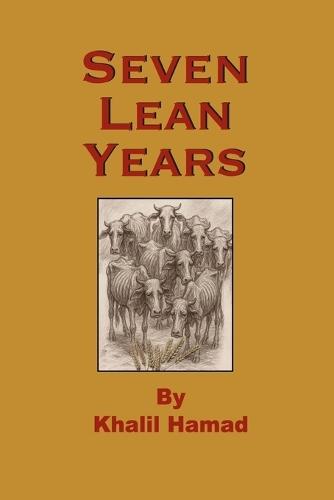
Seven Lean Years Part Two of the Memoir of Khalil Hamad This memoir offers a meticulous account of movement, dialogue, and suffering-so precise that it feels as though the writer is determined to etch every detail of his harrowing escape from Kuwait after the invasion of 1990 into memory. Khalil Hamad, as revealed in these seven lean years, possesses a memory so vivid they evoke the legendary precision of Mohammad Hassanein Heikal, who could resurrect forgotten details from the depths of time. The narrative voice here is intimate, almost conversational, though woven with Quranic phrases, colloquial proverbs, and echoes of prophetic tales. These barren years of Khalil's life are a trove of knowledge, offering readers both pleasure and insight. Khalil writes these pages in the ink of poverty, repeating the word-poverty-like a refrain, alongside the raw emotions and compromises that drive him to accept backbreaking labor, the meagerest wages, anything to break free from its grip. Yet to brighten the mood for himself and for the reader who might be influenced as they empathize with the author's plight or recall their own struggles with hunger and helplessness, Khalil leavens his tale with dark humor (like describing the midnight trek to the outhouse with the whispered prayers and imagined monsters lurking in the dark), or perseverance to overcome poverty, or laboring without despair. Through it all, Khalil's spirit remains restless-yearning for change, for a chance to serve society. He paves roads, builds schools, and extends kindness to his fellow breadwinners, those with modest education, when poverty forced him into the aluminum factory. What strikes me most, however, was the pettiness and envy that plagued Khalil among his coworkers-whether at the village council or telecom office-led them to conspire against him, burdening him with tasks like cleaning the paint furnace. Through this, Khalil unveils a deeper societal illness: the corrosive jealousy and selfishness festering within the laboring class, stemming from ignorance and frustration. Such toxic behaviors call for urgent scrutiny; only by addressing their roots can we foster a fairer world built on empathy and mutual respect. ""Style is the man himself."" This axiom perfectly encapsulates Khalil Hamad's prose. His writing mirrors his character and a singular intellect: a masterful interplay of humor and sorrow, enriched by vivid details and deliberate repetition, all woven with narrative tension. He hints at a crisis, then pauses-""This, I will unravel in its proper place""-drawing the reader ever deeper. In short, this is a memoir rich in truth and meaning. Its message is clear: windows of joy open just when we've resigned ourselves to darkness. My profound gratitude to Khalil Hamad-whose story moved me deeply, whose suffering I shared intimately, and whose experience, a vital thread in the tapestry of his people's struggle, I witnessed firsthand. Esteemed Critic and Writer, Ibrahim Joher
Full Product Details
Author: Khalil Moh'd Hamad ,
Fatima Abdel Kazim ,
Fayeq Oweis
Publisher: Inner Child Press, Ltd.
Imprint: Inner Child Press, Ltd.
Dimensions:
Width: 15.20cm
, Height: 1.50cm
, Length: 22.90cm
Weight: 0.367kg
ISBN: 9781961498716
ISBN 10: 1961498715
Pages: 274
Publication Date: 15 August 2025
Audience:
General/trade
,
General
Format: Paperback
Publisher's Status: Active
Availability: Available To Order

We have confirmation that this item is in stock with the supplier. It will be ordered in for you and dispatched immediately.