Overview
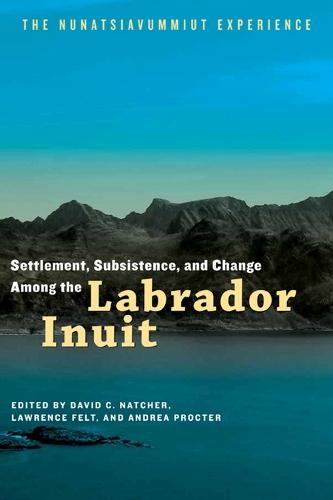
On January 22, 2005, Inuit from communities throughout northern and central Labrador gathered in a school gymnasium to witness the signing of the Labrador Inuit Land Claim Agreement and to celebrate the long-awaited creation of their own regional self-government of Nunatsiavut. This historic agreement defined the Labrador Inuit settlement area, beneficiary enrollment criteria, and Inuit governance and ownership rights. Settlement, Subsistence, and Change Among the Labrador Inuit explores how these boundaries – around land, around people, and around the right to self-govern – reflect the complex history of the region, of Labrador Inuit identity, and the role of migration and settlement patterns in regional politics. Comprised of twelve essays, the book examines the way of life and cultural survival of this unique indigenous population, including: household structure, social economy of wildfood production, forced relocations and land claims, subsistence and settlement patterns, and contemporary issues around climate change, urban planning, and self-government.
Full Product Details
Author: David C. Natcher ,
Lawrence Felt ,
Andrea Procter
Publisher: University of Manitoba Press
Imprint: University of Manitoba Press
Volume: 2
Dimensions:
Width: 14.90cm
, Height: 2.20cm
, Length: 22.60cm
Weight: 0.446kg
ISBN: 9780887557316
ISBN 10: 0887557317
Pages: 264
Publication Date: 31 May 2012
Audience:
Professional and scholarly
,
Professional & Vocational
Format: Paperback
Publisher's Status: Active
Availability: Manufactured on demand

We will order this item for you from a manufactured on demand supplier.
Reviews
Informed and informative, and a body of impressive seminal scholarship, _Settlement, Subsistence and Change Among the Labrador Inuit_ is very highly recommended for academic library Canadian History and Aboriginal History reference collections and supplemental reading lists. There have been a lot of changes in the political and social face of Labrador in the last 30 years or so. Settlement, Subsistence and Change among the Labrador Inuit is an anthology of essays edited by David Natcher, Larry Felt and Andrea Proctor, intended to track that change, particularly that brought about by the land claims negotiations that resulted in the establishment of the Nunatsiavut government. As described by the editors, the book represents a multidisciplinary exposition of Inuit history, culture and economy from the perspective of anthropology, archeology, sociology, biology, environmental studies and geography. Twenty six authors contributed to the 12 sections in this book, so I felt safe, for once, in starting at the middle and working my way randomly though the various parts of the collection. I received the book just as I returned from a visit to Sandwich Bay, where I stayed a gunshot away from the historical Inuit Metis house at North River, so I began with the essay by archeologists Lisa Rankin, Matthew Beaudoin and Natalie Brewster: Southern Exposure: The Inuit of Sandwich Bay, Labrador. Although it is known that Inuit travelled and traded with Europeans in Southern Labrador from the 1500s on, there has long been an argument about whether those Inuit who made contact with Basque, French and English fishers were seasonally in the area to trade or pilfer from the Europeans, or if they were longtime sojourners or permanent nomadic harvesters in the region. What is certain is that by the 18th century, most Southern Inuit had been forced by violence or lured by trade northward to the Moravian mission areas. Sandwich Bay is considered to be outside the core Inuit settlement zone, which limits the rights the Metis of that area have with regard to land claims. However, if they were traditional users of the area prior to Europeanization, they have every reason to expect their aboriginal rights within the area to be honoured. According to the authors of this essay, recent archeological findings strongly suggest that Inuit and Inuit Metis families had a significant presence in the Sandwich Bay region since the early seventeenth century and prior to European settlement. Such findings could have significant ramifications for people who now refer to themselves as NunatuKavummiut with regard to the hunting, fishing and mineral rights of the area. In other words, when Todd Russellcomplains that the Newfoundland and Labrador government is trampling the aboriginal rights of the people he represents, he's right -- they are. It's interesting that... [read more at http: //www.thetelegram.com/Opinion/Columnists/2013-09-06/article-3375655/Essays-give-important-informationon-life, -history-of-Labrador-Inuit/1]--Robin McGrath The Telegram
There have been a lot of changes in the political and social face of Labrador in the last 30 years or so. Settlement, Subsistence and Change among the Labrador Inuit is an anthology of essays edited by David Natcher, Larry Felt and Andrea Proctor, intended to track that change, particularly that brought about by the land claims negotiations that resulted in the establishment of the Nunatsiavut government. As described by the editors, the book represents a multidisciplinary exposition of Inuit history, culture and economy from the perspective of anthropology, archeology, sociology, biology, environmental studies and geography. Twenty six authors contributed to the 12 sections in this book, so I felt safe, for once, in starting at the middle and working my way randomly though the various parts of the collection. I received the book just as I returned from a visit to Sandwich Bay, where I stayed a gunshot away from the historical Inuit M tis house at North River, so I began with the essay by archeologists Lisa Rankin, Matthew Beaudoin and Natalie Brewster: Southern Exposure: The Inuit of Sandwich Bay, Labrador. Although it is known that Inuit travelled and traded with Europeans in Southern Labrador from the 1500s on, there has long been an argument about whether those Inuit who made contact with Basque, French and English fishers were seasonally in the area to trade or pilfer from the Europeans, or if they were longtime sojourners or permanent nomadic harvesters in the region. What is certain is that by the 18th century, most Southern Inuit had been forced by violence or lured by trade northward to the Moravian mission areas. Sandwich Bay is considered to be outside the core Inuit settlement zone, which limits the rights the M tis of that area have with regard to land claims. However, if they were traditional users of the area prior to Europeanization, they have every reason to expect their aboriginal rights within the area to be honoured. According to the authors of this essay, recent archeological findings strongly suggest that Inuit and Inuit M tis families had a significant presence in the Sandwich Bay region since the early seventeenth century and prior to European settlement. Such findings could have significant ramifications for people who now refer to themselves as NunatuKavummiut with regard to the hunting, fishing and mineral rights of the area. In other words, when Todd Russellcomplains that the Newfoundland and Labrador government is trampling the aboriginal rights of the people he represents, he's right -- they are. It's interesting that... [read more at http: //www.thetelegram.com/Opinion/Columnists/2013-09-06/article-3375655/Essays-give-important-informationon-life, -history-of-Labrador-Inuit/1]--Robin McGrath The Telegram Informed and informative, and a body of impressive seminal scholarship, _Settlement, Subsistence and Change Among the Labrador Inuit_ is very highly recommended for academic library Canadian History and Aboriginal History reference collections and supplemental reading lists.
Informed and informative, and a body of impressive seminal scholarship, _Settlement, Subsistence and Change Among the Labrador Inuit_ is very highly recommended for academic library Canadian History and Aboriginal History reference collections and supplemental reading lists. There have been a lot of changes in the political and social face of Labrador in the last 30 years or so. Settlement, Subsistence and Change among the Labrador Inuit is an anthology of essays edited by David Natcher, Larry Felt and Andrea Proctor, intended to track that change, particularly that brought about by the land claims negotiations that resulted in the establishment of the Nunatsiavut government. As described by the editors, the book represents a multidisciplinary exposition of Inuit history, culture and economy from the perspective of anthropology, archeology, sociology, biology, environmental studies and geography. Twenty six authors contributed to the 12 sections in this book, so I felt safe, for once, in starting at the middle and working my way randomly though the various parts of the collection. I received the book just as I returned from a visit to Sandwich Bay, where I stayed a gunshot away from the historical Inuit M tis house at North River, so I began with the essay by archeologists Lisa Rankin, Matthew Beaudoin and Natalie Brewster: Southern Exposure: The Inuit of Sandwich Bay, Labrador. Although it is known that Inuit travelled and traded with Europeans in Southern Labrador from the 1500s on, there has long been an argument about whether those Inuit who made contact with Basque, French and English fishers were seasonally in the area to trade or pilfer from the Europeans, or if they were longtime sojourners or permanent nomadic harvesters in the region. What is certain is that by the 18th century, most Southern Inuit had been forced by violence or lured by trade northward to the Moravian mission areas. Sandwich Bay is considered to be outside the core Inuit settlement zone, which limits the rights the M tis of that area have with regard to land claims. However, if they were traditional users of the area prior to Europeanization, they have every reason to expect their aboriginal rights within the area to be honoured. According to the authors of this essay, recent archeological findings strongly suggest that Inuit and Inuit M tis families had a significant presence in the Sandwich Bay region since the early seventeenth century and prior to European settlement. Such findings could have significant ramifications for people who now refer to themselves as NunatuKavummiut with regard to the hunting, fishing and mineral rights of the area. In other words, when Todd Russellcomplains that the Newfoundland and Labrador government is trampling the aboriginal rights of the people he represents, he's right -- they are. It's interesting that... [read more at http: //www.thetelegram.com/Opinion/Columnists/2013-09-06/article-3375655/Essays-give-important-informationon-life, -history-of-Labrador-Inuit/1]--Robin McGrath The Telegram
Author Information
David C. Natcher is an associate professor and Director of the Indigenous Land Management Institute at the University of Saskatchewan, Canada. Lawrence Felt is an associate professor in the Department of Sociology at Memorial University of Newfoundland, Canada. Andrea Procter is an instructor in the Department of Anthropology at Memorial University of Newfoundland, Canada and a postdoctoral fellow at the Labrador Institute.