Overview
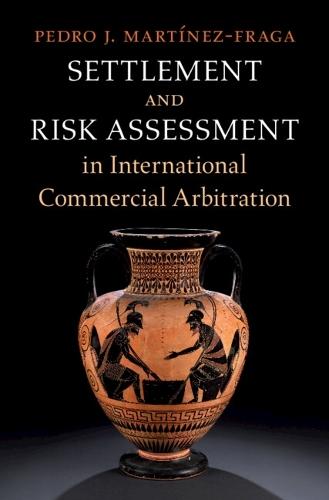
International commercial arbitration has failed to redeem its promise to be efficient. Approximately 27% of all international commercial arbitral proceedings are settled before issuance of a merits-based award. This book asserts that legacy international commercial arbitration is based on the economic efficiencies arising from a zero-sum-game approach to dispute resolution pursuant to which the most efficient result is one that yields a prevailing (winning) and non-prevailing (losing) party. This emphasis on process efficiency has caused international commercial arbitration to lose its standing as the premier dispute resolution methodology for cross-border commercial conflicts. Historically, settlement has not been perceived as an element of international commercial arbitration's culture. Only recently has a consensus arisen acknowledging that arbitrators have an obligation to facilitate settlement. This book explains that, through timely risk assessment, voluntary settlement of arbitral proceedings will become the rule, not the exception, leading to optimal efficiency.
Full Product Details
Author: Pedro J. Martínez-Fraga (Bryan Cave Leighton Paisner LLP)
Publisher: Cambridge University Press
Imprint: Cambridge University Press
Weight: 0.500kg
ISBN: 9781009756495
ISBN 10: 1009756494
Pages: 302
Publication Date: 04 June 2026
Audience:
Professional and scholarly
,
Professional & Vocational
Format: Hardback
Publisher's Status: Forthcoming
Availability: Not yet available, will be POD

This item is yet to be released. You can pre-order this item and we will dispatch it to you upon it's release. This is a print on demand item which is still yet to be released.
Reviews
'The rate of settlement of disputes in international arbitration is strikingly low, especially as compared to settlement rates in national court generally. Pedro Martínez-Fraga convincingly shows that this cannot be as heavily attributed as it commonly is to tribunals' simple failure to promote it. This brilliant book adopts a broader lens and finds that many central elements of the arbitral process itself – some of them paradoxically introduced in the interest of economy in time and cost – contribute importantly to the problem. Energetically promoting settlement may require rethinking some of international arbitration's most standard features.' George A. Bermann, Columbia University School of Law 'A bold and brilliant reframing of settlement in international commercial arbitration. Pedro Martínez-Fraga's latest book offers a powerful critique of international commercial arbitration's failure to embrace settlement as a core objective. He convincingly argues that without clear evidentiary rules enabling parties to assess risk, meaningful settlement remains out of reach. With scholarly rigor and elegant prose, he challenges traditional perspectives and places settlement at the very heart of arbitral efficiency. Through a compelling critique of current norms and a visionary call for reform, Martínez-Fraga offers a transformative blueprint for broadening arbitration's dispute resolution potential. The book persuasively promotes the advantages of moving dispute resolution beyond zero-sum outcomes toward results based on informed, equitable settlement.' Margaret L. Moses, Mary Ann G. McMorrow Professor of Law, Loyola University Chicago 'A thoughtful and necessary analysis that delves into the underlying factors contributing to the relatively low settlement rate in international commercial arbitration, in general and in contrast to the significantly higher settlement frequently observed in the US civil judicial proceedings. Mr. Martínez-Fraga offers a substantive evidential approach that is novel and considers the structural, procedural, and strategic differences between international arbitration and litigation. By examining these elements, the analysis aims to illuminate why parties in international arbitration may be less inclined to settle early, and how this trend diverges from the more settlement-driven dynamics of domestic litigation in the US courts.' Gary Born, WilmerHale (Partner) 'Professor Martínez-Fraga has given us a rigorous and insightful work compellingly demonstrating the link between settlement and risk assessment in international arbitration. Bringing his considerable experience to bear in a most thought-provoking manner, he identifies along the procedural timeline the incremental adjustments needed to sharpen the parties' respective understanding of the dispute in which they find themselves, better enabling them to bargain toward settlement. The book warrants careful study by anyone wishing to improve international arbitration's efficiency in ending disputes.' Jack J. Coe, Jr., PhD, Faculty Director of the LLM Concentration in International Commercial Arbitration, Pepperdine University – Caruso School of Law
Author Information
Pedro Julio Martínez-Fraga is Global Co-Leader of the International Arbitration Practice for Bryan Cave Leighton Paisner LLP (BCLP). He is both a distinguished visiting practitioner of international law and an adjunct professor of law at New York University Law School. He has represented eleven sovereign states as lead counsel, and published over fifty academic articles and eleven books on public and private international law.