Overview
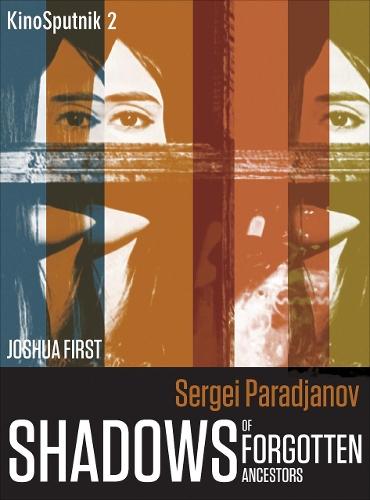
Released in 1965, Sergei Paradjanov’s Shadows of Forgotten Ancestors is a landmark of Soviet-era cinema—yet, because its emphasis on folklore and mysticism in traditional Carpathian Hutsul culture broke with Soviet realism, it caused Paradjanov to be blacklisted soon after its release. This book is the first full-length companion to the film. In addition to a synopsis of the plot and a close analysis of the many levels of symbolism in the film, it offers a history of the film’s legendarily troubled production process (which included Paradjanov challenging a cinematographer to a duel). The book closes with an account of the film’s reception by critics, ordinary viewers, and Soviet officials, and the numerous controversies that have kept it a subject of heated debate for decades. An essential companion to a fascinating, complicated work of cinema art, this book will be invaluable to students, scholars, and regular film buffs alike.
Full Product Details
Author: Joshua First ,
Birgit Beumers ,
Richard Taylor
Publisher: Intellect
Imprint: Intellect Books
Dimensions:
Width: 17.80cm
, Height: 0.50cm
, Length: 22.90cm
Weight: 0.154kg
ISBN: 9781783207091
ISBN 10: 1783207094
Pages: 112
Publication Date: 15 November 2016
Audience:
College/higher education
,
Postgraduate, Research & Scholarly
Format: Paperback
Publisher's Status: Active
Availability: Manufactured on demand

We will order this item for you from a manufactured on demand supplier.
Reviews
'Disputes about the existential meaning of Shadows of Forgotten Ancestors were conducted within the framework of hermetic 1960s debates about how to define 'poetic cinema' and 'national cinema'. As First argues, these discussions were 'filled with allusions to the great conflict between formalism and socialist realism during the early 1930s' (p. 45). Although these debates now have a decidedly musty aura, the film remains. First concludes his work by pointing, tantalizingly, to the films continuing influence over present day, and presumably future, filmmakers (p. 58). We shall see.' -- Steven A. Usitalo, Slavonic & East European Review 'These and future KinoSputniks will be cherished by Russian-film fans and used in courses on Russian cinema and culture. All three contribute not only to the project of writing Russian film history, but also to explorations of Russian/Soviet culture and history. In fact, whether this was intended or not, all three ultimately address the question of nationality and nation in Russian and Soviet culture: the controversial treatment of the Jews in The Commissar, the celebration of the Ukrainians in Shadows, and the place of Russia vis-a-vis the west in Russian Ark.' -- Maria Belodubrovskaya, Slavic Review
'These and future KinoSputniks will be cherished by Russian-film fans and used in courses on Russian cinema and culture. All three contribute not only to the project of writing Russian film history, but also to explorations of Russian/Soviet culture and history. In fact, whether this was intended or not, all three ultimately address the question of nationality and nation in Russian and Soviet culture: the controversial treatment of the Jews in The Commissar, the celebration of the Ukrainians in Shadows, and the place of Russia vis-à-vis the west in Russian Ark.' -- Maria Belodubrovskaya, Slavic Review 'Disputes about the existential meaning of Shadows of Forgotten Ancestors were conducted within the framework of hermetic 1960s debates about how to define ‘poetic cinema’ and ‘national cinema’. As First argues, these discussions were ‘filled with allusions to the great conflict between formalism and socialist realism during the early 1930s’ (p. 45). Although these debates now have a decidedly musty aura, the film remains. First concludes his work by pointing, tantalizingly, to the films continuing influence over present day, and presumably future, filmmakers (p. 58). We shall see.' -- Steven A. Usitalo, Slavonic & East European Review
'These and future KinoSputniks will be cherished by Russian-film fans and used in courses on Russian cinema and culture. All three contribute not only to the project of writing Russian film history, but also to explorations of Russian/Soviet culture and history. In fact, whether this was intended or not, all three ultimately address the question of nationality and nation in Russian and Soviet culture: the controversial treatment of the Jews in The Commissar, the celebration of the Ukrainians in Shadows, and the place of Russia vis-a-vis the west in Russian Ark.' -- Maria Belodubrovskaya, Slavic Review 'Disputes about the existential meaning of Shadows of Forgotten Ancestors were conducted within the framework of hermetic 1960s debates about how to define 'poetic cinema' and 'national cinema'. As First argues, these discussions were 'filled with allusions to the great conflict between formalism and socialist realism during the early 1930s' (p. 45). Although these debates now have a decidedly musty aura, the film remains. First concludes his work by pointing, tantalizingly, to the films continuing influence over present day, and presumably future, filmmakers (p. 58). We shall see.' -- Steven A. Usitalo, Slavonic & East European Review
'Disputes about the existential meaning of Shadows of Forgotten Ancestors were conducted within the framework of hermetic 1960s debates about how to define ‘poetic cinema’ and ‘national cinema’. As First argues, these discussions were ‘filled with allusions to the great conflict between formalism and socialist realism during the early 1930s’ (p. 45). Although these debates now have a decidedly musty aura, the film remains. First concludes his work by pointing, tantalizingly, to the films continuing influence over present day, and presumably future, filmmakers (p. 58). We shall see.' -- Steven A. Usitalo, Slavonic & East European Review 'These and future KinoSputniks will be cherished by Russian-film fans and used in courses on Russian cinema and culture. All three contribute not only to the project of writing Russian film history, but also to explorations of Russian/Soviet culture and history. In fact, whether this was intended or not, all three ultimately address the question of nationality and nation in Russian and Soviet culture: the controversial treatment of the Jews in The Commissar, the celebration of the Ukrainians in Shadows, and the place of Russia vis-à-vis the west in Russian Ark.' -- Maria Belodubrovskaya, Slavic Review
Author Information
Joshua First is the Croft Associate Professor of History and International Studies at the Croft Institute for International Studies at the University of Mississippi.