Overview
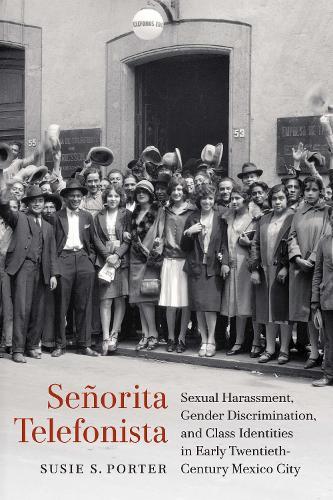
In Señorita Telefonista Susie S. Porter recounts the dynamic role of telephone operators in labor organizing in early twentieth-century Mexico City, taking us from switchboards to union halls and into the streets as working women fought for better wages and against sexual discrimination and harassment. The telephone operators' struggles reveal how bodily autonomy is historically contingent and constructed through the lived experiences of class. When and where were working-class identities available to women who wanted to make demands as workers? How did middle-class conceptions of respectability, sexual and otherwise, limit the space for working women to speak against male authority and to denounce assaults on their bodily autonomy? Porter charts the shifts in the ways women could (or could not) speak out against discrimination related to gender, marital status, and pregnancy. Señorita Telefonista examines the emergence of the idea that women were maladapted to the workplace and charts Mexican women's fight to claim their rights as workers. As languages of class circulated and identities were made and unmade––by management, organized labor, working men, and working women themselves––women's support for organized labor hung in the balance.
Full Product Details
Author: Susie S. Porter
Publisher: University of Nebraska Press
Imprint: University of Nebraska Press
ISBN: 9781496244307
ISBN 10: 1496244303
Pages: 316
Publication Date: 01 May 2026
Audience:
Professional and scholarly
,
College/higher education
,
Professional & Vocational
,
Postgraduate, Research & Scholarly
Format: Hardback
Publisher's Status: Active
Availability: Not yet available

This item is yet to be released. You can pre-order this item and we will dispatch it to you upon its release.
Reviews
""Señorita Telefonista documents working women's struggles for respectability and rights in early twentieth-century Mexico. Focusing on telefonistas' recurring complaints of sexual harassment and company firings of pregnant workers, Susie Porter centers the long history of sexual harassment in Mexican labor history. Porter has done yeoman's work to bring this history to light, and Señorita Telefonista will help us move the needle on the gendered history of labor toward women's lived experience of both sexual abuse and their struggle against it.""--Elizabeth Quay Hutchison, author of Workers Like All the Rest of Them: Domestic Service and the Rights of Labor in Twentieth-Century Chile ""By unveiling the history of telephone operators, this compelling book illuminates how two major changes of the twentieth century--the surge of the middle class and the expansion of women's role in society--intertwined, shaping Mexico's labor struggles and gender inequality. Telephone operators' shifting identities between middle-class señoritas and working-class compañeras unveil the many forms of resistance women have faced and continue to endure to obtain equitable working and living conditions in Mexico and elsewhere.""--Aurora Gómez-Galvarriato Freer, professor of history at the El Colegio de México ""Susie Porter deftly takes us from the initial days of the telephone operators in Mexico, who were described as señoritas, through their early organizing to become compañeras. Señorita Telefonista is the story of the awakening of labor consciousness among an important subsection of women workers who were incredibly savvy in getting their message out. The book reveals that the telefonistas are unsung heroines in the founding of Mexico's most important unions. Illuminating, well written, and a good read.""--Sonya Lipsett-Rivera, author of Gender and the Negotiation of Daily Life in Mexico, 1750-1856
""Susie Porter deftly takes us from the initial days of the telephone operators in Mexico, who were described as señoritas, through their early organizing to become compañeras. Señorita Telefonista is the story of the awakening of labor consciousness among an important subsection of women workers who were incredibly savvy in getting their message out. The book reveals that the telefonistas are unsung heroines in the founding of Mexico's most important unions. Illuminating, well written, and a good read.""—Sonya Lipsett-Rivera, author of Gender and the Negotiation of Daily Life in Mexico, 1750–1856 ""By unveiling the history of telephone operators, this compelling book illuminates how two major changes of the twentieth century—the surge of the middle class and the expansion of women's role in society—intertwined, shaping Mexico's labor struggles and gender inequality. Telephone operators' shifting identities between middle-class señoritas and working-class compañeras unveil the many forms of resistance women have faced and continue to endure to obtain equitable working and living conditions in Mexico and elsewhere.""—Aurora Gómez-Galvarriato Freer, professor of history at the El Colegio de México ""Señorita Telefonista documents working women's struggles for respectability and rights in early twentieth-century Mexico. Focusing on telefonistas' recurring complaints of sexual harassment and company firings of pregnant workers, Susie Porter centers the long history of sexual harassment in Mexican labor history. Porter has done yeoman's work to bring this history to light, and Señorita Telefonista will help us move the needle on the gendered history of labor toward women's lived experience of both sexual abuse and their struggle against it.""—Elizabeth Quay Hutchison, author of Workers Like All the Rest of Them: Domestic Service and the Rights of Labor in Twentieth-Century Chile
Author Information
Susie S. Porter is a presidential societal impact scholar and distinguished professor in the humanities at the University of Utah. She has been named as a corresponding international member of the Mexican Academy of History. Porter is the author of Working Women in Mexico City: Public Discourses and Material Conditions, 1879–1931 and From Angel to Office Worker: Middle-Class Identity and Female Consciousness in Mexico, 1890–1950 (Nebraska, 2018).