|
|
|||
|
||||
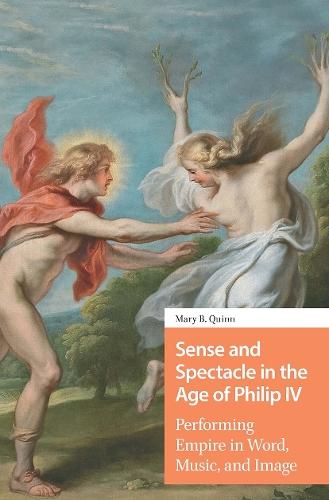
OverviewThis book accounts for the outpouring of celebrations in the Habsburg Empire upon the 1657 birth of Felipe Próspero, heir to Philip IV of Spain. These celebrations allow us to interrogate the shifting uses of performance in the empire’s center and periphery. Such spectacles could work to contain and manipulate public sentiment, but at other moments they questioned sanctioned power structures. A study of zarzuela texts, opera libretti, notated music, paintings, poems, and historical documents shows that an array of people took advantage of this festive moment to question the empire’s policies in surprising ways. Sensorial experience played a crucial role during these celebrations. For its part, the Crown engaged a variety of senses, especially sight, sound, and smell, in order to augment the impact of royal spectacles. But simultaneously, those who questioned the Crown also did so through an engagement of the sensorial world. Full Product DetailsAuthor: Mary QuinnPublisher: Taylor & Francis Ltd Imprint: Routledge Weight: 0.390kg ISBN: 9781041185925ISBN 10: 1041185928 Pages: 212 Publication Date: 01 December 2025 Audience: Professional and scholarly , Professional & Vocational Format: Paperback Publisher's Status: Active Availability: Manufactured on demand We will order this item for you from a manufactured on demand supplier. Table of ContentsReviews""By dissecting cultural artefacts into layers of meaning, Mary B. Quinn’s book convincingly shows how writers and artists used the performative sense to obtain new forms of communication."" Ascension Mazuela-Anguita, Universidad de Granada, in Music and Letters, gcaf145 Author InformationMary B. Quinn (University of New Mexico) is the author of The Moor and the Novel: Narrating Absence in Early Modern Spain and co-editor of Aural Culture and Poetics in the Early Modern Hispanic World: Sound, Rhythm, and Music. Tab Content 6Author Website:Countries AvailableAll regions |
||||