Overview
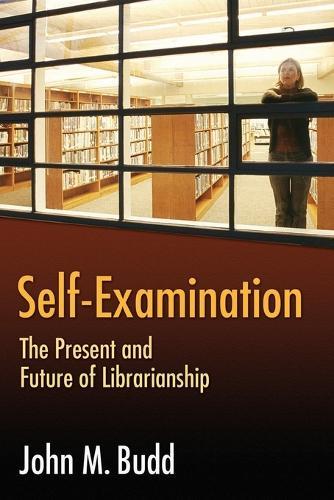
What makes us librarians? What is it we do that is indispensable? John Budd joins an august group of library-science luminaries, such as Pierce Butler, Jesse Shera, and Michael Gorman, whose works and example invite professional and critical self-examination. Here, Budd challenges us to confront the uneasy truth of whether libraries still represent people's will and intellect, or the cabalistic enclaves of an old guard? Through intellectually rich and engaging entrees into ethics, democracy, social responsibility, governance, and globalization, he makes the case that librarians who fail to grasp the importance of their heritage will never truly respond to societal change or the needs of the individual user.
Full Product Details
Author: John M. Budd
Publisher: Bloomsbury Publishing Plc
Imprint: Libraries Unlimited Inc
Dimensions:
Width: 15.60cm
, Height: 2.10cm
, Length: 23.50cm
Weight: 0.454kg
ISBN: 9781591585916
ISBN 10: 1591585910
Pages: 296
Publication Date: 30 November 2007
Recommended Age: From 7 to 17 years
Audience:
Professional and scholarly
,
Professional & Vocational
Format: Paperback
Publisher's Status: Active
Availability: Manufactured on demand

We will order this item for you from a manufactured on demand supplier.
Reviews
Budd, whose earlier Knowledge and Knowing in Library and Information Science: A Philosophical Framework won the 2002 Highsmith Library Literature award, continues his philosophical discourse. Viewing an absence of reflection as a shortcoming in librarianship, these seven chapters provide opportunities and suggestions for reflection, with consciousness of purpose serving as the basis for reflection. Citing works by Jesse Shera, Pierce Butler, and Michael Gorman as well as Aristotle, Hobbes, Habermas, Foucault, Kant, and other philosophers, Budd examines both the epistemology and phenomenology of librarianship, exploring ethics, democracy, intellectual freedom, social responsibility, the information society, and place and identity. The major question Budd asks is, Should social epistemology and discourse ethics inform our practice? It is left for the profession to answer. * Library Journal * Self-Examination proceeds chapter by chapter across the broadest possible themes for our times: professional ethics, intellectual freedom, democracy, the education of librarians, and so on. . . . Budd demands 21st-century librarians to look at themselves in the proverbial mirror and to question a profession where there are often no questions, no counterpoints. * College & Research Libraries * It's easy to get lost in the day-to-day activities of our jobs, but Budd's thought-provoking book challenges us to reflect more deeply on what we do and why. * American Libraries * There is so much material contained within these chapters, spot on and controversial. * Info Career Trends * All in all, I found Self-Examination to be a valuable source of inspiration and reflection. In my daily work, I am definitely caught up in everyday issues and usually don't pause to reflect on how these relate to the core values and beliefs of librarianship. . . [R]eading Self-Examination encouraged me to think about [core values and beliefs] more deeply than I have in a long while; this brought me back to the fundamental reasons I became a librarian in the first place: the value of information and knowledge and the rewards of helping people find and use it. * Information Today * . . . presents a good history and current challenges for the profession to consider. * Public Services Quarterly * Budd. . . brings a wealth of intellectual (philosophy, ethics, politics, communication) stuff to bear on the issues, argues that such things should be more used, and asks some very pertinent questions – of policy and identity, purpose and neutrality – that all libraries should ask (of themselves and their stakeholders, from consumer to citizen, from community to government). . . . the journey he takes us on is thoroughly worthwhile. * Journal of Librarianship and Information Science * The sections on library history and education . . . are both interestingly written and illuminating. . . . there is a great deal in this book for the reader who takes the profession seriously and is interested in the theories and philosophies that underpin it. . . * The Australian Library Journal * While this book should be read by all library and information professionals, it is far more important that we begin the difficult and continual process of dialogue on the issues and topics that it raises. This book would also serve as a first-rate text for many library and information science courses, particularly those serving as overviews to the profession. The extensive reference list of well over 300 citations provides an excellent entree into the topics and issues discussed. * Library & Information Science Research * …Budd's study of Self-Examination is radical, thought provoking and challenging. For any librarian serious about where they and their profession are going this is an excellent resource that will provoke both thought and action. * Library Review *
... presents a good history and current challenges for the profession to consider. - Public Services Quarterly Budd, whose earlier Knowledge and Knowing in Library and Information Science: A Philosophical Framework won the 2002 Highsmith Library Literature award, continues his philosophical discourse. Viewing an absence of reflection as a shortcoming in librarianship, these seven chapters provide opportunities and suggestions for reflection, with consciousness of purpose serving as the basis for reflection. Citing works by Jesse Shera, Pierce Butler, and Michael Gorman as well as Aristotle, Hobbes, Habermas, Foucault, Kant, and other philosophers, Budd examines both the epistemology and phenomenology of librarianship, exploring ethics, democracy, intellectual freedom, social responsibility, the information society, and place and identity. The major question Budd asks is, Should social epistemology and discourse ethics inform our practice? It is left for the profession to answer. - Library Journal There is so much material contained within these chapters, spot on and controversial. - Info Career Trends It's easy to get lost in the day-to-day activities of our jobs, but Budd's thought-provoking book challenges us to reflect more deeply on what we do and why. - American Libraries Self-Examination proceeds chapter by chapter across the broadest possible themes for our times: professional ethics, intellectual freedom, democracy, the education of librarians, and so on... Budd demands 21st-century librarians to look at themselves in the proverbial mirror and to question a profession where there are often no questions, no counterpoints. - College & Research Libraries All in all, I found Self-Examination to be a valuable source of inspiration and reflection. In my daily work, I am definitely caught up in everyday issues and usually don't pause to reflect on how these relate to the core values and beliefs of librarianship... [R]eading Self-Examination encouraged me to think about [core values and beliefs] more deeply than I have in a long while; this brought me back to the fundamental reasons I became a librarian in the first place: the value of information and knowledge and the rewards of helping people find and use it. - Information Today While this book should be read by all library and information professionals, it is far more important that we begin the difficult and continual process of dialogue on the issues and topics that it raises. This book would also serve as a first-rate text for many library and information science courses, particularly those serving as overviews to the profession. The extensive reference list of well over 300 citations provides an excellent entree into the topics and issues discussed. - Library & Information Science Research The sections on library history and education ... are both interestingly written and illuminating... there is a great deal in this book for the reader who takes the profession seriously and is interested in the theories and philosophies that underpin it... - The Australian Library Journal Budd... brings a wealth of intellectual (philosophy, ethics, politics, communication) stuff to bear on the issues, argues that such things should be more used, and asks some very pertinent questions - of policy and identity, purpose and neutrality - that all libraries should ask (of themselves and their stakeholders, from consumer to citizen, from community to government)... the journey he takes us on is thoroughly worthwhile. - Journal of Librarianship and Information Science ...Budd's study of Self-Examination is radical, thought provoking and challenging. For any librarian serious about where they and their profession are going this is an excellent resource that will provoke both thought and action. - Library Review
Self-Examination proceeds chapter by chapter across the broadest possible themes for our times: professional ethics, intellectual freedom, democracy, the education of librarians, and so on....Budd demands 21st-century librarians to look at themselves in the proverbial mirror and to question a profession where there are often no questions, no counterpoints. -College & Research Libraries
Author Information
John M. Budd is Professor and Associate Director of the School of Information Science and Learning Technologies at the University of Missouri-Columbia. His 2001 book, Knowledge and Knowing in Library and Information Science: A Philosophical Framework, was awarded the 2002 Highsmith Library Literature Award.