|
|
|||
|
||||
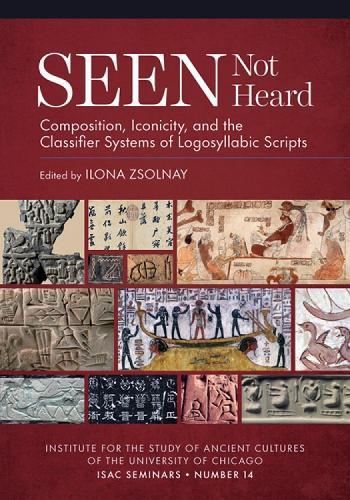
OverviewTraditionally, writing—a graphic, multidimensional form of communication—has been approached as a vehicle for representing, and therefore conveying, the spoken word. Moving beyond this manner of analysis, this volume interrogates writing as a medium that is not simply a handmaiden to oral and aural exchange but a communication system that is richly layered and experienced. To exploit this aspect of visual code, scholars from the fields of Egyptology, Sinology, Hittitology, and Assyriology, together with Mesoamericanists, art historians, and a sign language specialist, are brought together in this volume. In its pages, these contributors incorporate into their analyses methods more commonly used in linguistics and semiotics, communication studies, art historical analysis, and traditional philology to new ends to form original trajectories of inquiry. Each contribution either lays bare explicit exploitation of visuality in scribal production as a means to cementing power, reveal the mystical, induce humour or expose clandestine views, or locates implicit knowledge schemes and cultural maps underlying and informing these same productions. The pioneering investigations presented in Seen Not Heard reveal that although writing may be heard, the fact that it can also be seen affects its reception and therefore the meaning of any transported phonological units. Full Product DetailsAuthor: Ilona ZsolnayPublisher: Institute for the Study of Ancient Cultures Imprint: Institute for the Study of Ancient Cultures Dimensions: Width: 17.70cm , Height: 2.10cm , Length: 25.20cm Weight: 0.722kg ISBN: 9781614910855ISBN 10: 1614910855 Pages: 350 Publication Date: 31 July 2023 Audience: Professional and scholarly , Professional & Vocational Format: Paperback Publisher's Status: Active Availability: Available To Order We have confirmation that this item is in stock with the supplier. It will be ordered in for you and dispatched immediately. Table of Contents"Preface and Acknowledgments. Ilona Zsolnay Introduction. Ilona Zsolnay Part I: Experiential Writing 1. Text in Context: Relief and Hierarchy on Piedras Negras Panel. Claudia Brittenham 2. The Iconicity of the Vertical: Hieroglyphic Encoding and the Akhet in Royal Burial Chambers of Egypt's New Kingdom. Joshua Aaron Roberson 3. For the Eye Only: Aspects of the Visual Text in Ancient Egypt. Andréas Stauder Part II: Classifiers 4. Animal Categorization in Mesopotamia and the Origins of Natural Philosophy. Gebhard J. Selz 5. Was There an ""Animal"" in Ancient Egypt? Studies in Lexica and Classifier Systems, with a Glimpse toward Sumer and Ancient China. Orly Goldwasser 6. The Cognitive Role of Semantic Classifiers in Modern Chinese Writing as Reflected in Neogram Creation. Zev Handel 7. Iconic and Grammatical Dimensions of Sign Language Classifiers. Diane Brentari Part III: Script Evolutions 8. Encounters between Scripts in Bronze Age Asia Minor. Elisabeth Rieken and Ilya Yakubovich 9. Iconicity, Composition, and Semantics: A Structural Investigation of Pictures in an Early Writing Environment. Holly Pittman 10. Ava and ABb, a Memoir - or, The Curious Case of Nigin/Nanse Signification. Ilona Zsolnay Part IV: Response 11. On the Visual Presentation of Writing. Wang Haicheng"ReviewsAuthor InformationIlona Zsolnay is an Assyriologist who seeks to make the ancient world more germane by integrating rigorous philosophical enquiry and cutting-edge theory with lateral approaches. She is a consulting scholar in the Babylonian section of the Penn Museum at the University of Pennsylvania. Tab Content 6Author Website:Countries AvailableAll regions |
||||