|
|
|||
|
||||
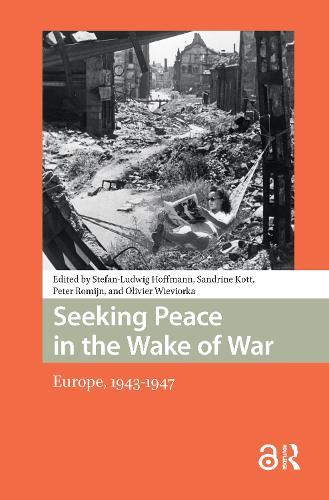
OverviewWhen the Second World War ended, Europe was in ruins. Yet, politically and socially, the years between 1943 and 1947 were a time of dramatic reconfigurations, which proved to be foundational for the making of today's Europe. This volume hones in on the crucial period from the beginning of the end of Nazi rule in Europe to the advent of the Cold War. Through a series of interrelated case studies that span the entire continent, it demonstrates how the everyday experiences of Europeans during these five years shaped the transition of their societies from war to peace. The authors explore these reconfigurations on different scales and levels -the local and regional, the ethnic and national, and the international - with the purpose of enhancing our understanding of how wars end. Full Product DetailsAuthor: Stefan-Ludwig Hoffmann , Peter Romijn , Sandrine Kott , Olivier WieviorkaPublisher: Taylor & Francis Ltd Imprint: Routledge ISBN: 9781041185901ISBN 10: 1041185901 Pages: 360 Publication Date: 01 December 2025 Audience: Professional and scholarly , Professional & Vocational Format: Paperback Publisher's Status: Active Availability: In Print This item will be ordered in for you from one of our suppliers. Upon receipt, we will promptly dispatch it out to you. For in store availability, please contact us. Table of ContentsReviewsAuthor InformationStefan-Ludwig Hoffman is associate professor at the Department of History at the University of California Berkley. Sandrine Kott is professor of contemporary European history at Geneva University.|Peter Romijn is a historian, Head of Research at NIOD, and part-time Professor of Twentieth-Century History at the University of Amsterdam. Olivier Wieviorka is professor of history at l'École normale supérieure in Cachan, France. Tab Content 6Author Website:Countries AvailableAll regions |
||||