Overview
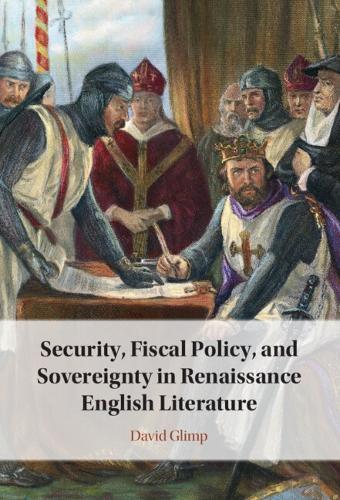
Taxation was a central challenge for England's rulers during the Renaissance, and consequently became a major theme for some of the period's greatest writers. Through close readings of works by Thomas More, Christopher Marlowe, William Shakespeare, George Herbert, and John Milton, David Glimp reveals how these writers and others grappled with the period's expanding systems of taxation and changing understandings of collective security. Such debates involved questions of political obligation, what it meant to be safe, and the nature of political community itself. Challenging dominant understandings of Renaissance sovereignty, Glimp explores in greater detail than ever before how early modern authors thought about and engaged the fiscal realities of government. From Utopia to Paradise Lost, his groundbreaking analysis illuminates how Renaissance literature addressed concerns about fiscal policy, state power, and collective wellbeing and will appeal to scholars of Renaissance literature, political theory, and economic history alike.
Full Product Details
Author: David Glimp (University of Colorado Boulder)
Publisher: Cambridge University Press
Imprint: Cambridge University Press
Dimensions:
Width: 15.20cm
, Height: 1.80cm
, Length: 22.90cm
Weight: 0.570kg
ISBN: 9781009618809
ISBN 10: 1009618806
Pages: 282
Publication Date: 18 September 2025
Audience:
General/trade
,
General
Format: Hardback
Publisher's Status: Active
Availability: Manufactured on demand

We will order this item for you from a manufactured on demand supplier.
Reviews
'Nothing is certain but death and taxes, yet David Glimp finds that these certainties are always accompanied by a perplexing uncertainty especially amenable to literature. His book traces and renders legible the large-scale social question embedded in minutiae of taxation and state security, showing how Marlowe, Herbert, and Milton were all, in their own ways, drawing upon fiscal language to ask what the common good might mean.' Christopher Warley, Professor of English, University of Toronto 'In Fiscal Policy and the Limits of Sovereignty in Renaissance English Literature,David Glimp offers a nuanced examination of how the administrative realities of funding collective security and managing risk in early modern England shaped literary culture. In deft readings of works by Thomas More, Christopher Marlowe, William Shakespeare, George Herbert, and John Milton, the book identifies what amounts to a 'fiscal poetics,' hiding in plain sight, that transforms our sense of the relationship between writing and security in the period.' Julian Yates, H. Fletcher Brown Professor of English and Material Culture Studies, University of Delaware
Author Information
A scholar of Renaissance English literature and culture, David Glimp teaches at the University of Colorado Boulder. He is the author of Increase and Multiply: Governing Cultural Reproduction in Early Modern England (2003), along with numerous works that explore relations between knowledge production, governmental practice, and literary culture in the period.