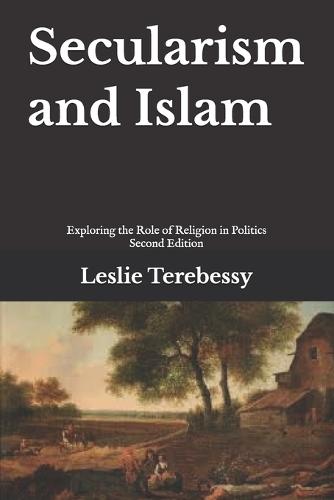
Overview
Secularism and Islam are alternative perspective. Secularism, a product of the Enlightenment or the Age of Reason, prefers reason at the expense of religion. The preference is due in part to the corruption of the knowledge of revelation by unwarranted accretions. Also, religious authorities propped up autocratic rulers. But the population wanted freedom. This was manifested in the French revolution. Islam or Islamism is based on the assumption that the laws of a nation are to be based on revelation. To the extent that even ""secular"" countries feature legislation from revelation, the tension between the two is less prominent than is usually understood. What is the relationship between secularism and Islamism? The answers are affected by a person's prior knowledge of, and experience with these perspectives. Traditional Muslims perceive the ""secular"" parts of the world as a threat, as ungodly. They do not subscribe to the perception that politics should be separated from religion. To Muslims, revelation furnishes a comprehensive way of life, encompassing all aspects of life. A few take it to the point of micromanaging even the minutest aspects of Muslim existence. A few traditionalists have Westphobia, fear of the West and its ""permissiveness,"" ""materialism"" and ""immorality."" They do not value freedom. They perceive freedom as licentiousness. They point to divorces, crime, and premarital and extramarital sex. Syed Qutb was aghast when he witnessed men and women intermingling at an event. A few traditionalists have reservations about what they perceive as ""free sex."" Personal relations in the West are perceived as entered into or ended without formality and responsibility. There are also usury, substance abuse, disorientation and purges by totalitarian regimes. Not to be forgotten is the foreign policies of the Western nations, assaults on Muslim lands in the name of the ""war on terror,"" the crusades, and the practice of slavery. Thus, we may ask, is there a shared ground? The ""people of the book,"" including Muslims, follow Abraham, but then Cain killed Abel. How to proceed? How to establish a commitment to fairness and justice? By contrast, a few non-Muslims perceive ""Islamic"" regimes as a threat. This is due to the association of Islam with radicalism and terrorism. These concerns are justified. Parts of penal legislation are extreme, mandating punishments of death for adultery, blasphemy and apostasy. These transgressions do merit the death penalty according to revelation. Jurists rendered penal laws extreme by permitting traditions to replace revealed rulings. They treat persons as ""lawgivers."" And this exacerbates Islamophobia. There are also honor killings and splashings of acid on ""wayward"" relatives. But secularism reflects ""Islamic"" aspects, for example, the prohibition of force in religion, while purportedly ""Islamic"" regimes not infrequently resort to force in religion. Parts of the legislation in ""secular"" nations is rooted in religion, the Ten Commandments. To accuse secular regimes of being ""godless"" accordingly is an exaggeration. A few positive features of secularism notwithstanding, the Islamic alternative - when accurately articulated - is better. But religious legislation requires being derived from, and be in agreement with revelation. For any articulation of legislation that departs from revelation is bound to rest upon a misrepresentation of revelation and result in a miscarriage of justice. Extreme punishments, intolerance and heavy-handedness render populations fearful and hence lean to ""secular"" alternatives. Where religion is properly articulated, these fears should subside. The challenge for Muslim nations is not having to decide between an Islamic and a secular blueprint of society, but to incorporate revealed rulings in the law of the nation in ways that reflect the rulings of revelation accurately, without causing miscarriages of justice.
Full Product Details
Author: Leslie Terebessy
Publisher: Independently Published
Imprint: Independently Published
Dimensions:
Width: 15.20cm
, Height: 1.00cm
, Length: 22.90cm
Weight: 0.249kg
ISBN: 9798257683725
Pages: 182
Publication Date: 16 April 2026
Audience:
General/trade
,
General
Format: Paperback
Publisher's Status: Active
Availability: Available To Order

We have confirmation that this item is in stock with the supplier. It will be ordered in for you and dispatched immediately.