|
|
|||
|
||||
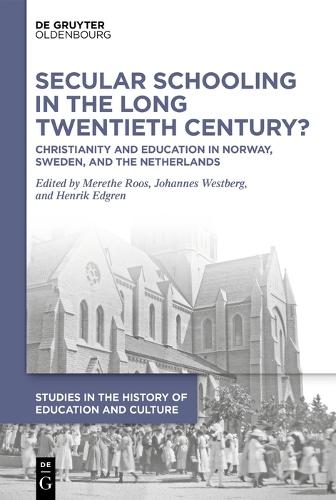
OverviewThe twentieth-century process of secularization does not mean that institutional church and Christian ideas were irrelevant for twentieth-century societal projects – such as the introduction of democracy, the improvement of school and education, the framing of national identities – or in the establishment of welfare-states. On the contrary, this publication is built on the presupposition that secularization runs parallell with the sacralization of the state. It can be argued that Christianity has been decisive for how the modern European society evolved in the twentieth century, e.g. concerning how Christian history and Christian values were a part of the new national and social imaginary where re-enchantment and re-sacralization of the state were central elements. In this publication, the aim is to highlight the role of Christianity in the twentieth- and twentyfirst-century welfare-state modernization process with the focus on schooling and education. A central perspective is the impact of cultural Protestantism during the twentieth century. The publication is comparative and will investigate education in Norway, Sweden, and the Netherlands via chapters on curriculums, textbooks, politicians, and political debates. Full Product DetailsAuthor: Merethe Roos , Johannes Westberg , Henrik EdgrenPublisher: De Gruyter Imprint: De Gruyter Oldenbourg Volume: 5 Weight: 0.527kg ISBN: 9783111082431ISBN 10: 3111082431 Pages: 286 Publication Date: 23 September 2024 Audience: Professional and scholarly , Professional & Vocational Format: Hardback Publisher's Status: Active Availability: Available To Order We have confirmation that this item is in stock with the supplier. It will be ordered in for you and dispatched immediately. Table of ContentsReviewsAuthor InformationM. Roos, University of South Eastern, Norway; J. Westberg, University of Groningen, the Netherlands; H. Edgren, Uppsala University. Tab Content 6Author Website:Countries AvailableAll regions |
||||