Awards
- Commended for Named one of the Best Books of 2014 on the Middle East by Foreign Affairs 2014
Overview
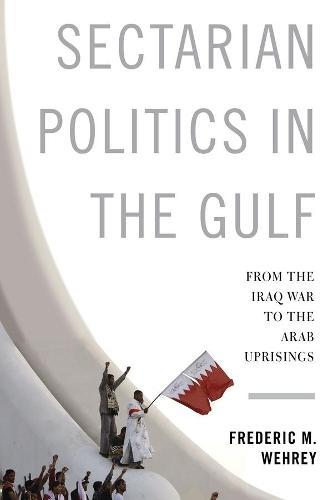
One of Foreign Policy's Best Five Books of 2013, chosen by Marc Lynch of The Middle East Channel Beginning with the 2003 invasion of Iraq and concluding with the aftermath of the 2011 Arab uprisings, Frederic M. Wehrey investigates the roots of the Shi'a-Sunni divide now dominating the Persian Gulf's political landscape. Focusing on three Gulf states affected most by sectarian tensions-Bahrain, Saudi Arabia, and Kuwait-Wehrey identifies the factors that have exacerbated or tempered sectarianism, including domestic political institutions, the media, clerical establishments, and the contagion effect of external regional events, such as the Iraq war, the 2006 Lebanon conflict, the Arab uprisings, and Syria's civil war. In addition to his analysis, Wehrey builds a historical narrative of Shi'a activism in the Arab Gulf since 2003, linking regional events to the development of local Shi'a strategies and attitudes toward citizenship, political reform, and transnational identity. He finds that, while the Gulf Shi'a were inspired by their coreligionists in Iraq, Iran, and Lebanon, they ultimately pursued greater rights through a nonsectarian, nationalist approach. He also discovers that sectarianism in the region has largely been the product of the institutional weaknesses of Gulf states, leading to excessive alarm by entrenched Sunni elites and calculated attempts by regimes to discredit Shi'a political actors as proxies for Iran, Iraq, or Lebanese Hizballah. Wehrey conducts interviews with nearly every major Shi'a leader, opinion shaper, and activist in the Gulf Arab states, as well as prominent Sunni voices, and consults diverse Arabic-language sources.
Full Product Details
Author: Frederic M. Wehrey
Publisher: Columbia University Press
Imprint: Columbia University Press
Dimensions:
Width: 15.20cm
, Height: 3.30cm
, Length: 22.90cm
Weight: 0.624kg
ISBN: 9780231165129
ISBN 10: 0231165129
Pages: 352
Publication Date: 17 December 2013
Audience:
Professional and scholarly
,
Professional & Vocational
Format: Hardback
Publisher's Status: Active
Availability: Manufactured on demand

We will order this item for you from a manufactured on demand supplier.
Language: English
Reviews
This is an excellent book and an important piece of scholarship. Wehrey has written a compelling, thoughtful, and original analysis of the new politics of sectarianism in the Persian Gulf since 2003. He is well positioned to write such a book, having traveled extensively in the region and spent considerable time with the most important political figures in Kuwait, Saudi Arabia, and Bahrain. His tone is commanding, the research is impressive, and the result is timely and vital. Wehrey's book is the best study I have seen yet of these pressing matters. -- Toby Jones, Rutgers University Frederic Wehrey has written a finely-grained, insightful and carefully researched contemporary study of Sectarian Politics in the Gulf. The author offers insights on the broader Arab world, which has been profoundly unsettled by several recent events, notably the U.S.-U.K. invasion of Iraq, and the ensuing Iraqi civil war, as well as the Arab awakenings across the region. His major contributions, drawing on impressive fieldwork, are his richly informed and nuanced examinations of Sunni-Shi'i relations in Sunni-dominated Saudi Arabia, Bahrain and Kuwait, as well as his focus on the transnational flows of ideas and people that link these cases. As he reveals, sectarian identity is no artificial construct, but a culturally imbedded and historically honed aspect of self. Yet, he also demonstrates that sectarianism has been wielded cynically by both powerful rulers (Saudi Arabia) and insecure, easily manipulated monarchs (as in Bahrain) in order to foment division and to divert legitimate accusations of injustice, discrimination and opprobrious violations of basic human rights. This is the best book on the topic and must reading for policymakers. -- Augustus Richard Norton, Boston University
Author Information
Frederic M. Wehrey is a senior associate in the Middle East Program at the Carnegie Endowment for International Peace. He is a specialist in the politics of the Persian Gulf, and his articles and commentary have appeared in the New York Times, the Washington Post, the Financial Times, Foreign Affairs, and Foreign Policy. He holds a doctorate in international relations from St. Antony's College, Oxford University.