Overview
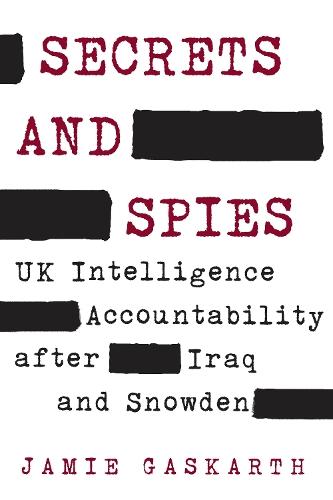
Exploring how intelligence professionals view accountability in the context of twenty-first century politics How can democratic governments hold intelligence and security agencies accountable when what they do is largely secret? Using the UK as a case study, this book addresses this question by providing the first systematic exploration of how accountability is understood inside the secret world. It is based on new interviews with current and former UK intelligence practitioners, as well as extensive research into the performance and scrutiny of the UK intelligence machinery. The result is the first detailed analysis of how intelligence professionals view their role, what they feel keeps them honest, and how far external overseers impact on their work Moving beyond the conventional focus on oversight, the book examines how accountability works in the day to day lives of these organizations, and considers the impact of technological and social changes, such as artificial intelligence and social media. The UK is a useful case study as it is an important actor in global intelligence, gathering material that helps inform global decisions on such issues as nuclear proliferation, terrorism, transnational crime, and breaches of international humanitarian law. On the flip side, the UK was a major contributor to the intelligence failures leading to the Iraq war in 2003, and its agencies were complicit in the widely discredited U.S. practices of torture and rendition of terrorism suspects. UK agencies have come under greater scrutiny since those actions, but it is clear that problems remain. The book concludes with a series of suggestions for improvement, including the creation of intelligence ethics committees, allowing the public more input into intelligence decisions. The issues explored in this book have important implications for researchers, intelligence professionals, overseers, and the public when it comes to understanding and scrutinizing intelligence practice.
Full Product Details
Author: Jamie Gaskarth
Publisher: Bloomsbury Publishing Plc
Imprint: Brookings Institution
Dimensions:
Width: 15.30cm
, Height: 1.40cm
, Length: 22.90cm
Weight: 0.277kg
ISBN: 9780815737971
ISBN 10: 0815737971
Pages: 200
Publication Date: 18 February 2020
Audience:
Professional and scholarly
,
Professional & Vocational
Format: Paperback
Publisher's Status: Active
Availability: Manufactured on demand

We will order this item for you from a manufactured on demand supplier.
Reviews
Gaskarth's novel approach, interpreting interviews with senior figures from the intelligence world, brings fresh insight on a significant yet contested topic. He offers an impressively holistic account of intelligence accountability--both formal and informal--and, most interestingly of all, of how those involved understand it. This is essential reading for those wanting to know what accountability means and how it is enacted. --Rory Cormac, professor of international relations, University of Nottingham Open society is increasingly defended by secret means. For this reason, oversight has never been more important. This book offers a new exploration of the widening world of accountability for UK intelligence, encompassing formal as well as informal mechanisms. It substantiates its claims well, drawing on an impressive range of interviews with senior figures. This excellent book offers both new information and fresh interpretations. It will have a major impact. --Richard J. Aldrich, professor of international security, University of Warwick
Gaskarth's novel approach, interpreting interviews with senior figures from the intelligence world, brings fresh insight on a significant yet contested topic. He offers an impressively holistic account of intelligence accountability--both formal and informal--and, most interestingly of all, of how those involved understand it. This is essential reading for those wanting to know what accountability means and how it is enacted. --Rory Cormac, professor of international relations, University of Nottingham Jamie Gaskarth's Secrets and Spies: UK Intelligence Accountability after Iraq and Snowden aims to fill a key gap by flipping the perspective from which accountability is viewed. Rather than looking simply at how those charged with oversight view the issues, Gaskarth asks how British intelligence and security policymakers understand accountability and how their understanding links to institutional structures and organizational performance. --Jason U. Manosevitz Open society is increasingly defended by secret means. For this reason, oversight has never been more important. This book offers a new exploration of the widening world of accountability for UK intelligence, encompassing formal as well as informal mechanisms. It substantiates its claims well, drawing on an impressive range of interviews with senior figures. This excellent book offers both new information and fresh interpretations. It will have a major impact. --Richard J. Aldrich, professor of international security, University of Warwick
Author Information
Jamie Gaskarth is a Professor of Foreign Policy and International Relations at the Open University, UK where he teaches strategy and decision-making. His research looks at the ethical dilemmas of leadership and accountability in intelligence, foreign policy, and defense. He is author/editor/co-editor of six books and served on the Academic Advisory panel for the 2015 UK National Security Strategy and Strategic Defense and Security Review.