|
|
|||
|
||||
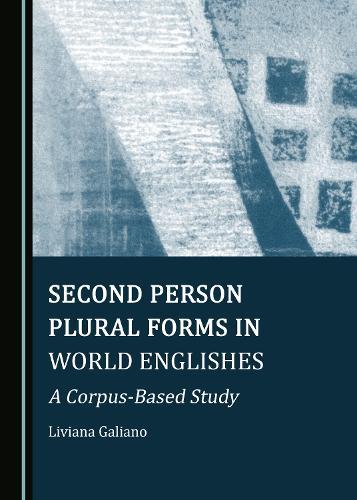
OverviewPreviously, English used to distinguish between singular and plural second person pronouns. However, this distinction was lost during its transition into Modern English, which saw the establishment of the single form you for both singular and plural reference.Despite this, many dialects of English have always continued to explicitly mark number on second person pronouns by resorting to different linguistic strategies, both morphological and analytic. Among such morphological variants is yous, together with a host of different spelling variants such as youse, yiz, and yez, among others.This work is a synchronic, corpus-based investigation of second person plural forms in 20 varieties of English. The corpus under study here (GloWbe) contains 1.9 billion words collected on the web in 2013 and was analysed in order to uncover the usage trends of second person plural forms in present-day English. The picture that emerges displays the diatopic distribution of the forms, in addition to markers of politeness and empathy, singular-reference emphatic markers, attention-getting devices, and possessive determiner, and their frequencies of occurrence. The book pays particular attention to the fundamental function of second person plural forms in the creation and management of the speaker-hearer relationship. Full Product DetailsAuthor: Liviana GalianoPublisher: Cambridge Scholars Publishing Imprint: Cambridge Scholars Publishing Edition: Unabridged edition ISBN: 9781527577183ISBN 10: 152757718 Pages: 285 Publication Date: 24 January 2022 Audience: Professional and scholarly , Professional & Vocational Format: Hardback Publisher's Status: Active Availability: In Print This item will be ordered in for you from one of our suppliers. Upon receipt, we will promptly dispatch it out to you. For in store availability, please contact us. Table of ContentsReviewsAuthor InformationLiviana Galiano is a Researcher at the University of Pavia, Italy. During her studies at Lancaster University, UK, she became interested in corpus linguistics applied to English grammar studies. Her work focuses on giving a wider perspective to the study of spoken features by comparing data across world varieties of English. Her research also intersects elements of cognitive linguistics, sociolinguistics and linguistic typology. Tab Content 6Author Website:Countries AvailableAll regions |
||||