Overview
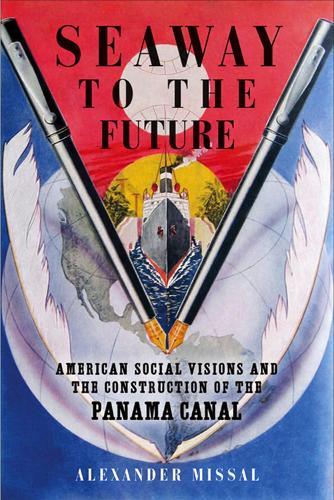
Realizing the centuries-old dream of a passage to India, the building of the Panama Canal was an engineering feat of colossal dimensions, a construction site filled not only with mud and water but with interpretations, meanings, and social visions. Alexander Missal's """"Seaway to the Future"""" unfolds a cultural history of the Panama Canal project, revealed in the texts and images of the era's policymakers and commentators. Observing its creation, journalists, travel writers, and officials interpreted the Canal and its environs as a perfect society under an efficient, authoritarian management featuring innovations in technology, work, health, and consumption.For their middle-class audience in the United States, the writers depicted a foreign yet familiar place, a showcase for the future - images reinforced in the exhibits of the 1915 Panama-Pacific International Exposition that celebrated the Canal's completion. Through these depictions, the building of the Panama Canal became a powerful symbol in a broader search for order as Americans looked to the modern age with both anxiety and anticipation.Like most utopian visions, this one aspired to perfection at the price of exclusion. Overlooking the West Indian laborers who built the Canal, its admirers praised the white elite that supervised and administered it. Inspired by the masculine ideal personified by President Theodore Roosevelt, writers depicted the Canal Zone as an emphatically male enterprise and Chief Engineer George W. Goethals as the emblem of a new type of social leader, the engineer-soldier, the benevolent despot. Examining these and other images of the Panama Canal project, """"Seaway to the Future"""" shows how they reflected popular attitudes toward an evolving modern world and, no less important, helped shape those perceptions.
Full Product Details
Author: Alexander Missal ,
Paul S. Boyer
Publisher: University of Wisconsin Press
Imprint: University of Wisconsin Press
Dimensions:
Width: 16.00cm
, Height: 2.20cm
, Length: 23.50cm
Weight: 0.514kg
ISBN: 9780299229405
ISBN 10: 0299229408
Pages: 336
Publication Date: 30 November 2008
Audience:
College/higher education
,
Professional and scholarly
,
Undergraduate
,
Postgraduate, Research & Scholarly
Format: Hardback
Publisher's Status: Active
Availability: Manufactured on demand

We will order this item for you from a manufactured on demand supplier.
Reviews
In the idealized space of the Canal, imperialism seemed benign, scientists banished disease, engineers conquered nature, and the United States imposed a middle-class social order. - David Nye, author of Technology Matters.
Author Information
Alexander Missal, a journalist in Germany, earned his PhD. in Anglo-American history from the University of Cologne.