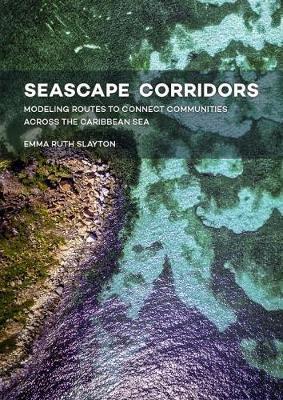
Seascape Corridors: Modeling Routes to Connect Communities Across the Caribbean Sea

Author:   Emma Ruth Slayton
Publisher:   Sidestone Press
ISBN:  

9789088905780


Pages:   340
Publication Date:   14 September 2018
Format:   Hardback
Availability:   Available To Order   Availability explained
We have confirmation that this item is in stock with the supplier. It will be ordered in for you and dispatched immediately.

Our Price $514.80 Quantity:  
Add to Cart

Share |

Seascape Corridors: Modeling Routes to Connect Communities Across the Caribbean Sea


Overview

In this book past maritime connections are modeled between indigenous island communities in the Caribbean. It is evaluated how routes connecting islands in the Caribbean.

Full Product Details

Author:   Emma Ruth Slayton
Publisher:   Sidestone Press
Imprint:   Sidestone Press
Dimensions:   Width: 17.80cm , Height: 2.00cm , Length: 25.40cm
Weight:   0.907kg
ISBN:  

9789088905780


ISBN 10:   9088905789
Pages:   340
Publication Date:   14 September 2018
Audience:   Professional and scholarly ,  Professional & Vocational
Format:   Hardback
Publisher's Status:   Active
Availability:   Available To Order   Availability explained
We have confirmation that this item is in stock with the supplier. It will be ordered in for you and dispatched immediately.

Table of Contents

Acknowledgments Chapter 1: Introduction 1.1 Objectives and research questions 1.2 The model's underpinnings 1.3 Outline of chapters Chapter 2: Modeling canoe voyaging in theory 2.1 Seascapes as spaces 2.2 Movement through sea spaces 2.3 Sea-based mental maps 2.4 Conclusion Chapter 3: Caribbean canoes and canoe modeling 3.1 The canoe as a base for modeling 3.1.1 Canoes: What we know 3.1.2 Paddles and Propulsion 3.1.3 To sail or not to sail 3.2 Modeling land and sea routes 3.2.1 The origins of optimal modeling methods 3.2.2 Previous attempts to model sea routes 3.2.3 Incorporating archaeological evidence 3.3 Conclusion Chapter 4: Modeling reciprocal voyages 4.1 The Influence of current and wind 4.2 Adding a human element 4.3 Evaluating currents 4.4 Isochrone modeling Chapter 5: Routes between neighbouring islands: Connecting partners in the Long Island lithic exchange network 5.1 Some islands and sites 5.1.1 Antigua and Long Island 5.1.2 Anguilla 5.1.3 St. Martin 5.1.4 Saba 5.1.5 St. Eustatius 5.1.6 St. Kitts 5.1.7 Nevis 5.1.8 Barbuda 5.1.9 Montserrat 5.2 Modeling interpretations 5.2.1 Route costs 5.2.2 Route trajectories 5.3 Conclusion Chapter 6: Modeling canoeing across the Mona Passage and the Anegada Passage: Connecting the Greater and the Lesser Antilles 6.1 Connecting the Greater Antilles and Lesser Antilles 6.1.1 Taino across the Antillean divide 6.1.2 Ceramic styles 6.1.3 Three pointers and shell masks 6.2 Islands and points 6.2.1 Southeastern Hispaniola 6.2.2 Mona Island 6.2.3 Puerto Rico 6.2.4 St. Thomas and St. John 6.2.5 St. Croix 6.2.6 Anguilla 6.2.7 Saba 6.3 Modeling routes between the Greater Antilles and the Lesser Antilles 6.3.1 Underlying environmental factors 6.3.2 Failed routes and navigation challenges 6.3.3 Route cost 6.3.4 Route trajectory 6.4 Conclusion Chapter 7: Voyaging over longer distances: Connecting the South American mainland with the Windward Islands 7.1 Kalina and Kalinago 7.1.1 Ceramic styles 7.1.2 Language 7.1.3 Ethnohistoric accounts 7.1.4 Mainland and island locations 7.2 Route modeling 7.2.1 Failed routes and navigation challenges 7.2.2 Current tool 7.2.3 Route cost 7.2.4 Route layout 7.3 Conclusion Chapter 8: Discussion 8.1 A brief review 8.2 Observations on research questions 8.2.1 Seasonality 8.2.2 Canoe pathways and site placement 8.2.3 Modeled seafaring practices, navigation, and mental maps 8.3 Limitations 8.4 Future work Bibliography Summary Curriculum vitae

Reviews

Author Information

Emma Slayton worked on her PhD as a part of the NWO funded Island Networks Project (project number 360-62-060). During her PhD at the Leiden University, Emma was a teaching assistant, guest lectured, presented at seven international conferences, organized several conference sessions at the CAA, SAA, and EAA, as well as planned lectures and workshops for the Leiden Digital Archaeology Group. During her time at Leiden she was fortunate enough to have the opportunity to work in the Caribbean, participating in fieldwork in Grenada and Saba in addition to canoe training runs in Martinique organized by the Karisko project. Emma was also a co-author on papers during her time at Leiden.

Tab Content 6

Author Website:  

Countries Available

All regions
Latest Reading Guide

April RG 26_2


Shopping Cart
Your cart is empty
Shopping cart
Mailing List