Overview
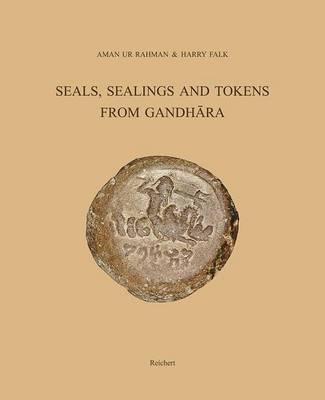
English summary: Ancient seals say much about people, their names, preferred styles and self-esteem. Over many decades Aman ur Rahman has built a large collection of seals from North-Western Pakistan, which were produced during Hellenistic times up to the Guptas. He classifies them and explains their pictorial content, while Harry Falk, a professor of Indology at Berlin, reads all epigraphs in Kharosthi and Brahmi and provides an introduction on the scribal aspects. German description: Das Werk prasentiert uber tausend Siegel, Siegelabdrucke und Verwandtes aus Gandhara aus der Zeit des Hellenismus bis zu den Guptas. Die Sammlung Aman ur Rahmans findet sich durchweg in Farbe wiedergegeben, wie auch die Sammlungen der Museen in Taxila und Peshawar. Harry Falk bietet eine schrift- und kulturgeschichtliche Einleitung, mit Schwerpunkten bei den Kulten der Bhima aus der Hohle Kashmir Smast und den Lesungen aller Epigramme in indischen und griechischen Schriften verbunden mit einer namenskundlichen Analyse.
Full Product Details
Author: Aman Ur Rahman ,
Harry Falk
Publisher: Dr Ludwig Reichert
Imprint: Dr Ludwig Reichert
Volume: 21
Dimensions:
Width: 24.60cm
, Height: 2.30cm
, Length: 30.00cm
Weight: 1.429kg
ISBN: 9783895008191
ISBN 10: 3895008192
Pages: 240
Publication Date: 29 July 2011
Audience:
General/trade
,
General
Format: Hardback
Publisher's Status: Active
Availability: Awaiting stock

The supplier is currently out of stock of this item. It will be ordered for you and placed on backorder. Once it does come back in stock, we will ship it out for you.
Reviews
Like SARC 2, this volume [...] greatly expands the glyptic corpus from Afghanistan and the Northwest of the Indian subcontinent, previously compiled and published by Pierfrancesco Callieri in 1997. In particular, and most welcome, it presents the seals, sealings and tokens of the Hellenistic, Graeco-Bactrian, Indo-Greek, and Kushan eras that preceded those covered in SARC 2. [...] The main portion of the volume, the catalogue, provides a detailed description of each specimen, each skillfully photographed by Aman ur Rahman himself. The front and side views are reproduced in actual size and are accompanied by an enlarged view of the object's impression if it is a seal, or of the object itself, if it is a sealing or token. Photographs of impressions of intaglios are in black and white, while those of each actual specimen are in colour; the colour contributes greatly to our understanding and appreciation of the collection. [...] Seals, Sealings and Tokens from Gandhara will provide scholars with much interesting material for future studies. Judith A. Lerner Orientalistische Literaturzeitung; 112(2017), 417-420 There is a huge amount of fascinating information in the catalogue showing that the authors have given much thought and many years to the materials studied. Only somebody who has already dealt with this type of material can appreciate how much work and study stands behind this brilliant and convincing presentation which offers the useful and avoids the superfluous. The publisher is to be especially praised for the cxccllent quality of the paper and the reproductions which make this volumea delight to consult. The catalogue is indeed a treasure-trove for everyone interested in early India, its culture and religions and its history. But more than that, it is also an aesthetic pleasure to enjoy the remarkable artistic quality which many of the pieces display. Despite the admirable work done by both authors it is characteristic of this type of material that it provides much ground for further, exciting discoveries. We all should feel invited by Aman ur Rahman and Harry Falk to use their excellent book for our research and to make it thus, what it certainly deserves to be: a mile-stone in the exploration of the history and culture of Gandhara. Ingo Strauch, Journal of the Royal Asiatic Society. Series 3, Volume 22 (2012). pp. 602-606
Review - German There is a huge amount of fascinating information in the catalogue showing that the authors have given much thought and many years to the materials studied. Only somebody who has already dealt with this type of material can appreciate how much work and study stands behind this brilliant and convincing presentation which offers the useful and avoids the superfluous. The publisher is to be especially praised for the cxccllent quality of the paper and the reproductions which make this volumea delight to consult. The catalogue is indeed a treasure-trove for everyone interested in early India, its culture and religions and its history. But more than that, it is also an aesthetic pleasure to enjoy the remarkable artistic quality which many of the pieces display. Despite the admirable work done by both authors it is characteristic of this type of material that it provides much ground for further, exciting discoveries. We all should feel invited by Aman ur Rahman and Harry Falk to use their excellent book for our research and to make it thus, what it certainly deserves to be: a mile-stone in the exploration of the history and culture of Gandhara. Ingo StrauchIn: Journal of the Royal Asiatic Society. Series 3, Volume 22 (2012). pp. 602-606.
Author Information
Contributor Biography - English Aman ur RahmanPak-Canadian citizen, Masters Degree in Chemical Engineering; worked as an International expatriate in the oil industry; currently CEO of manufacturing plant in Dubai. Pakistan's foremost numismatist; authored several books and articles on numismatics. Harry Falkist Professor fur Indologie, habilitiert 1984 an der Universitat Freiburg und derzeit Leiter des Instituts fur die Sprachen und Kulturen Sudasiens an der Freien Universitat Berlin.