Overview
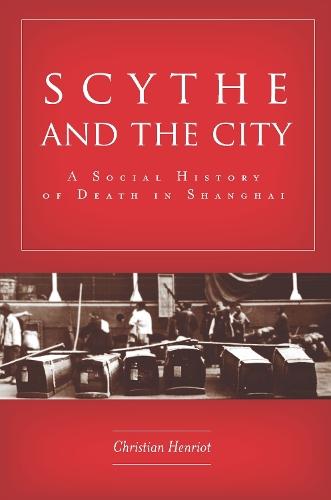
The issue of death has loomed large in Chinese cities in the modern era. Throughout the Republican period, Shanghai swallowed up lives by the thousands. Exposed bodies strewn around in public spaces were a threat to social order as well as to public health. In a place where every group had its own beliefs and set of death and funeral practices, how did they adapt to a modern, urbanized environment? How did the interactions of social organizations and state authorities manage these new ways of thinking and acting? Recent historiography has almost completely ignored the ways in which death created such immense social change in China. Now, Scythe and the City corrects this problem. Christian Henriot's pioneering and original study of Shanghai between 1865 and 1965 offers new insights into this crucial aspect of modern society in a global commercial hub and guides readers through this tumultuous era that radically redefined the Chinese relationship with death.
Full Product Details
Author: Christian Henriot
Publisher: Stanford University Press
Imprint: Stanford University Press
Edition: New edition
Dimensions:
Width: 15.20cm
, Height: 3.00cm
, Length: 22.90cm
Weight: 0.771kg
ISBN: 9780804797467
ISBN 10: 0804797463
Pages: 496
Publication Date: 18 May 2016
Audience:
General/trade
,
General
Format: Hardback
Publisher's Status: Active
Availability: In Print

This item will be ordered in for you from one of our suppliers. Upon receipt, we will promptly dispatch it out to you. For in store availability, please contact us.
Reviews
A city of death: though grim, this is Shanghai in the early twentieth century. Henriot's excellent book shows the unexpected intersections of modernity and traditional custom, whether in the rise of the coffin industry or local guilds' handling of funeral rites. This volume breaks ground as powerfully as the shovels that created Shanghai's modern cemeteries. -- Rana Mitter Christian Henriot provides an utterly original perspective on Shanghai's modernization. Against a background of periodic epidemics and wars, poverty stands out as the biggest killer. Shanghai sucked in and killed people by the tens of thousands, this human fuel being what fired the city and made it work. Henriot's 'scythe' will stick in readers' minds. -- Matthew Sommer Henriot probes the question of how the city treated its working masses when they became dead bodies. The industrializing city steadfastly pushed graveyards out while the Sino-Japanese War witnessed numerous 'bodies without masters,' disproportionately of children dying in public places. This is a powerful work and a must-read for all readers enamored with Shanghai's famed splendor. -- Wen-hsin Yeh, University of California Based on extensive archival research, Christian Henriot's groundbreaking book Scythe and the City: A Social History of Death in Shanghai offers an original perspective on the subject of death-a previously overlooked aspect by which Shanghai modernity deems to be re-defined....The breadth and depth of archival research on historiography of death in modern Shanghai that the book presents is unmistakably pioneering. -- Lei Ping
Henriot probes the question of how the city treated its working masses when they became dead bodies. The industrializing city steadfastly pushed graveyards out while the Sino-Japanese War witnessed numerous 'bodies without masters,' disproportionately of children dying in public places. This is a powerful work and a must-read for all readers enamored with Shanghai's famed splendor. -- Wen-hsin Yeh, University of California Christian Henriot provides an utterly original perspective on Shanghai's modernization. Against a background of periodic epidemics and wars, poverty stands out as the biggest killer. Shanghai sucked in and killed people by the tens of thousands, this human fuel being what fired the city and made it work. Henriot's 'scythe' will stick in readers' minds. -- Matthew Sommer Stanford University A city of death: though grim, this is Shanghai in the early twentieth century. Henriot's excellent book shows the unexpected intersections of modernity and traditional custom, whether in the rise of the coffin industry or local guilds' handling of funeral rites. This volume breaks ground as powerfully as the shovels that created Shanghai's modern cemeteries. -- Rana Mitter
Christian Henriot provides an utterly original perspective on Shanghai's modernization. Against a background of periodic epidemics and wars, poverty stands out as the biggest killer. Shanghai sucked in and killed people by the tens of thousands, this human fuel being what fired the city and made it work. Henriot's 'scythe' will stick in readers' minds. Matthew Sommer, Stanford University
Divergent Memories is a stimulating and comprehensive account of key issues relating to memory and history in East Asia. It offers a series of intriguing and important contrasts between China, Japan and Korea, as well as the US. A valuable new resource for scholars and general readers interested in the past and future of the Asia-Pacific. Rana Mitter, Oxford University and author of Forgotten Ally: China's World War II, 1937-1945
A city of death: though grim, this is Shanghai in the early twentieth century. Henriot's excellent book shows the unexpected intersections of modernity and traditional custom, whether in the rise of the coffin industry or local guilds' handling of funeral rites. This volume breaks ground as powerfully as the shovels that created Shanghai's modern cemeteries. -- Rana Mitter * Oxford University * Christian Henriot provides an utterly original perspective on Shanghai's modernization. Against a background of periodic epidemics and wars, poverty stands out as the biggest killer. Shanghai sucked in and killed people by the tens of thousands, this human fuel being what fired the city and made it work. Henriot's 'scythe' will stick in readers' minds. -- Matthew Sommer * Stanford University * Henriot probes the question of how the city treated its working masses when they became dead bodies. The industrializing city steadfastly pushed graveyards out while the Sino-Japanese War witnessed numerous 'bodies without masters,' disproportionately of children dying in public places. This is a powerful work and a must-read for all readers enamored with Shanghai's famed splendor. -- Wen-hsin Yeh, University of California * Berkeley * Based on extensive archival research, Christian Henriot's groundbreaking book Scythe and the City: A Social History of Death in Shanghai offers an original perspective on the subject of death-a previously overlooked aspect by which Shanghai modernity deems to be re-defined....The breadth and depth of archival research on historiography of death in modern Shanghai that the book presents is unmistakably pioneering. -- Lei Ping * <i>China Review International</i> *
Author Information
Christian Henriot is Professor of Modern History at Aix-Marseille University and the author of numerous books on modern Chinese history, including Prostitution and Sexuality in Shanghai: A Social History, 1849–1949 (2001). He is also Project Director of Virtual Shanghai (virtualshanghai.net).