Overview
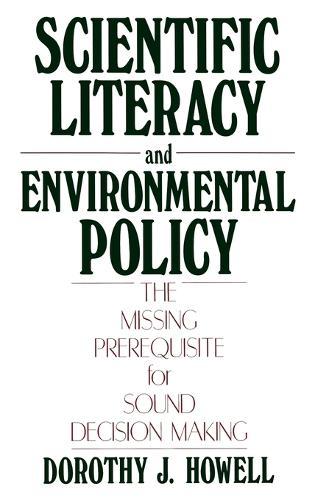
National institutions involved in environmental policy planning respond more to the accommodation of special interests, whether vested, parochial, or societal, than to the realities of technological advances. This situation, combined with the added problem of widespread scientific illiteracy, makes the formulation of effective environmental policy a very difficult task to accomplish. Our politico-legal system and relationships among science, scientists, and society are explored here with specific attention to issues arising from pharmaceutical innovation and biotechnology. The identification of the resultant dilemmas reveal disenfranchisement and point to possible means of reform. Howell focuses on the need for multilateral responsibility for communication to improve the accommodation of science in policy. A truly multidisciplinary study, this book is for environmental planners as well as the interested public.
Full Product Details
Author: Dorothy J. Howell
Publisher: Bloomsbury Publishing Plc
Imprint: Praeger Publishers Inc
Dimensions:
Width: 15.60cm
, Height: 1.20cm
, Length: 23.40cm
Weight: 0.459kg
ISBN: 9780899306162
ISBN 10: 0899306160
Pages: 200
Publication Date: 06 April 1992
Recommended Age: From 7 to 17 years
Audience:
College/higher education
,
Undergraduate
,
Postgraduate, Research & Scholarly
Format: Hardback
Publisher's Status: Active
Availability: Manufactured on demand

We will order this item for you from a manufactured on demand supplier.
Reviews
?The US Food and Drug Administration and Environmental Protection Agency have been key players in the development of a national policy for the control of recombinant DNA technology. Howell uses this case study as a vehicle to explore the disenfranchisement of the public in the development of national policies. The underlying premise is that scientific illiteracy on the part of the public and the cliquishness and separateness of the scientific and politico-legal communities are factors in the paralysis of the decision-making process. Thoroughly referenced, the book is a recompilation of the works of a large number of other individuals to build a case for the need for scientific literacy on the part of the general public. The focus is on the reenfranchisement of the public through scientific literacy rather than on the reformation of the scientific and political communities... Suitable for general readers.?-Choice
?The US Food and Drug Administration and Environmental Protection Agency have been key players in the development of a national policy for the control of recombinant DNA technology. Howell uses this case study as a vehicle to explore the disenfranchisement of the public in the development of national policies. The underlying premise is that scientific illiteracy on the part of the public and the cliquishness and separateness of the scientific and politico-legal communities are factors in the paralysis of the decision-making process. Thoroughly referenced, the book is a recompilation of the works of a large number of other individuals to build a case for the need for scientific literacy on the part of the general public. The focus is on the reenfranchisement of the public through scientific literacy rather than on the reformation of the scientific and political communities... Suitable for general readers.?-Choice The US Food and Drug Administration and Environmental Protection Agency have been key players in the development of a national policy for the control of recombinant DNA technology. Howell uses this case study as a vehicle to explore the disenfranchisement of the public in the development of national policies. The underlying premise is that scientific illiteracy on the part of the public and the cliquishness and separateness of the scientific and politico-legal communities are factors in the paralysis of the decision-making process. Thoroughly referenced, the book is a recompilation of the works of a large number of other individuals to build a case for the need for scientific literacy on the part of the general public. The focus is on the reenfranchisement of the public through scientific literacy rather than on the reformation of the scientific and political communities... Suitable for general readers. -Choice
Author Information
DOROTHY J. HOWELL is Adjunct Professor at the Environmental Law Center at Vermont Law School and a participant in environmental programs since 1969. She teaches a seminar in the multidisciplinary aspects of environmental planning, as well as courses in environmental sciences and toxics law.