Overview
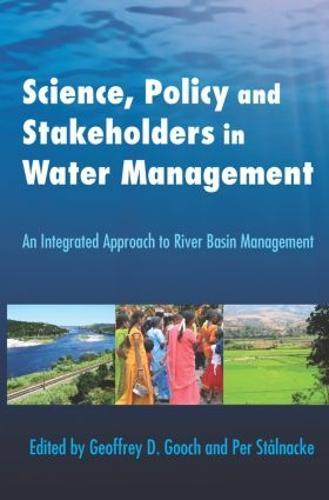
One of the major problems facing practitioners and scientists working with water management is how to integrate knowledge and experiences from scientific, policy and stakeholder perspectives. In this book this science-policy-stakeholder interface (SPSI) is examined both analytically and through the description of practical experiences from river basins in Europe, India and South-East Asia. These include the Tungabhadra (India), Sesan (Vietnam/Cambodia), Tagus (Spain/Portugal) and Glomma (Norway), which particularly highlight issues associated with pollution, severely altered river flows and transboundary conflicts. Following two chapters which lay the framework for the book the authors describe how SPSI was managed in the case study basins and how stakeholder participation and scenarios were used to integrate different perspectives, and to facilitate the communication of different forms of knowledge. Four important aspects of water management and SPSI are then discussed; these are water pollution, land and water interaction, environmental flow and transboundary water regimes. Short descriptions of the case study rivers are provided together with analyses of how SPSI was managed in water management in these basins and policy recommendations for the basins. The book concludes by providing a series of recommendations for improving the science-policy-stakeholder interface in water management. It represents a major step forward in our understanding of how to implement integrated water resources management.
Full Product Details
Author: Geoffrey Gooch ,
Per Stålnacke
Publisher: Taylor & Francis Ltd
Imprint: Routledge
Weight: 0.272kg
ISBN: 9780415853415
ISBN 10: 0415853419
Pages: 184
Publication Date: 12 December 2013
Audience:
College/higher education
,
Professional and scholarly
,
Postgraduate, Research & Scholarly
,
Undergraduate
Format: Paperback
Publisher's Status: Active
Availability: In Print

This item will be ordered in for you from one of our suppliers. Upon receipt, we will promptly dispatch it out to you. For in store availability, please contact us.
Reviews
'There is a fast growing field of interest around the coupling between scientific results and policy uptake. This highly updated book reflects upon these issues in the context water management. An important feature of the book is the discussion of science-policy interfacing needs with practical examples from four river large basins. The book will be a valuable reference for others engaging in research for sustainable development as well as policy-makers and stakeholders involved in IWRM implementation and development.' Philippe Quevauviller, DG Research, European Commission, and Dept. of Hydrology and Hydrological Engineering, Vrije Universiteit Brussel (VUB) 'Integrating different forms of experts' and local knowledge is increasingly needed to cope with the challenge of managing complex socio-ecological systems. This book, by a highly interdisciplinary, multinational team, describes and reflects upon sustainability challenges in the context of integrated water resource management (IWRM). The authors' analysis of these challenges, however, translates beyond the water context into useful insights for a much broader community of sustainability-oriented researchers and practitioners.' Carlo Sessa, Institute of Studies for the Integration of Systems. Rome
'There is a fast growing field of interest around the coupling between scientific results and policy uptake. This highly updated book reflects upon these issues in the context water management. An important feature of the book is the discussion of science-policy interfacing needs with practical examples from four river large basins. The book will be a valuable reference for others engaging in research for sustainable development as well as policy-makers and stakeholders involved in IWRM implementation and development.' Philippe Quevauviller, DG Research, European Commission, and Dept. of Hydrology and Hydrological Engineering, Vrije Universiteit Brussel (VUB) 'Integrating different forms of experts' and local knowledge is increasingly needed to cope with the challenge of managing complex socio-ecological systems. This book, by a highly interdisciplinary, multinational team, describes and reflects upon sustainability challenges in the context of integrated water resource management (IWRM). The authors' analysis of these challenges, however, translates beyond the water context into useful insights for a much broader community of sustainability-oriented researchers and practitioners.' Carlo Sessa, Institute of Studies for the Integration of Systems. Rome
Author Information
Geoffrey D. Gooch is Professor of Political Science at Linköping University, Sweden, and at the UNESCO Centre for Water law, Policy and Science at the University of Dundee, Scotland. Per Stålnacke is a Senior Researcher and Head of Section 'Water quality and Hydrology' at Bioforsk (Norwegian Institute for Agricultural and Environmental Research).