Awards
- Winner of Jackie Kirk Outstanding Book Award 2015
- Winner of Jackie Kirk Outstanding Book Award 2016
- Winner of University of Louisville Grawemeyer Award for Ideas Improving World Order 2017
- Winner of W. Gabriel Carras Research Award 2015
- Winner of W. Gabriel Carras Research Award 2017
Overview
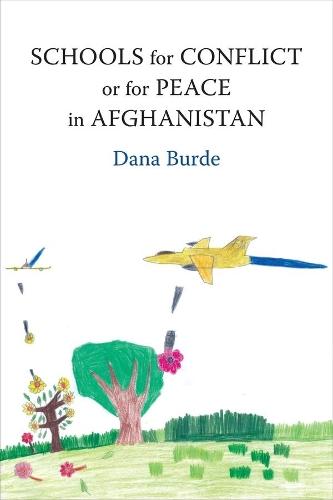
Foreign-backed funding for education does not always stabilize a country and enhance its statebuilding efforts. Dana Burde shows how aid to education in Afghanistan bolstered conflict both deliberately in the 1980s through violence-infused, anti-Soviet curricula and inadvertently in the 2000s through misguided stabilization programs. She also reveals how dominant humanitarian models that determine what counts as appropriate aid have limited attention and resources toward education, in some cases fueling programs that undermine their goals. For education to promote peace in Afghanistan, Burde argues we must expand equal access to quality community-based education and support programs that increase girls' and boys' attendance at school. Referring to a recent U.S. effort that has produced strong results in these areas, Burde commends the program's efficient administration and good quality, and its neutral curriculum, which can reduce conflict and build peace in lasting ways. Drawing on up-to-date research on humanitarian education work amid conflict zones around the world and incorporating insights gleaned from extensive fieldwork in Afghanistan and Pakistan, Burde recalculates and improves a popular formula for peace.
Full Product Details
Author: Dana Burde
Publisher: Columbia University Press
Imprint: Columbia University Press
Dimensions:
Width: 15.20cm
, Height: 2.50cm
, Length: 22.90cm
Weight: 0.468kg
ISBN: 9780231169288
ISBN 10: 0231169280
Pages: 232
Publication Date: 21 October 2014
Audience:
Professional and scholarly
,
Professional & Vocational
,
Postgraduate, Research & Scholarly
Format: Hardback
Publisher's Status: Active
Availability: Manufactured on demand

We will order this item for you from a manufactured on demand supplier.
Language: English
Reviews
This masterly books offers the first comprehensive fieldwork based research on education in contemporary Afghanistan. Dana Burde makes the convincing case that NGOs have generally been neglecting education and that jihadist programs in the 1980s implied a huge exposure of children to message of violence and intolerance. Post-2001, the author points the general failure of the counter-insurgency strategy to provide adequate support to education. -- Gilles Dorronsoro, professor of political science, Sorbonne University, Paris Public education in conflict-ridden societies should be a force for peace and stability, if done well. But Dana Burde shows that international aid to education in Afghanistan sowed conflict when its political goals prioritized jihad against the Soviet occupation or favored some ethnic groups over others. Impeccably researched, this study has global implications for thinking about politics, education policy, and foreign aid. -- Jack Snyder, Institute of War and Peace Studies and Department of Political Science, Columbia University
This masterly book offers the first comprehensive fieldwork-based research on education in contemporary Afghanistan. Dana Burde makes the convincing case that NGOs have generally been neglecting education and that jihadist programs in the 1980s implied a huge exposure of children to the message of violence and intolerance. Post-2001, Burde points to the general failure of the counterinsurgency strategy to provide adequate support to education. -- Gilles Dorronsoro, Carnegie Endowment for International Peace Public education in conflict-ridden societies should be a force for peace and stability, if done well. But Dana Burde shows that international aid to education in Afghanistan sowed conflict when its political goals prioritized jihad against the Soviet occupation or favored some ethnic groups over others. Impeccably researched, this book has global implications for thinking about politics, education policy, and foreign aid. -- Jack Snyder, Saltzman Institute of War and Peace Studies and Department of Political Science, Columbia University Dana Burde provides rare insights into the potential for Afghanistan's educational system to advance either political violence or peace.... [Schools for Conflict or for Peace in Afghanistan] could serve as a foundational text for those who want to understand the issues surrounding education and conflict. -- Paul Clemans * H-War * Schools for Conflict or for Peace in Afghanistan lays out a detailed history of education in the Afghan context, its importance, and how educational funds can be effectively used to avoid conflict.... This book is a welcome contribution to the field of both international and comparative education as well as conflict studies. -- Mujtaba Hedayet * Comparative Education Review * [Schools for Conflict or for Peace in Afghanistan] provides an excellent overview and diverse analysis of the historical emergence of, and currently existing relationship between, education, peace and conflict within and beyond Afghanistan. * South Asia: Journal of South Asian Studies *
This masterly book offers the first comprehensive fieldwork-based research on education in contemporary Afghanistan. Dana Burde makes the convincing case that NGOs have generally been neglecting education and that jihadist programs in the 1980s implied a huge exposure of children to the message of violence and intolerance. Post-2001, Burde points to the general failure of the counterinsurgency strategy to provide adequate support to education. -- Gilles Dorronsoro, Carnegie Endowment for International Peace Public education in conflict-ridden societies should be a force for peace and stability, if done well. But Dana Burde shows that international aid to education in Afghanistan sowed conflict when its political goals prioritized jihad against the Soviet occupation or favored some ethnic groups over others. Impeccably researched, this book has global implications for thinking about politics, education policy, and foreign aid. -- Jack Snyder, Saltzman Institute of War and Peace Studies and Department of Political Science, Columbia University
Author Information
Dana Burde is an assistant professor of international education at New York University's Steinhardt School and holds affiliations with the Saltzman Institute of War and Peace Studies at Columbia University, NYU Abu Dhabi, and the NYU Wagner School of Public Service. Her research examines the effects of war on education and how to mitigate these effects; the relationship between education and political violence; and transnational advocacy and humanitarian action.