Overview
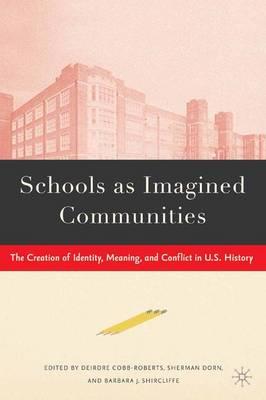
Government forces mean the notion of a 'community' school has become less defined by decisions on core curriculum. This collection explores the extent to which collective notions of school-community relations have prevented citizens from speaking openly about the tensions created where schools are imagined as communities.
Full Product Details
Author: S. Dorn ,
B. Shircliffe ,
D. Cobb-Roberts
Publisher: Palgrave USA
Imprint: Palgrave Macmillan
Edition: 2006 ed.
Dimensions:
Width: 15.50cm
, Height: 1.30cm
, Length: 23.50cm
Weight: 0.454kg
ISBN: 9781403964724
ISBN 10: 1403964726
Pages: 217
Publication Date: 22 February 2006
Audience:
College/higher education
,
Professional and scholarly
,
Postgraduate, Research & Scholarly
,
Professional & Vocational
Format: Paperback
Publisher's Status: Active
Availability: In Print

This item will be ordered in for you from one of our suppliers. Upon receipt, we will promptly dispatch it out to you. For in store availability, please contact us.
Reviews
From the nineteenth-century common school movement to contemporary struggles over redistricting neighborhood attendance zones, Americans have sought to build communities around local schools--and sometimes to restrict access to outsiders. This anthology of historical case studies brings together rich narratives on this dynamic and the surrounding contexts of race, class, gender, sexuality, and disability. In particular, the editors' excellent introduction draws meaningful insights from various scholarly fields and taught me how to think about communities with fresh eyes. ---Jack Dougherty, Trinity College Individually and collectively, the essays in this volume ask readers to think deeply, more critically, more thoughtfully, about the unspoken assumptions and the political implications of our common tendency to conceptualize schools as 'communities.' Issues of nostalgia, of inclusion and exclusion, of racial and social and sexual differentiation, are all deftly handled, highlighting new contributions in the history of American education. Well done. -- Michael Fultz, Professor, University of Wisconsin-Madison <br> As a whole, the book offers sociologists several themes to ponder, such as the uneasy relation between ideals of school community and formal equality, the tension between legal initiatives and subjective experiences of belonging, and the meandering path from political battle to institutionalized practice. This Canadian reader was particularly alerted to the tacit influence of the American Civil Rights movement and its legal landmarks, such as Brown v. Board of Education, on contemporary notions of educability and rights that are spreading around the globe. -- AmericanJournal of Sociology <p><br>
From the nineteenth-century common school movement to contemporary struggles over redistricting neighborhood attendance zones, Americans have sought to build communities around local schools--and sometimes to restrict access to outsiders. This anthology of historical case studies brings together rich narratives on this dynamic and the surrounding contexts of race, class, gender, sexuality, and disability. In particular, the editors' excellent introduction draws meaningful insights from various scholarly fields and taught me how to think about communities with fresh eyes. ---Jack Dougherty, Trinity College Individually and collectively, the essays in this volume ask readers to think deeply, more critically, more thoughtfully, about the unspoken assumptions and the political implications of our common tendency to conceptualize schools as 'communities.' Issues of nostalgia, of inclusion and exclusion, of racial and social and sexual differentiation, are all deftly handled, h
From the nineteenth-century common school movement to contemporary struggles over redistricting neighborhood attendance zones, Americans have sought to build communities around local schools--and sometimes to restrict access to outsiders. This anthology of historical case studies brings together rich narratives on this dynamic and the surrounding contexts of race, class, gender, sexuality, and disability. In particular, the editors' excellent introduction draws meaningful insights from various scholarly fields and taught me how to think about communities with fresh eyes. ---Jack Dougherty, Trinity College Individually and collectively, the essays in this volume ask readers to think deeply, more critically, more thoughtfully, about the unspoken assumptions and the political implications of our common tendency to conceptualize schools as 'communities.' Issues of nostalgia, of inclusion and exclusion, of racial and social and sexual differentiation, are all deftly handled, highlighting new contributions in the history of American education. Well done. -- Michael Fultz, Professor, University of Wisconsin-Madison <br> As a whole, the book offers sociologists several themes to ponder, such as the uneasy relation between ideals of school community and formal equality, the tension between legal initiatives and subjective experiences of belonging, and the meandering path from political battle to institutionalized practice. This Canadian reader was particularly alerted to the tacit influence of the American Civil Rights movement and its legal landmarks, such as Brown v. Board of Education , on contemporary notions of educability and rights that are spreading around the globe. -- American Journal of Sociology<br><br><br><br>
Author Information
SHERMAN DORN, BARBARA SHIRCLIFFE and DEIRDRE COBB-ROBERTS are historians of education at the Tampa campus of the University of South Florida, USA.