Overview
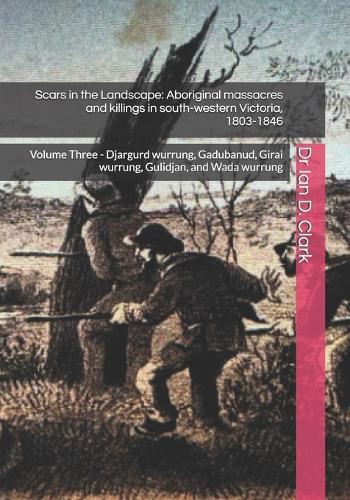
Given my recent research into inter se violence and Indigenous violence against non-Indigenous people in colonial Victoria (2025 a, b, c, d), it is time that I revisited Scars in the Landscape (1995). Scars in the Landscape, has not been without its critics. Its most strident critic has been Michael Connor (2005). His critique of my 1995 study has been the stimulus to undertake a more rigorous study of frontier violence in western Victoria. I have narrowed the spatial focus of this revised study, excising the entries on Wergaia and Djadja wurrung, electing to focus on the eight language groups that were part of the Western District of the Port Phillip Aboriginal protectorate. My rationale for this is that apart from the northern portions of Wada wurrung, Djab wurrung, and Jardwadjali, which were the responsibility of Edward Stone Parker (of the Loddon District of the Protectorate), the eight languages encompass the entirety of the Western District or Geelong District of the Aboriginal protectorate. Given the extent of the primary information that is available, I have produced three volumes covering the southwest study area: - volume one dealing with Dhauwurd wurrung, volume two dealing with Jardwadjali and Djabwurrung, and volume three (this volume) dealing with the remaining language groups - Giraiwurrung, Gadubanud, Djargurdwurrung, Gulidjan, and Wadawurrung. My interest in frontier conflict and frontier cooperation stems from my doctoral research into Aboriginal land tenure and dispossession in western Victoria. I was concerned to document Aboriginal possession, and to reconstruct the various processes of dispossession. I was conscious of the predominance of the paradigm of peaceful colonization and yet in wanting to reveal its shortcomings as it applied to western Victoria, I was mindful of the need not to replace it with a paradigm of violent colonization that failed to account for the many documented instances of cooperation and violence-free relationships between some Indigenous groups and some European settlers. Indeed, my study of dispossession revealed that a nuanced understanding of the colonial frontier was required. The conclusion of my research was that neither paradigm - 'peaceful colonization' or 'violent colonization' - captured the range of experiences on the frontier in western Victoria. This belief has been reinforced by my recent studies of Aboriginal killings of non-Indigenous peoples in colonial Victoria (Clark 2025a, b); inter se killings in colonial Victoria (Clark 2025c), and the Native Police Corps and intra-Indigenous violence (Clark 2025d). Some of the accounts of violence committed on Aboriginal people in Victoria are extremely difficult reading The violence is unsettling and disturbing, but that is not grounds to abandon the study. This study is not setting out to glorify the Aboriginal people that were killed in the Port Phillip district. Nor is it about demonizing the European people who caused their deaths. There is no veneration intended in my writing. The men and children discussed are not heroes, but all victims of frontier violence deserve to be uncovered, or recovered.
Full Product Details
Author: Ian D Clark
Publisher: Independently Published
Imprint: Independently Published
Volume: 5
Dimensions:
Width: 17.80cm
, Height: 1.30cm
, Length: 25.40cm
Weight: 0.417kg
ISBN: 9798195049614
Pages: 238
Publication Date: 30 April 2026
Audience:
General/trade
,
General
Format: Paperback
Publisher's Status: Active
Availability: Available To Order

We have confirmation that this item is in stock with the supplier. It will be ordered in for you and dispatched immediately.