Overview
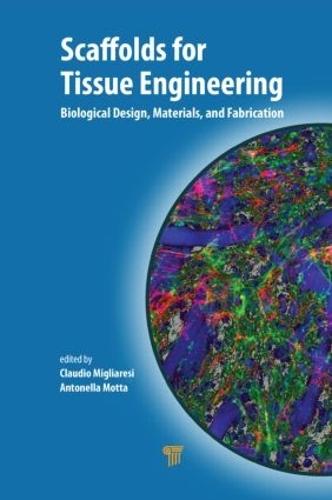
Scaffolds for tissue engineering are devices that exploit specific and complex physical and biological functions, in vitro or in vivo, and communicate through biochemical and physical signals with cells and, when implanted, with the body environment. Scaffolds are produced mainly with synthetic materials, and their fabrication technologies are derived from already well-established industrial processes, with some new specific technologies having been developed in the last years to address required complexities. Often, a generalist approach is followed for the translation of materials and technologies designed for other applications, without considering the specific role of scaffolds from a physical and biological point of view. The book illustrates scaffold design principles, with particular relevance to the biological requirements needed to control and drive the biological cross talk, and reviews materials and fabrication and validation methods.
Full Product Details
Author: Claudio Migliaresi , Antonella Motta
Publisher: Pan Stanford Publishing Pte Ltd
Imprint: Pan Stanford Publishing Pte Ltd
Dimensions:
Width: 15.20cm
, Height: 4.20cm
, Length: 22.90cm
Weight: 1.104kg
ISBN: 9789814463201
ISBN 10: 9814463205
Pages: 698
Publication Date: 10 June 2014
Audience:
College/higher education
,
Professional and scholarly
,
Tertiary & Higher Education
,
Professional & Vocational
Format: Hardback
Publisher's Status: Active
Availability: In Print 
This item will be ordered in for you from one of our suppliers. Upon receipt, we will promptly dispatch it out to you. For in store availability, please contact us.
Table of Contents
Premise An Evolving State of the Art in Tissue Engineering A T DiBenedetto The functional role of Extra Cellular Matrix E Carletti, M Stoppato, C Migliaresi, A Motta The Premise of Tissue Engineering: Molecular Recognition C J Pateman & J W Haycock Principles and Biological Pathways to Tissue Regeneration: The tissue regenerative niche R Cancedda & C Lo Sicco Host Response to Biomaterials S Srinivasan & J E Babensee Scaffold Vascularization L E Fitzpatrick, A Lisovsky, E C Ciucurel & M V Sefton Note: The role of osteoblasts on the in vitro vascularization C Migliaresi & A Motta Engineering Biomimetic Scaffolds N Annabi, N E Vrana, P Zorlutuna, F Dehghani & A Khademhosseini Biomaterials for scaffolds: Synthetic polymers L Rojo, B Vázquez & J San Román Note: Biomimetic scaffolds and remodeling C Migliaresi & A Motta Biomaterials for scaffolds: Natural Polymers L S Wray & D L Kaplan Hydrogels: characteristics and properties R Barbucci & D Pasqui Note: Protein based hydrogels C Migliaresi & A Motta Fabrication methods of tissue engineering scaffolds V M Correlo, J M Oliveira, A R C Duarte, A Martins, A L Oliveira, J Silva-Correia, R. L Reis & N M Neves Engineered scaffolds: Materials and microstructure from nanostructures to macrostructures for tissue engineering V G Varanasi, P S Shiakolas & P B Aswath Note: Decellularized tissues as scaffolds C Migliaresi & A Motta Organ Printing and Cell Encapsulation S Tasoglu, U A Gurkan, S Guven & U Demirci In vitro and in vivo testing M Fini, N Nicoli Aldini & P Torricelli Bioreactor Strategies for In Vitro Conditioning of Engineered Tissues A Goldstein & P Thayer Microvascular imaging methods for tissue engineering B W Thimm, S Hofmann & R Müller Tissue Engineering: Scope, Products, Commercialization Strategies A J Court
Reviews
"""This comprehensive textbook begins with chapters covering the structural and functional biology of body tissues, their healing processes, and their regeneration and ends with a chapter looking toward the future commercialization of tissue-engineered scaffolds. It should be useful for those doing research on tissue-engineered scaffolds, companies developing tissue-engineered products, and clinicians looking to the future replacement of tissues in the clinic."" Prof. Allan S. Hoffman, University of Washington, USA ""The current volume provides an excellent basis to assist researchers in leaving the path of trial and error and designing scaffolds on the basis of true understanding. It is a must-read for anybody interested in tissue engineering."" Prof. Clemens A. van Blitterswijk, University of Twente, the Netherlands ""Tissue engineering is the most promising technology to treat various diseases by using cultured cells and will be a main actor in medical science in the twenty-first century. The fusion of medicine and engineering is essentially indispensable for tissue engineering, especially scaffold-based tissue engineering. This very timely book will be equally useful for those who have engineering, medical, and biological science background."" Prof. Teruo Okano, Tokyo Women’s Medical University, Japan"
This comprehensive textbook begins with chapters covering the structural and functional biology of body tissues, their healing processes, and their regeneration and ends with a chapter looking toward the future commercialization of tissue-engineered scaffolds. It should be useful for those doing research on tissue-engineered scaffolds, companies developing tissue-engineered products, and clinicians looking to the future replacement of tissues in the clinic. Prof. Allan S. Hoffman, University of Washington, USA The current volume provides an excellent basis to assist researchers in leaving the path of trial and error and designing scaffolds on the basis of true understanding. It is a must-read for anybody interested in tissue engineering. Prof. Clemens A. van Blitterswijk, University of Twente, the Netherlands Tissue engineering is the most promising technology to treat various diseases by using cultured cells and will be a main actor in medical science in the twenty-first century. The fusion of medicine and engineering is essentially indispensable for tissue engineering, especially scaffold-based tissue engineering. This very timely book will be equally useful for those who have engineering, medical, and biological science background. Prof. Teruo Okano, Tokyo Women's Medical University, Japan
Author Information
Claudio Migliaresi is professor of composite materials engineering and of biomaterials and biomedical technologies, head of the Department of Industrial Engineering, dean of the School of Industrial Engineering, and head of the BIOtech Research Center of the University of Trento, Italy. His research activities range from composite materials to biodegradable polymers, biomaterials, materials, and scaffolds for tissue engineering. Prof. Migliaresi has published about 200 papers, edited the five volumes of the book Polymers in Medicine, and owns some patents. Antonella Motta is assistant professor at the University of Trento and has qualified as associate professor of bioengineering by the Italian evaluation system. She teaches bioengineering and tissue engineering and regenerative medicine courses. Prof. Motta’s research activities are mainly focused on nature-derived polymers for tissue engineering applications, scaffold design, and interactions of material–biological systems. She has published about 90 papers, edited several chapters on tissue engineering, and owns some patents.
Tab Content 6
Author Website:
Countries Available
All regions
|