Overview
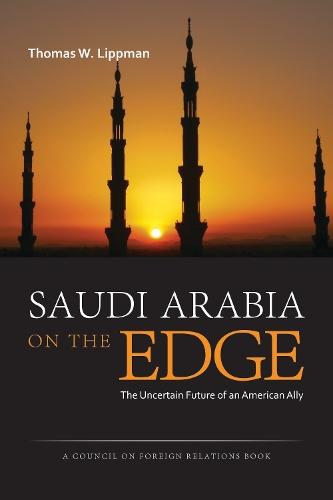
Of all the countries in the world that are vital to the strategic and economic interests of the United States, Saudi Arabia is the least understood by the American people. Saudi Arabia's unique place in Islam makes it indispensable to a constructive relationship between the non-Muslim West and the Muslim world. For all its wealth, the country faces daunting challenges that it lacks the tools to meet: a restless and young population, a new generation of educated women demanding opportunities in a closed society, political stagnation under an octogenarian leadership, religious extremism and intellectual backwardness, social division, chronic unemployment, shortages of food and water, and troublesome neighbors. Today's Saudi people, far better informed than all previous generations, are looking for new political institutions that will enable them to be heard, but these aspirations conflict with the kingdom's strict traditions and with the House of Saud's determination to retain all true power. Meanwhile, the country wishes to remain under the protection of American security but still clings to a system that is antithetical to American values. Basing his work on extensive interviews and field research conducted in the kingdom from 2008 through 2011 under the auspices of the Council on Foreign Relations, Thomas W. Lippman dissects this central Saudi paradox for American readers, including diplomats, policymakers, scholars, and students of foreign policy.
Full Product Details
Author: Thomas W. Lippman
Publisher: Potomac Books Inc
Imprint: Potomac Books Inc
Dimensions:
Width: 15.00cm
, Height: 3.00cm
, Length: 23.00cm
Weight: 0.617kg
ISBN: 9781597976886
ISBN 10: 1597976881
Pages: 320
Publication Date: 01 January 2012
Audience:
Professional and scholarly
,
Professional & Vocational
Format: Hardback
Publisher's Status: Active
Availability: Out of stock

The supplier is temporarily out of stock of this item. It will be ordered for you on backorder and shipped when it becomes available.
Reviews
Thomas Lippman's Saudi Arabia on the Edge is an excellent introduction to Saudi Arabian politics as well as the economic and social challenges facing the Kingdom today. He manages to show the complexities of this country without over simplifying and treats these in a balanced way, eschewing the excessive praise or the vilification that often typify books on the Kingdom. He has been a keen observer of the Saudi scene for a number of decades and his deep insights inform this work. This is best book available for an introduction to contemporary Saudi Arabia.
Thomas Lippman's Saudi Arabia on the Edge is an excellent introduction to Saudi Arabian politics as well as the economic and social challenges facing the Kingdom today. He manages to show the complexities of this country without over simplifying and treats these in a balanced way, eschewing the excessive praise or the vilification that often typify books on the Kingdom. He has been a keen observer of the Saudi scene for a number of decades and his deep insights inform this work. This is best book available for an introduction to contemporary Saudi Arabia. Bernard Haykel, Professor of Near Eastern Studies; Director, The Transregional Institute, Princeton University
Thomas Lippman's <i>Saudi Arabia on the Edge</i> is an excellent introduction to Saudi Arabian politics as well as the economic and social challenges facing the Kingdom today. He manages to show the complexities of this country without over simplifying and treats these in a balanced way, eschewing the excessive praise or the vilification that often typify books on the Kingdom. He has been a keen observer of the Saudi scene for a number of decades and his deep insights inform this work. This is best book available for an introduction to contemporary Saudi Arabia. Bernard Haykel, Professor of Near Eastern Studies; Director, The Transregional Institute, Princeton University--Bernard Haykel
Author Information
Thomas W. Lippman, a former Middle East bureau chief for the Washington Post, is an award-winning journalist who has written about Middle Eastern affairs and American foreign policy for more than three decades. He is a former adjunct senior fellow of the Council on Foreign Relations and an adjunct scholar at the Middle East Institute in Washington. The author of five previously published books on the Middle East and diplomacy, Lippman has appeared frequently on national television and radio. He lives in Washington, D.C.