|
|
|||
|
||||
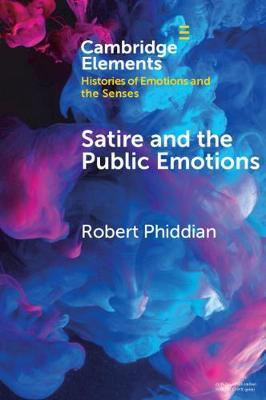
OverviewThe dream of political satire - to fearlessly speak truth to power - is not matched by its actual effects. This study explores the role of satirical communication in licensing public expression of harsh emotions defined in neuroscience as the CAD (contempt, anger, disgust) triad. The mobilisation of these emotions is a fundamental distinction between satirical and comic laughter. Phiddian pursues this argument particularly through an account of Jonathan Swift and his contemporaries. They played a crucial role in the early eighteenth century to make space in the public sphere for intemperate dissent, an essential condition of free political expression. Full Product DetailsAuthor: Robert Phiddian (Flinders University)Publisher: Cambridge University Press Imprint: Cambridge University Press Dimensions: Width: 15.30cm , Height: 0.50cm , Length: 22.80cm Weight: 0.200kg ISBN: 9781108798839ISBN 10: 1108798837 Pages: 84 Publication Date: 02 January 2020 Audience: Professional and scholarly , Professional & Vocational Format: Paperback Publisher's Status: Active Availability: Manufactured on demand We will order this item for you from a manufactured on demand supplier. Table of ContentsReviewsAuthor InformationRobert Phiddian is Professor of English at Flinders University. He is author of Swift's Parody (1995) and (with Julian Meyrick and Tully Barnett) What Matters? Talking Value in Australian Culture (2018). He edited (with Haydon Manning) Comic Commentators - Contemporary Political Cartooning in Australia (2008) and (with David Lemmings and Heather Kerr) Passions, Sympathy and Print Culture: Public Opinion and Emotional Authenticity in Eighteenth-Century Britain (2016). He is author or co-author of nearly fifty academic articles or chapters. He was the founding director of the Australasian Consortium of Humanities Research Centres (2011-17) and sits on the board of the international Consortium of Humanities Centers and Institutes. Tab Content 6Author Website:Countries AvailableAll regions |
||||