|
|
|||
|
||||
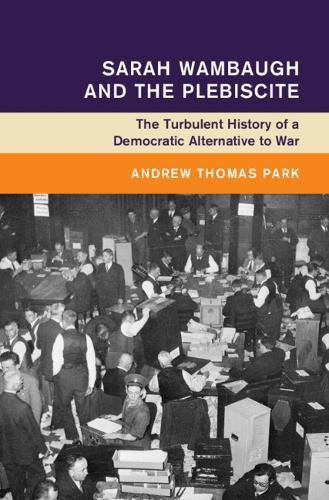
OverviewAndrew Park tells the story of the rise and fall of the plebiscite, once seen as a promising democratic solution to international conflict which – more than once – became embroiled in controversy and war in the first half of the twentieth century. The book's central figure is the brilliant but largely forgotten American scholar Sarah Wambaugh, the leading expert on the plebiscite technique whose dramatic career took her to many of the world's political hotspots. The norms she developed for the technique continue to shape how self-determination and popular suffrage in international affairs are thought about and conducted today. In a world where borders are again being redrawn by force and democracy everywhere appears under strain, this book is a timely and compelling reminder that such events are not new. Full Product DetailsAuthor: Andrew Thomas Park (University of Hong Kong)Publisher: Cambridge University Press Imprint: Cambridge University Press Weight: 0.500kg ISBN: 9781009647779ISBN 10: 1009647776 Pages: 300 Publication Date: 31 January 2026 Audience: General/trade , General Format: Hardback Publisher's Status: Forthcoming Availability: Not yet available, will be POD This item is yet to be released. You can pre-order this item and we will dispatch it to you upon it's release. This is a print on demand item which is still yet to be released. Table of ContentsIntroduction; 1. A career in plebiscites begins: suffrage, peace, and the Paris peace conference of 1919; 2. The plebiscites of the post-war settlement, 1920–1923; 3. Locating Sarah Wambaugh's political thought: science, neutrality, and public opinion; 4. Tacna-Arica and the perfection of the plebiscite, 1925–1933; 5. 'The highest point yet attained': the Saar plebiscite of 1935; 6. Low point: the plebiscite and the second world war; 7. An era ends: election monitoring and the plebiscite after the war; Conclusion; Bibliography; Index.Reviews'It is so exciting to finally have a study of Sarah Wambaugh, and of the plebiscite era in international history. Both deserve close historical analysis, and to be reintegrated into our broader understanding of the interwar period. This study delivers the goods with its attention to a range of actors – including women – and the breadth of postwar international ambitions, their success as well as their failure. I hope it makes its way on to course readings as a vital resource for renovating the study of war and peace in the long 20th century.' Glenda Sluga, Professor of International History, European University Institute 'Powerful, carefully researched and well-written, this thoughtful history of Sarah Wambaugh's pioneering work on plebiscites and the international application of democratic principles comes at a timely juncture. Sarah Wambaugh and the Plebiscite is also a highly readable study of a remarkable woman, who helped to shape the international contours of the modern world.' Maartje Abbenhuis, Ahorangi Professor in Modern History, Waipapa Taumata Rau University of Auckland Author InformationAndrew Thomas Park is a historian of international relations working in the University of Hong Kong. Tab Content 6Author Website:Countries AvailableAll regions |
||||